
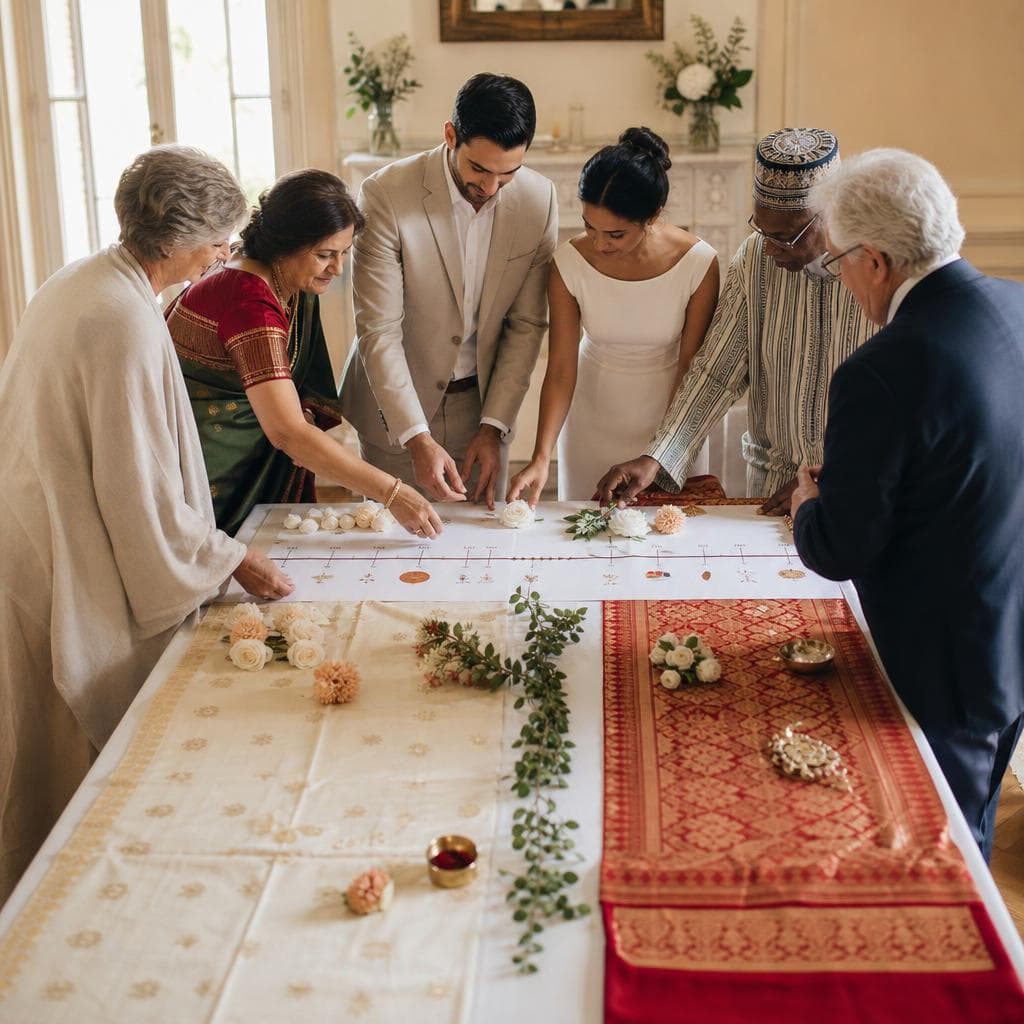
Organizing a Multicultural Wedding: Practical Tips
A multicultural wedding brings together two families who do not necessarily share the same ceremonial reference points, meal customs, or dress codes. Well organized, it can highlight both traditions rather than erasing one in favor of the other.
Start with a conversation, not a program
Identify what really matters to each family
Before creating a schedule, talk with both families about what they consider essential and what can be adapted or shortened. Some elements have a strong symbolic value, others are more a matter of habit than a necessity.
Accept not doing everything in full
Trying to include the entirety of two traditional ceremonies in a single day often results in a day that is too long for both guests and the couple. Choosing the highlights of each tradition, rather than everything, leads to a clearer experience.
Structure a two-part ceremony
One or two ceremonial moments
Depending on the traditions involved, a single ceremony combining elements of both cultures, or two separate moments organized on the same day or over two days, can both work. The choice mainly depends on the religious or customary requirements of each family.
Plan for a guide or presenter
When guests are unfamiliar with the customs of the other culture, a brief introduction before each highlight helps to understand what is happening, without turning the ceremony into a continuous explanation.
Inform guests without overwhelming them
The language issue
If some guests do not speak the same language, provide translation or bilingual materials for essential information: schedules, locations and the order of events. Our article on the multilingual weddings and the ceremony details several concrete options for this specific point.
Explain the dress code
If traditional attire is expected or recommended for a particular moment, specify it clearly in advance, with a simple explanation rather than a technical term that half the guests won't understand.
Adapt the food and music
The menu and music are often the most natural places to represent both cultures without excessive complexity: a two-part menu, or an evening organized in two distinct musical sections, allow each family to find a portion of its own reference points.
Draw inspiration from documented weddings
Depending on the cultures involved in your wedding, our dedicated guides can give you more precise reference points for a particular tradition: Tamil wedding, Maghrebi wedding and African wedding each detail the steps, outfits and providers specific to these traditions.
Involve both families in the preparations
Share decisions, not just tasks
Beyond logistical help, giving each family a real area of decision, for example a part of the ceremony or a section of the meal, prevents one family from feeling like a mere spectator of the other's choices. This distribution should ideally be discussed from the start of the planning, not when finalizing the details.
Manage different religious expectations
When the two families do not share the same religion, clarify early on what is negotiable and what is not for each tradition. An officiant or a reference person from each culture can help to formulate a ceremony respectful to both sides, rather than leaving the couple alone facing contradictory requests.
Think about the venue and schedule accordingly
A venue compatible with two ceremonial moments
If your wedding includes two distinct ceremonies, check that the chosen venue allows this arrangement: sufficient space for two different configurations, transition time between the two moments, and easy access for guests who would attend only one of the moments.
Allow for a wider time margin
A wedding with two traditions often requires more time than initially planned, between outfit changes, transition times and explanations given to guests. Build the schedule for the wedding day with a more generous margin than for a single-ceremony wedding.
Involve a coordinator if the wedding is complex
Beyond a generalist wedding planner, some coordinators specialize in multicultural weddings and are already familiar with common friction points between several traditions. This is not indispensable for all weddings, but it can secure the organization when the two ceremonies involve very different requirements.
Anticipate practical questions
A wedding with two traditions sometimes involves additional vendors: a caterer able to prepare two types of menus, musicians trained in two repertoires, or a photographer aware of the moments not to miss in each ceremony. Identify this need from the first contact with each vendor, rather than discovering it late.
Keep the sense of priorities
A multicultural wedding demands more coordination than a wedding with a single tradition, but the goal remains the same: bring together the people who matter around a moment that reflects the couple. Logistical details almost always get resolved; the open conversation between the two families, however, must be maintained throughout the planning, not only at the start.
Frequently Asked Questions
Should two separate receptions be organized?
It's not mandatory. Many couples bring both families together in a single day by structuring the ceremony and reception in several distinct parts.
How to handle disagreements between the two families?
Favor a direct and open discussion as early as possible in the planning, identifying together the non-negotiable elements on each side before building the rest of the program.
Is a vendor specialized in multicultural weddings necessary?
It's not essential, but a vendor experienced in this type of event often asks better questions from the first meeting and anticipates specific needs more effectively.
How to manage guests who know neither culture?
Provide a short explanation, oral or written, before each unfamiliar highlight. A program handed out at the entrance with a few lines of context is often enough for everyone to feel comfortable rather than lost during the ceremony.
Should guests be informed of the schedule in advance?
It is recommended, especially regarding expected attire and the overall duration of the day. A note on the invitation or the wedding website avoids surprises and allows everyone to organize calmly.
DreamWeds
Find your dream vendors
Photographers, caterers, venues and much more — compare up to 4 vendors side by side.
Discover vendorsArticles on the same topic
Wedding insurance: is it really useful?
Cancellation, bad weather, civil liability: what wedding insurance covers and when it makes sense.
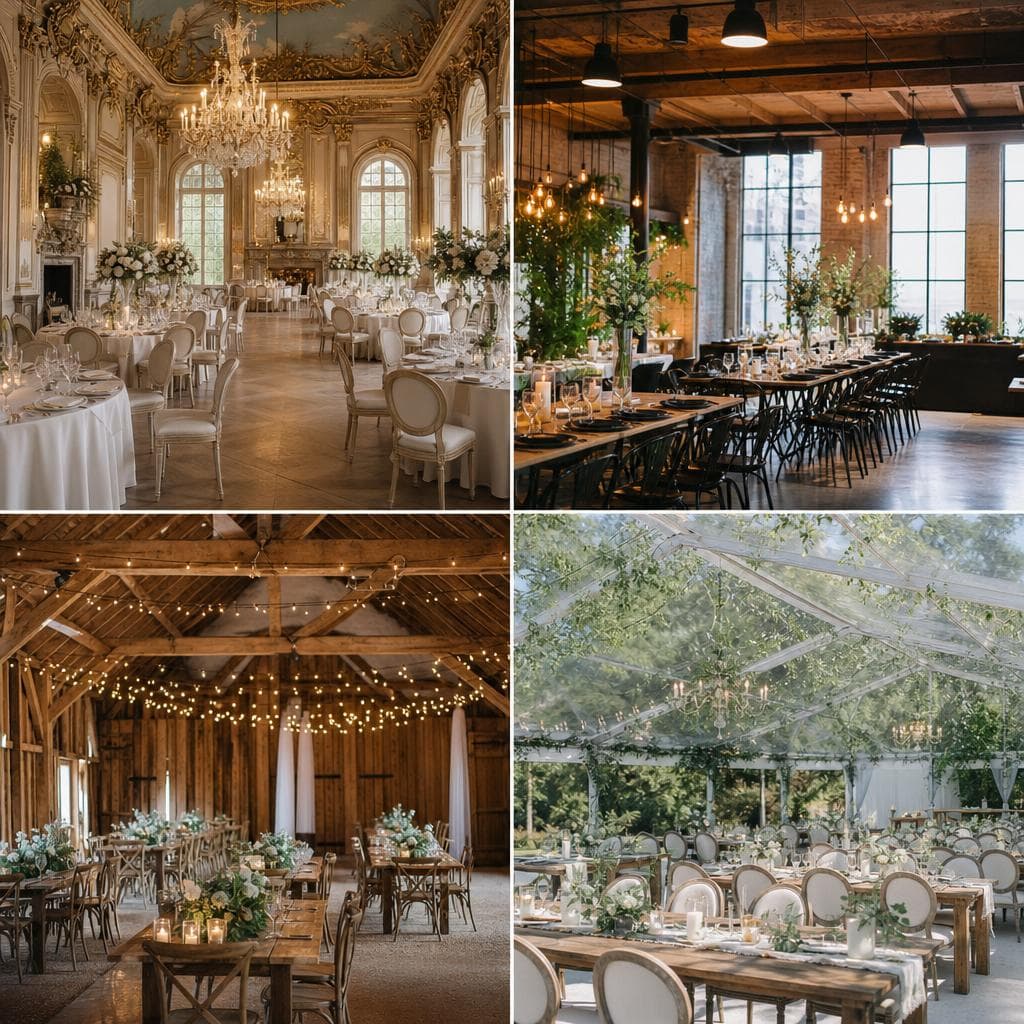
The different types of wedding venues: which one to choose?
Castle, estate, community hall, outdoor venue, urban loft: compare venue types before deciding.
Child-free wedding: how to announce it to guests tactfully?
Set a clear rule and communicate it early enough to avoid misunderstandings with invited families.