
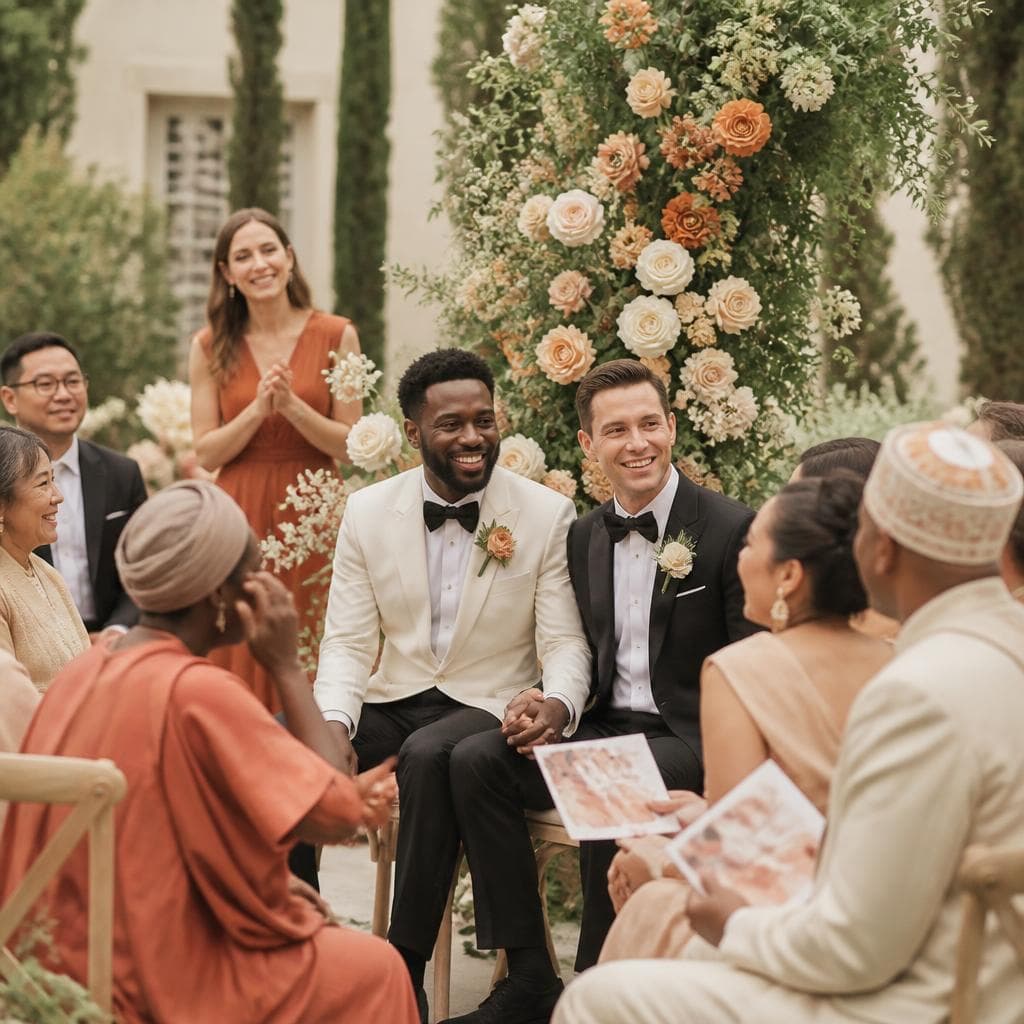
Multilingual wedding: how to include guests who don't speak the same language?
A multilingual wedding mainly requires thinking about the moments when information matters. The goal is not to translate every sentence, but to enable everyone to understand the essential steps and take part.
Identify the moments to translate
Schedules, locations, transport instructions and food information are priorities. For the ceremony and speeches, a summarized translation may be sufficient.
Prepare the speeches
Ask speakers to limit very local references or long anecdotes that would be incomprehensible to part of the audience. A short spoken translation or a written summary can be offered.
Pay attention to signage
Signs indicating restrooms, cloakroom, transport, guestbook or reserved areas can be bilingual. Pictograms effectively complement the text.
Provide a point of contact
Designate a person able to answer questions in each main language. The couple should not become the event's reception desk for the evening.
Respect both cultures
Language is only part of the issue. Meal schedules, traditions, music and family habits can also differ. Good preparation prevents one family from feeling like they were merely invited to the other family's wedding.
Also find our guide to organize a multicultural wedding.
Frequently asked questions
Should the entire ceremony be translated?
Not necessarily. Focus on the passages essential to guests' understanding and comfort.
Should only one language be used for speeches?
No. An alternating format or summaries can work depending on the number of languages.
DreamWeds
Find your dream vendors
Photographers, caterers, venues and much more — compare up to 4 vendors side by side.
Discover vendorsArticles on the same topic
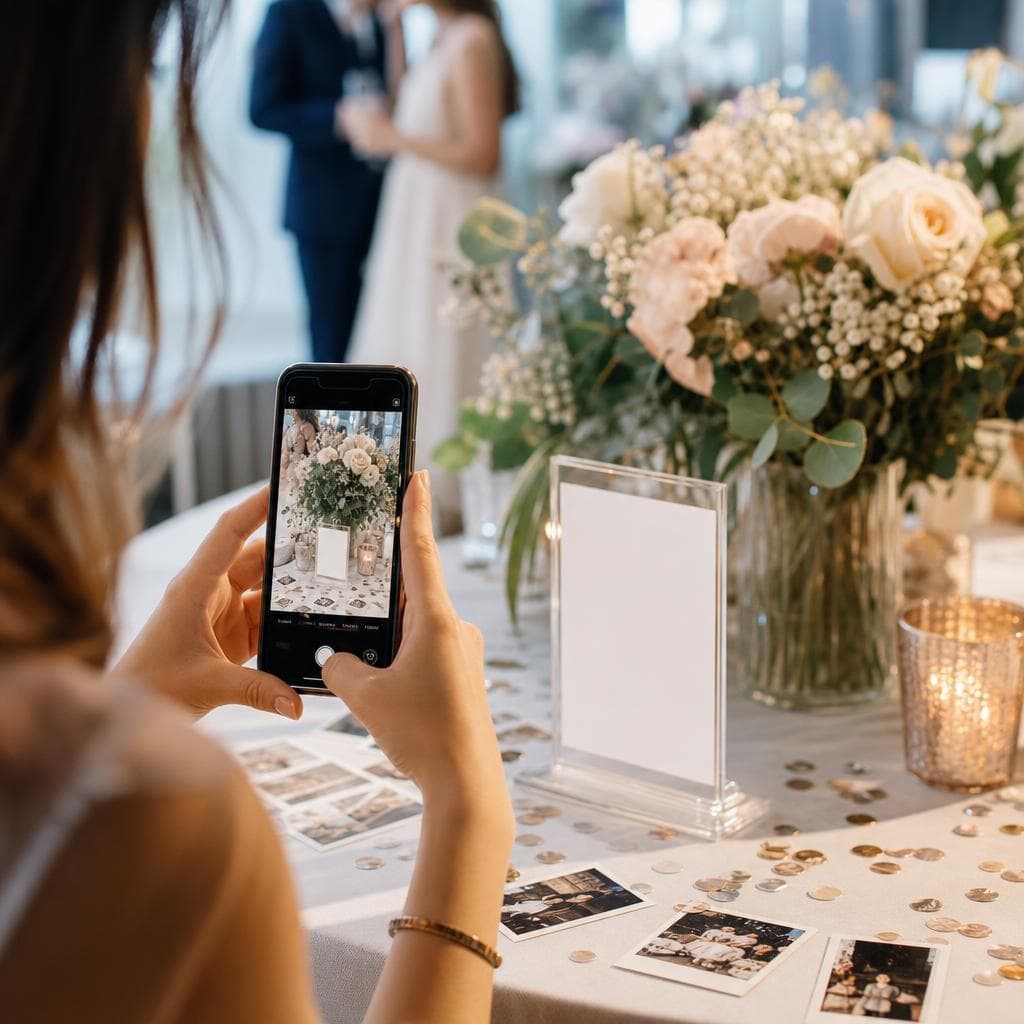
Wedding hashtag: how to choose a good one?
Original, easy to remember and unique: the method to create a wedding hashtag that your guests will actually use.
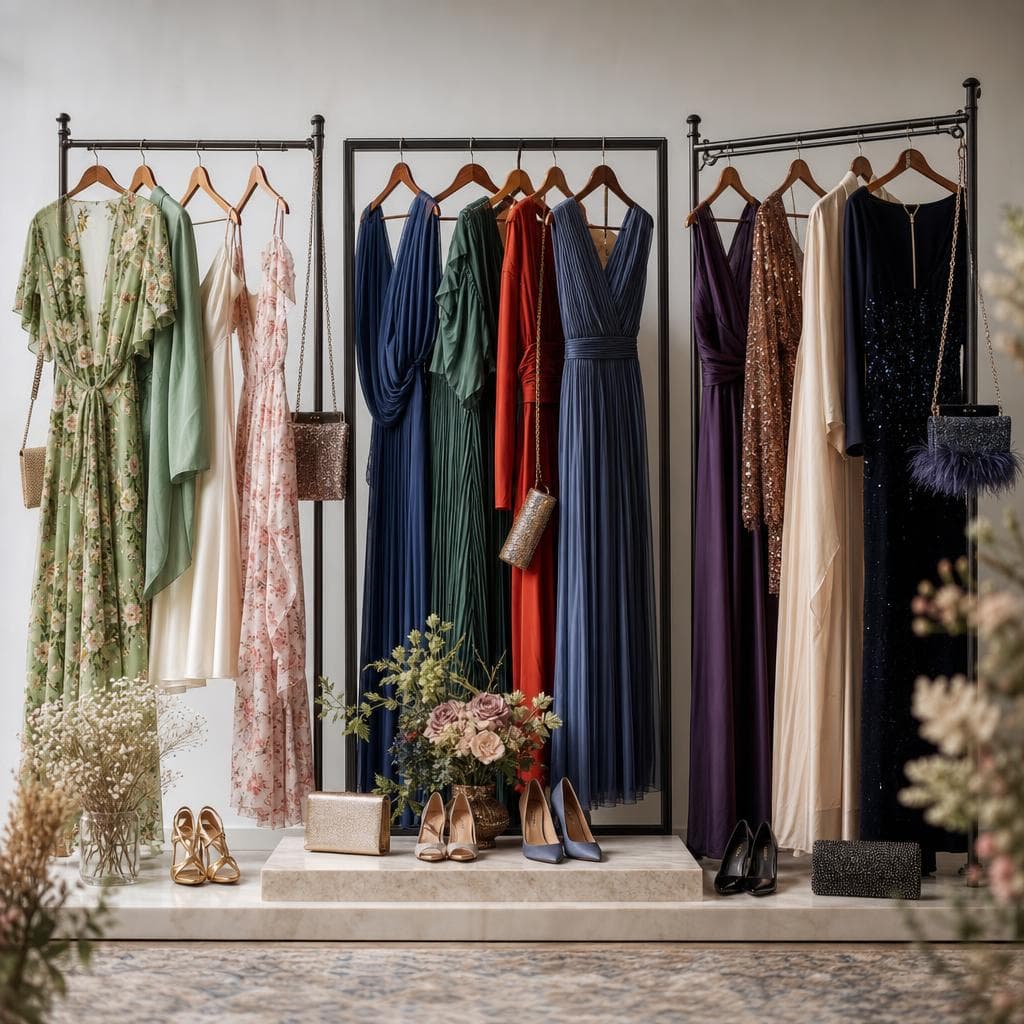
Wedding guest attire: what to wear according to the dress code?
Understanding common dress codes, adapting to the venue and season, and avoiding classic faux pas as a guest.
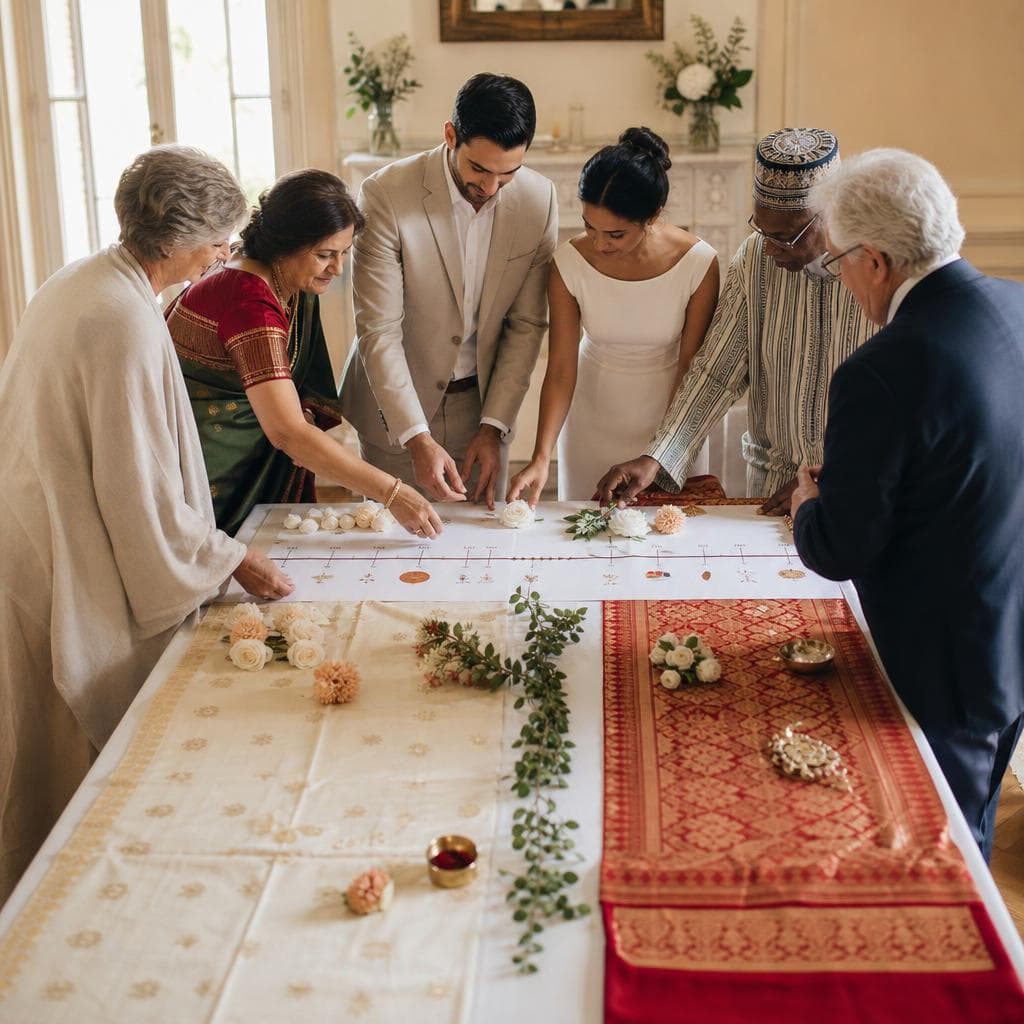
Organizing a Multicultural Wedding: Practical Tips
Blending two traditions, addressing guests from different cultures, and creating a ceremony that is meaningful for both families.