
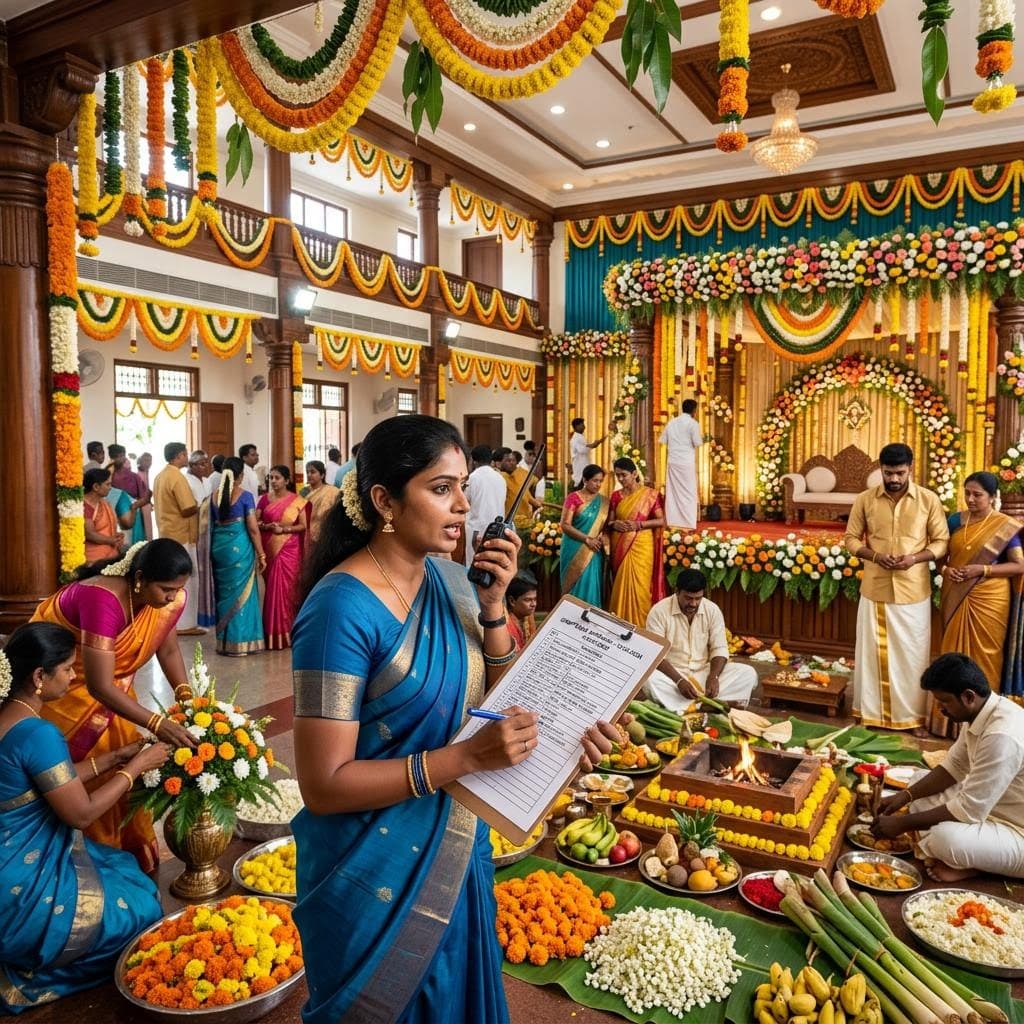
Schedule of a Tamil wedding: example timeline for the wedding day
The day of a Tamil Hindu wedding can start very early and include many successive moments: preparation of the bride and groom, arrival of families, Maalai, Oonjal, religious ceremony, Thali, photos, meal and reception.
With several vendors and sometimes several hundred guests, a detailed schedule becomes indispensable.
Here is an example to organize your day without forgetting the important moments.
The times shown here are indicative only.
The actual sequence must always be adapted to the families' traditions, the priest's instructions and the Muhurtham time when a precise time is scheduled.
Why prepare a detailed schedule?
A schedule allows coordination of:
- the bride and groom;
- the families;
- the priest;
- the venue;
- the decorator;
- the caterer;
- the makeup artist;
- the photographer;
- the videographer;
- the musicians;
- the DJ.
Without a schedule, each vendor risks working on their own timing.
The result can quickly become complicated.
Start with the Muhurtham
When the ceremony includes a Muhurtham, start by noting that time.
Then build the program around that moment.
For example:
Muhurtham : 10 h 30
You will then need to determine how long the different preceding rituals require.
To learn more: Muhurtham in a Tamil wedding: ceremony date and time
Example schedule for a Tamil wedding
Here is an example for a ceremony organized in the morning.
05 h 00 – Start of the bride's preparations
Depending on the number of services booked, preparation can start very early.
You should plan for:
- ☐ Makeup
- ☐ Hairstyling
- ☐ Flowers
- ☐ Sari
- ☐ Jewelry
- ☐ Accessories
The bride should ideally be ready with some margin before leaving.
To learn more: Tamoul bride makeup and hair: how to prepare for the wedding day?
06 h 30 – Groom's preparations
The groom prepares:
- Veshti;
- shirt or traditional top;
- accessories;
- shoes.
The photographer can also take some photos of the preparations.
To learn more: Tamil wedding attire: sari, Veshti, jewelry and accessories
07 h 00 – Arrival of the decorator and final checks
Ideally, much of the decoration is already installed.
The wedding morning is mainly for final adjustments:
- flowers;
- Mandap;
- Oonjal;
- the couple's table;
- signs;
- photo area.
To learn more: Tamil wedding decoration: Mandap, flowers and inspiration
07 h 30 – Arrival of the photographer and videographer
The professionals can start with:
- venue details;
- decoration;
- sari;
- jewelry;
- Thali;
- Maalai;
- preparations of the bride and groom.
It is preferable that they arrive before the first important moments.
To learn more: Photographer and videographer for a Tamil wedding: moments not to miss
08 h 00 – Arrival of the musicians
If traditional musicians are planned, they must know the program exactly.
The Nadaswaram and the Thavil can accompany different moments of the ceremony.
To learn more: Nadaswaram and Thavil: traditional music of the Tamil wedding
08 h 30 – Arrival of the first guests
At this time, everything should ideally be ready.
Check:
- ☐ Welcome
- ☐ Parking
- ☐ Signage
- ☐ Venue open
- ☐ Accessible restrooms
- ☐ Music
- ☐ Staff present
One or two people can be assigned to guide guests.
09 h 00 – Arrival of the groom
The groom's arrival can be an early highlight of the day.
Depending on family traditions, different welcoming gestures may be performed.
The photographer, videographer and musicians should be ready before his arrival.
09 h 20 – Arrival of the bride
The bride should arrive with enough advance to avoid any timing pressure.
The photographer can take a few images before her official entrance.
09 h 30 – Start of the first rituals
The program depends entirely on the ceremony planned by the priest.
It may include various moments before the main ritual.
It is important to respect the order communicated by the priest.
09 h 45 – Exchange of Maalai
Depending on the chosen sequence, the exchange of garlands may take place at this time.
The Maalai should already be available and entrusted to the responsible person.
To learn more: Maalai in a Tamil wedding: meaning and exchange of garlands
10 h 00 – Oonjal if planned
When this tradition is included in the wedding, the couple sits on the swing.
Family, photographer, videographer and musicians should be ready.
To learn more: Oonjal in a Tamil wedding: meaning and sequence
10 h 15 – Return to the main ceremony
Plan a few minutes for:
- moving the couple;
- seating;
- repositioning the photographer;
- preparing ceremonial objects.
These transitions must be integrated into the schedule.
10 h 30 – Muhurtham and main moment of the ceremony
In this example, the central moment of the ceremony is scheduled around 10 h 30.
The priest leads the religious steps according to the followed tradition.
All vendors must be ready before this time.
10 h 40 – Thali ceremony
The Thali moment is generally one of the highlights of the wedding.
Photographer, videographer and musicians must know exactly where it falls in the sequence.
To learn more: The Thali in a Tamil wedding: meaning and tradition
11 h 00 – Continuation of religious rituals
The ceremony can continue with other rites depending on the tradition followed by the families.
The required time can vary.
Avoid scheduling an important activity immediately after the theoretical end time.
11 h 45 – Approximate end of the ceremony
Allow a small margin.
A religious ceremony can take longer than expected.
Do not schedule the meal at 11 h 46 if the ceremony is theoretically due to finish at 11 h 45.
12 h 00 – Photos with families
Group photos should be organized.
Prepare a list in advance.
For example:
- Couple + bride's parents
- Couple + groom's parents
- Two families
- Brothers and sisters
- Grandparents
- Witnesses
- Close friends
A trustworthy person should be in charge of gathering the groups.
12 h 30 – Start of the meal
The caterer must know the approximate end time of the ceremony.
For several hundred guests, service must be organized precisely.
To learn more: Caterer for a Tamil wedding: how to choose the menu?
14 h 00 – Gradual end of lunch
Depending on the program, the couple may then:
- take a break;
- change outfits;
- do a photo session;
- prepare the reception.
14 h 30 – Change of outfit
If a second outfit is planned, allow enough time.
The bride may need to change:
- sari;
- jewelry;
- hairstyle;
- makeup.
The groom may also change clothes.
Do not underestimate the time needed.
15 h 30 – Couple photo session
If the venue allows, use this moment to take some photos without guests.
The session can take place:
- in the venue;
- in a garden;
- in a park;
- at a nearby location.
Travel time must be integrated into the schedule.
17 h 00 – Break or reception preparation
When the religious ceremony and the reception take place on the same day, a break can be useful.
Vendors can also use this time to prepare the venue.
18 h 00 – Arrival of guests for the reception
If a second evening part is organized, plan for:
- welcome;
- music;
- drinks;
- photobooth;
- seating plan.
19 h 00 – Entrance of the couple
The couple can make a new entrance in their reception attire.
The DJ, photographer and videographer must know the time.
19 h 30 – Dinner
If a second meal is planned, the caterer must organize service accordingly.
21 h 00 – Speeches and entertainment
Families may plan:
- speeches;
- videos;
- entertainment;
- games;
- performances.
Plan a maximum duration for each intervention to avoid delaying the whole evening.
22 h 00 – Opening of the dance floor
The DJ can then take over.
The time naturally depends on the couple's program.
00 h 00 – Planned end or continuation of the evening
Check the curfew indicated in the venue contract.
Some locations impose:
- volume reduction;
- stopping the music;
- guests leaving;
- teardown time.
Example summarized schedule
This schedule is an indicative example. The times and order of the rituals must be adapted to your ceremony with your family and your priest.
- 05 h 00 – Bride preparations
- 06 h 30 – Groom preparations
- 07 h 30 – Photo / video
- 08 h 30 – Guest arrival
- 09 h 00 – Groom arrival
- 09 h 20 – Bride arrival
- 09 h 30 – First rituals
- 09 h 45 – Maalai
- 10 h 00 – Oonjal
- 10 h 30 – Muhurtham
- 10 h 40 – Thali
- 11 h 45 – Approximate end of ceremony
- 12 h 00 – Family photos
- 12 h 30 – Meal
- 14 h 30 – Outfit change
- 15 h 30 – Couple photos
- 18 h 00 – Reception
- 19 h 00 – Couple entrance
- 19 h 30 – Dinner
- 21 h 00 – Entertainment
- 22 h 00 – Evening
Allow buffers between each step
A too-tight schedule is one of the main sources of stress.
Ideally add a few minutes between:
- preparations and departure;
- arrival and ceremony;
- different rituals;
- ceremony and photos;
- photos and meal;
- outfit change and reception.
A wedding almost never runs exactly on the minute.
Do not schedule every minute
The schedule should guide the organization.
It should not become a permanent constraint for the couple.
Focus mainly on the times that really matter:
- arrival of vendors;
- start of the ceremony;
- Muhurtham;
- meal;
- changes of location;
- reception.
Create two versions of the schedule
Full version
For:
- wedding planner;
- coordinator;
- photographer;
- videographer;
- caterer;
- decorator.
It can contain all the details.
Simplified version
For family and guests.
It can simply indicate:
- 09 h 00 : arrival
- 09 h 30 : ceremony
- 12 h 30 : lunch
- 18 h 00 : reception
This avoids sending a document that is too complex to everyone.
Appoint a coordinator
The couple should not spend their day checking the time.
Appoint a person in charge of following the schedule.
This can be:
- wedding planner;
- coordinator;
- brother or sister;
- witness;
- trusted relative.
This person can communicate directly with vendors.
Create a vendors group
A few days before the wedding, you can also create a communication group with the main responsible people.
It can include:
- coordinator;
- venue;
- caterer;
- decorator;
- photographer;
- videographer;
- DJ.
The goal is not to add the couple to every discussion, but to allow vendors to communicate quickly if needed.
Day-of schedule checklist
One month before
- ☐ Muhurtham confirmed
- ☐ Priest's times confirmed
- ☐ Provisional schedule created
- ☐ Vendors informed
One week before
- ☐ Schedule finalized
- ☐ Venue confirmed
- ☐ Caterer confirmed
- ☐ Photographer confirmed
- ☐ Videographer confirmed
- ☐ Makeup artist confirmed
- ☐ Musicians confirmed
- ☐ DJ confirmed
- ☐ Decorator confirmed
The day before
- ☐ Schedule sent to everyone
- ☐ Phone numbers shared
- ☐ Responsible person designated
- ☐ Outfits ready
- ☐ Thali ready
- ☐ Maalai confirmed
- ☐ Religious items prepared
Prepare your entire wedding
To organize all the steps, also consult:
- Prepare a Tamil wedding: the complete checklist
- Tamil Hindu wedding: traditions and ceremony sequence
- Which venue to choose for a Tamil wedding of 200, 300 or 400 guests?
Find vendors to organize your wedding
A schedule is much easier to build when all vendors are identified early enough.
On DreamWeds, search for the professionals you need for your wedding and gradually organize your event.
DreamWeds
Find your dream vendors
Photographers, caterers, venues and much more — compare up to 4 vendors side by side.
Find my wedding vendorsDiscover wedding packagesArticles on the same topic

Wedding insurance: is it really useful?
Cancellation, bad weather, civil liability: what wedding insurance covers and when it makes sense.
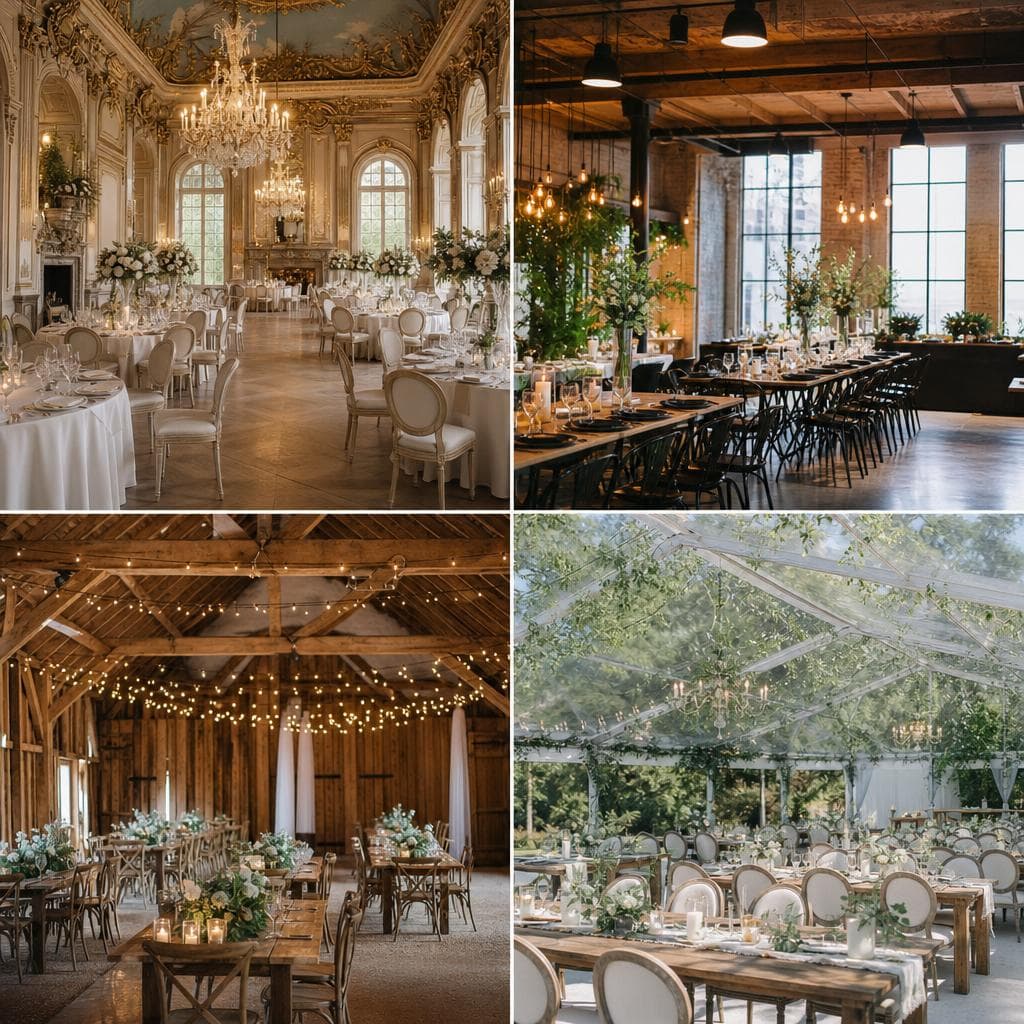
The different types of wedding venues: which one to choose?
Castle, estate, community hall, outdoor venue, urban loft: compare venue types before deciding.
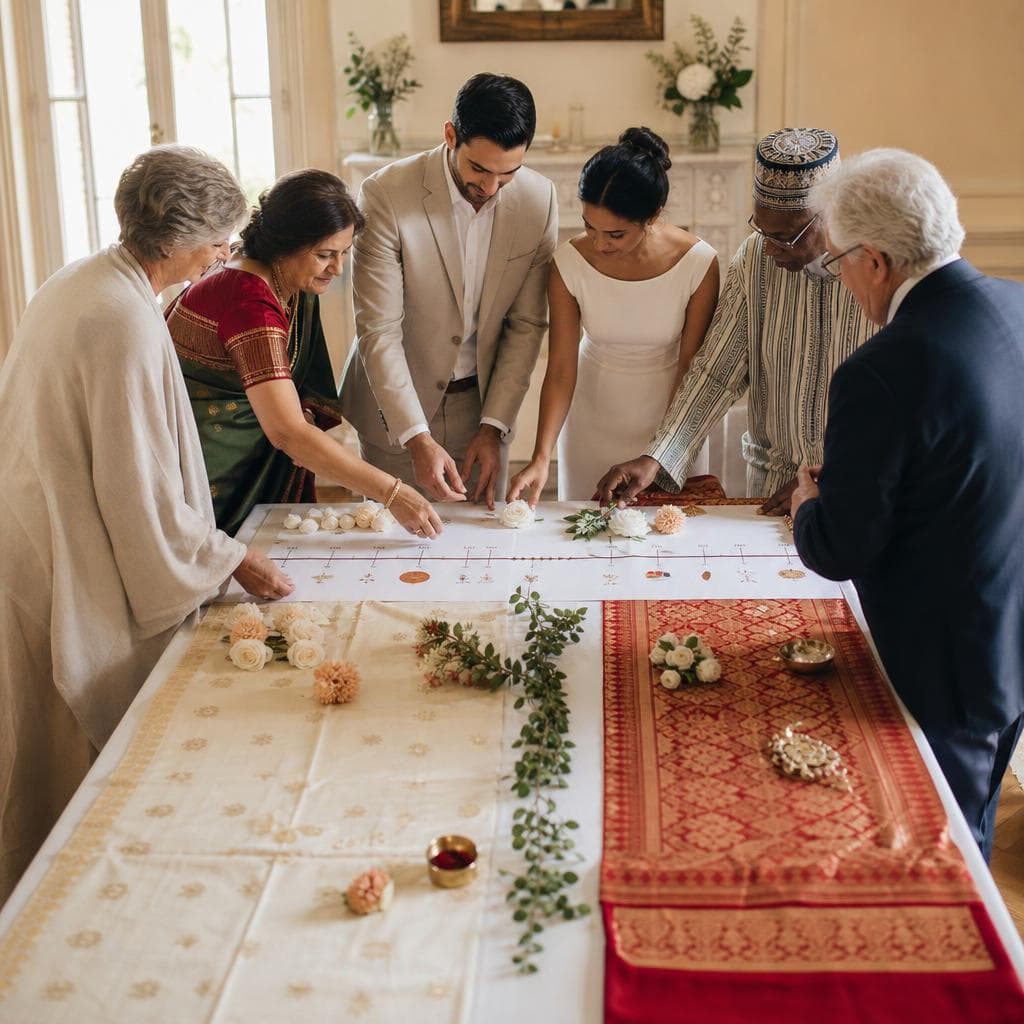
Organizing a Multicultural Wedding: Practical Tips
Blending two traditions, addressing guests from different cultures, and creating a ceremony that is meaningful for both families.