
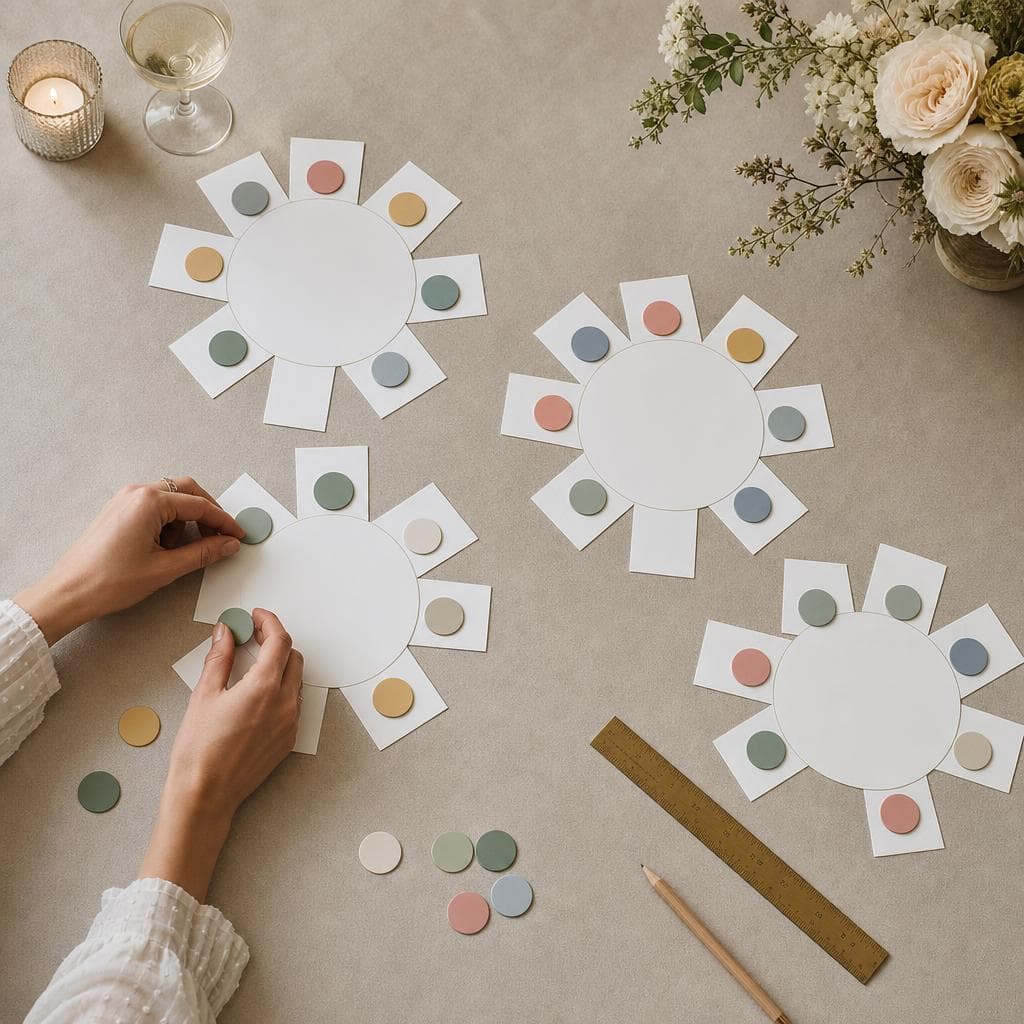
The seating plan is often one of the last major tasks before the wedding. It comes at a time when the fatigue of preparations begins to show, while the guest list can still change. A multi-step method prevents spending entire evenings on it.
Wait until you have the main confirmations
Don’t start the final seating too early. You can think about the main groups in advance, but wait until you have a sufficiently stable list of attendees before assigning every chair.
Step 1: group guests by affinity
First create natural groups without thinking about tables:
- bride's family ;
- groom's family ;
- childhood friends ;
- colleagues ;
- mutual friends ;
- cousins ;
- children and teenagers if you plan a dedicated table.
This step immediately reveals the groups that are easy to place and those that require more thought.
Step 2: know the real capacity of the tables
A round table advertised for 10 people isn’t always comfortable for 10 once decorations, chairs and service are in place. Ask the venue or the caterer for the recommended capacity, not just the maximum capacity.
Step 3: place the constraints first
Start with situations that offer few choices:
- elderly people close to the exits ;
- wheelchair users ;
- strollers ;
- guests who need a quiet environment ;
- parents of young children ;
- people who must avoid standing for long periods.
You can then build the other tables around these constraints.
Step 4: aim for balance, not perfection
A good table brings together people who have at least one thing in common. It’s not necessary for everyone to already know each other. Mixing two small groups can work very well if ages, interests or personalities are compatible.
Avoid isolating a single person in the middle of a very tight-knit group.
What about delicate family situations?
A wedding is not the best time to force a reconciliation. If two people are in conflict, seat them far enough apart so each can enjoy the evening.
It is often better to preserve a calm atmosphere than to seek perfect symmetry between families.
Head table or sweetheart table?
You can choose:
- a table for two ;
- a table with witnesses and close friends ;
- a table with the parents ;
- a large central table mixing several close relations.
There is no single rule. Choose the arrangement that matches your relationship with your families and the atmosphere you want.
Children
For very young children, seating them with their parents is often more practical. A kids' table works mainly when the children are fairly autonomous and when entertainment or supervision is planned.
Find our advice in Children at weddings: meals and activities.
Keep an easily editable version
Until the last week, an absence or a late confirmation can change everything. Work in a spreadsheet or a tool that allows you to move names quickly.
Only print the final version once the caterer has received the definitive number of guests.
The seating chart displayed at the entrance
On the big day, guests should be able to find their table within a few seconds. Sort names alphabetically or organize the board in a very readable way. A beautiful design should never prevent finding one’s name.
The best seating plan is not the one that looks perfect on paper: it’s the one that creates natural conversations and allows everyone to enjoy the meal.
DreamWeds
Find your dream vendors
Photographers, caterers, venues and much more — compare up to 4 vendors side by side.
Discover vendorsArticles on the same topic

Antillean wedding: traditions and organization in metropolitan France
Procession, madras, Creole cuisine, zouk and quadrille: the traditions of an Antillean wedding and how to bring them to life in metropolitan France.

Organizing a large wedding of 300 to 500 guests: the method
Guest list, budget, venue, caterer, timing and coordination: how to keep control of a wedding with several hundred guests.

Indian wedding in France: rituals, ceremony flow and organization
Haldi, mehndi, sangeet, baraat, pheras and reception: understanding the stages of an Indian wedding and organizing them in France.