
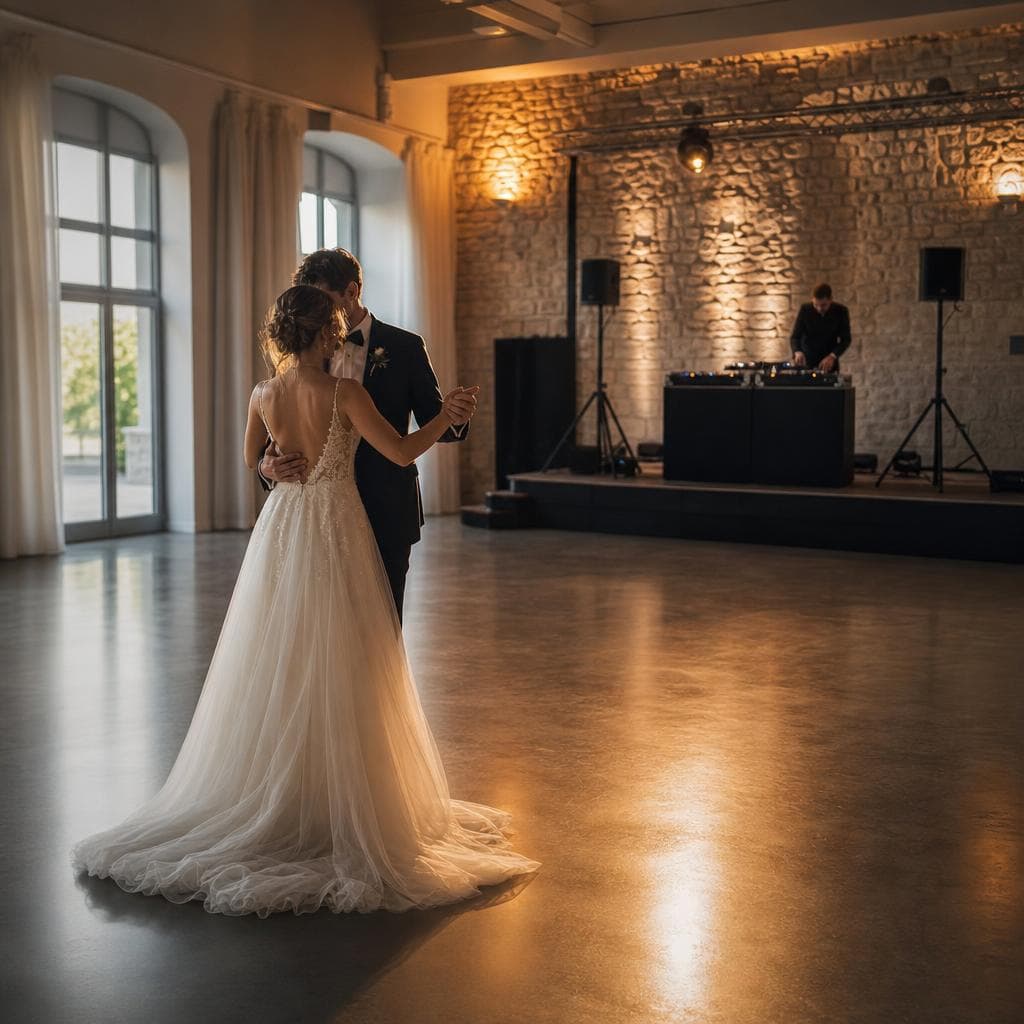
The first dance attracts a lot of attention on the wedding evening, which can turn a moment meant to be intimate into a source of stress. Well prepared, it remains one of the simplest moments to get right during the whole reception.
Choosing a Song That Reflects You
Symbolic Value Rather Than a Purely Aesthetic Choice
A song linked to a shared memory, a meeting or a specific moment in your story generally makes more sense than a title chosen only because it seems romantic. The personal connection matters more than the song's popularity.
Check the Tempo and Duration
A track that is too slow can make a simple choreography harder to sustain, while a track that is too fast leaves little room for a settled moment. Many couples choose to cut the song to two or three minutes rather than dance to the full version.
Prepare the Dance Without Aiming for Perfection
A Few Steps Are Enough
No need to prepare a complex choreography if that's not your world. A few simple steps, repeated at home a few times before the wedding, are enough to feel comfortable without giving the impression of an over-rehearsed routine.
Practice with the Wedding-Day Shoes
The dress, the suit and especially the shoes change the way you move. A rehearsal, even a short one, with the planned outfit and shoes prevents surprises regarding stability or the range of movements.
Coordinate with the DJ or the Band
Provide the Exact Version of the Track
Some tracks exist in multiple versions or remixes. Send the exact file or the precise link of the chosen version, with the desired duration, to avoid a surprise on stage if the version played is not the correct one.
Decide When in the Evening It Will Happen
The first dance can open the floor just after the meal or take place later in the evening. This choice depends on the overall flow of the reception: our guide on the hour-by-hour reception schedule can help you place this moment within the full timeline.
Whether to Involve the Guests or Not
Some couples prefer to dance alone for the entire song, others invite loved ones to join them after the first verse. Neither option is more appropriate than the other: the choice simply depends on how comfortable you are in front of an audience and the atmosphere you want.
Have a Plan B for Shyness
If the idea of dancing in front of everyone makes you uncomfortable, dimmed lighting, a shorter dance, or gradually opening the dance floor to other couples after a few seconds can reduce the pressure without eliminating the moment.
Think About the Rest of the Musical Evening
The first dance often sets the tone for the rest of the dance evening. If you are working with a DJ or a live band, our article on the choice between the two formats, DJ or live band for the wedding, can help you frame the overall musical programming, not just this first track.
And Dances with Parents?
A Tradition to Adapt or Not
The dance with a parent, often placed just after the couple's first dance, remains an optional tradition. Some couples keep it, others simplify it or replace it with a different moment, depending on what makes sense for their family.
Include These Tracks in the Same Submission
If you plan one or more additional dances, send these tracks to the DJ or band at the same time as the first dance, with the desired order, so the sequence stays smooth without dead time between each moment.
Manage Nerves in Front of Guests
Even without a complex choreography, dancing in front of an audience is impressive for many couples. Focusing on each other rather than on onlookers' gazes, and accepting that an imperfect step won't ruin anything, helps you enjoy the moment rather than endure it.
Plan a Smooth Transition with the Rest of the Evening
Open the Dance Floor Gradually
After the first dance, first invite the witnesses or close family to join the floor, before opening more widely to all the guests. This build-up avoids an awkward lull once the first song ends.
Inform the DJ of the End Signal
Decide in advance on a simple signal, a look or a gesture, to indicate to the DJ or band that the dance is ending and that the music can naturally move on to the rest of the evening.
Frequently Asked Questions
Should You Take Dance Lessons Before the Wedding?
It's not necessary for the majority of couples. A few rehearsals at home are generally enough, unless you want a more elaborate choreography.
Can You Cut the Song to Shorten the Dance?
Yes, it's very common. Two to three minutes is more than enough; ask your DJ or band to prepare a shortened version of the chosen track.
What If No Song Comes to Mind?
Start from a specific memory rather than a list of popular titles: a song heard during a meaningful moment in your story often works better than a choice based only on popularity.
Should You Announce the First Dance on the Microphone?
This remains optional, but a short announcement helps guests gather and fully enjoy the moment rather than discover it halfway through.
Can You Replace the Dance with Another Moment If You Don't Like Dancing?
Yes. Some couples replace the first dance with a different moment, such as a short speech or a shared toast. The essential thing is to choose a moment that truly puts you at ease rather than following a tradition out of obligation.
Who Films or Photographs the First Dance?
Inform your photographer and videographer of the track and its duration in advance so they can position themselves correctly and not miss the start of the evening's most anticipated moment.
Can You Choose Several Tracks Instead of One?
Yes, some couples string together two short excerpts to vary the mood during the dance. Simply inform the DJ in advance so the transition between tracks remains smooth.
DreamWeds
Find your dream vendors
Photographers, caterers, venues and much more — compare up to 4 vendors side by side.
Discover vendorsArticles on the same topic
Wedding guest gifts: how to choose a truly useful keepsake?
Treats, personalized items or experiences: choose a gift consistent with your wedding and your budget.
Outdoor wedding: build a plan B that remains elegant
Tent, backup venue, traffic flow and decoration: prepare a weather solution without waiting until the day before.
Small wedding: how to organize an intimate reception with 30 to 80 guests?
Venue, food, budget and atmosphere: enjoy a small number of guests without reproducing the constraints of a large reception.