
The different types of wedding venues: which one to choose?
The type of venue determines much of the rest of the planning: necessary decoration, possible number of guests, logistical constraints and general atmosphere. Comparing the main categories of venues before visiting helps target more relevant searches.
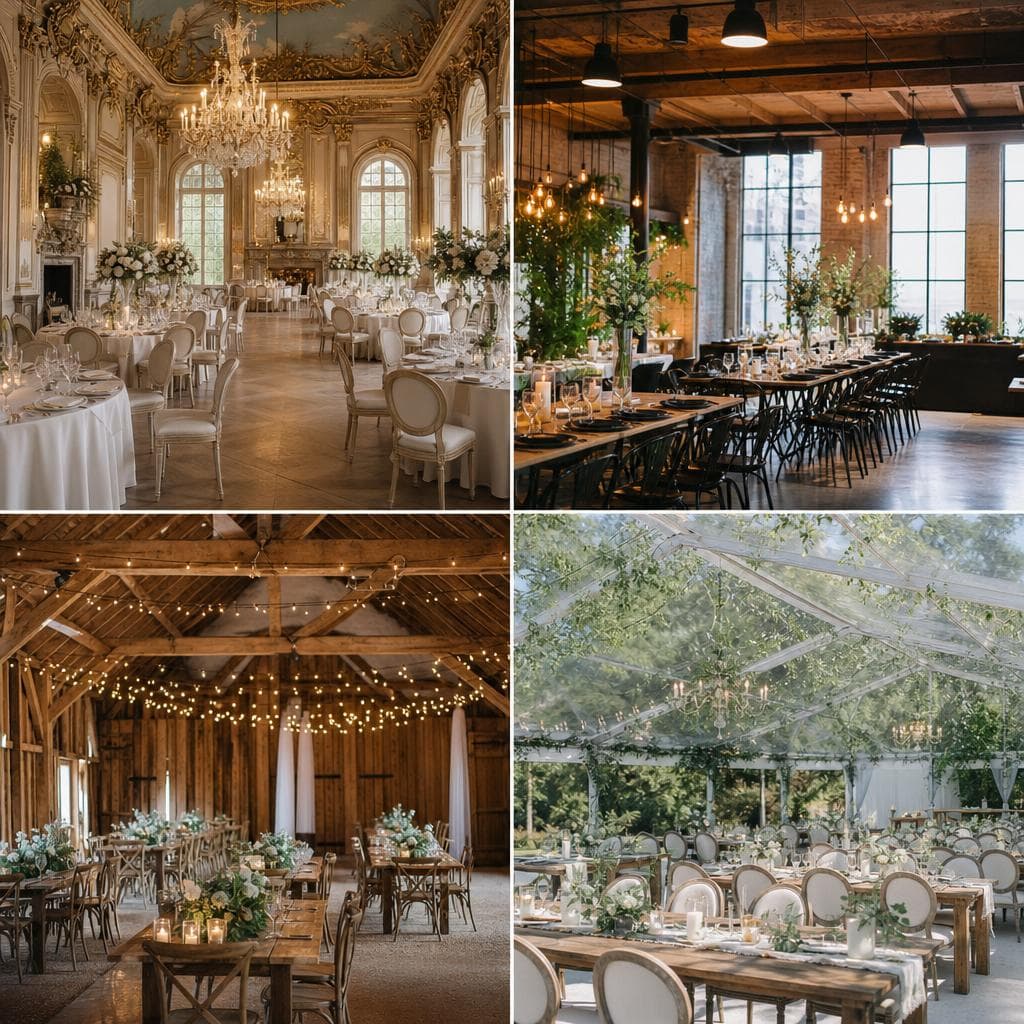
Castle and estate
What this type of venue provides
A castle or estate often offers an already aesthetic setting that requires less decoration to produce a striking result. Many also offer on-site accommodation for some of the guests.
Points of caution
This type of venue often implies a higher budget, indoor capacity that can sometimes be limited, and heritage restrictions on the installation of certain equipment. Also check access for vendors and guest parking.
Community hall or multipurpose hall
What this type of venue provides
A community hall generally remains the most economical choice, with great flexibility on timing and often fewer restrictions on the vendors allowed to work there.
Points of caution
The space is often more architecturally neutral, which requires more decoration to create a personalized atmosphere. Also check any end times imposed by the town hall or the venue's regulations.
Outdoor reception
What this type of venue provides
A garden, a winery estate or an outdoor space offers a natural setting that appeals to many couples, often with particularly flattering light for photos at the end of the day.
Points of caution
The weather remains the main risk: always plan for a covered backup option. Our article on the plan B in case of rain details how to anticipate this point without waiting for the last week.
Urban loft or atypical venue
What this type of venue provides
A loft, a former workshop or a converted industrial space attracts couples looking for a style different from classic reception venues, often with great freedom to customize the decoration.
Points of caution
This type of venue rarely offers an integrated kitchen or included furniture: check precisely what is provided and what must be rented separately, as this can significantly affect the final budget.
Hotel or all-inclusive venue
What this type of venue provides
A hotel with an integrated reception space often simplifies coordination, with a caterer and accommodation managed by the same establishment, reducing the number of contacts to handle.
Points of caution
This simplicity sometimes comes with reduced freedom regarding the choice of external vendors, notably the caterer, who is often imposed by the establishment.
How to choose according to your priorities
Number of guests first and foremost
A beautiful venue but too small for your guest list will not work, whatever its aesthetics. Set an estimate of the number of guests before you start visits, to quickly eliminate unsuitable venues.
Visit at the scheduled time of the reception
The light and atmosphere of a venue change enormously depending on the time of day. If possible, visit at the time when your reception will take place rather than in the middle of the day if your wedding is in the evening.
To explore options available near you, the reception venue directory allows filtering by city and capacity before scheduling your first visits.
Questions to ask during each visit
What is included in the price
Furniture, tableware, welcoming staff, post-event cleaning: ask for a precise list of what is actually included in the rental price, rather than discovering it on the final bill.
Time and noise restrictions
Some venues impose a strict end time or a noise limitation after a certain hour, notably in residential areas. Check this point before committing if a prolonged dance party is part of your expectations.
Compare several venues before deciding
Visiting at least two or three venues of different types, even if one of them already seems to be the favorite, helps better evaluate your true priorities. A venue that seemed ideal in photos can prove less suitable once compared to an alternative visited in person.
Access and guest comfort
Distance and transportation
An isolated venue, charming as it may be, can complicate attendance for guests without a car. Check available transport or carpooling options, or plan a shuttle if access remains difficult.
Nearby accommodation
If some of your guests are coming from afar, the presence of hotels or accommodation options close to the venue greatly simplifies their planning, especially for a wedding that extends over two days.
Frequently asked questions
Which type of venue is best suited for a small wedding?
A loft, a privatized restaurant or a small hall often offer more conviviality for a reduced number of guests than a large estate designed for bigger receptions.
Is a plan B absolutely necessary for an outdoor reception?
Yes, always. Even in summer, a covered backup space is essential so you don't depend entirely on the day's weather.
Does an all-inclusive venue cost more than organizing everything yourself?
Not necessarily. An all-inclusive venue can reduce certain coordination costs, but it sometimes limits the choice of vendors, which can also represent an opportunity cost depending on your priorities.
How long before the wedding should the venue be booked?
In highly sought-after areas, six to twelve months in advance are often necessary, particularly for spring and summer dates.
Can the ceremony and reception be held in two different venues?
Yes, it's very common. In that case, plan a realistic travel time between the two venues and clearly inform your guests so they can organize themselves.
Is a venue that offers multiple spaces an advantage?
Often yes: being able to separate ceremony, cocktail and dinner into distinct spaces, even within the same venue, paces the day and prevents guests from waiting in the same space during configuration changes.
Should you visit a venue multiple times before signing?
At least a second visit, ideally with the main vendor such as the caterer, helps validate logistics concretely once the project is more advanced.
DreamWeds
Find your dream vendors
Photographers, caterers, venues and much more — compare up to 4 vendors side by side.
Discover vendorsArticles on the same topic

Wedding insurance: is it really useful?
Cancellation, bad weather, civil liability: what wedding insurance covers and when it makes sense.

Organizing a Multicultural Wedding: Practical Tips
Blending two traditions, addressing guests from different cultures, and creating a ceremony that is meaningful for both families.
Child-free wedding: how to announce it to guests tactfully?
Set a clear rule and communicate it early enough to avoid misunderstandings with invited families.