
Cameroonian wedding: traditions, dowry, outfits and timeline
A Cameroonian wedding can include a customary ceremony, a civil marriage, a religious celebration and a large family reception.
Cameroon has significant cultural diversity. The traditions of a Bamiléké, Béti, Bulu, Sawa, Bamoun, Peule family or from another community can be very different.
There is therefore no single sequence for a Cameroonian wedding. The engaged couple should prepare the ceremonies with their families and keep only the traditions that correspond to their origins. For an overview of the continent's traditions, consult our guide to the African wedding; also discover our articles dedicated to Senegalese weddings, Ivorian and Congolese.
Presentation to the families
Before the official proposal, the future husband or wife may be introduced to the parents and relatives.
This meeting allows the families to get to know each other and to discuss the wedding project.
It may be accompanied by:
- drinks;
- symbolic gifts;
- fabrics;
- foodstuffs;
- a meal;
- the presence of elders.
The families can then explain the steps required before the customary ceremony.
The marriage proposal
The official proposal can be conducted by representatives of the future groom's family.
The spokespeople present the plan for the union and may give an initial gift to the future bride's family.
Depending on traditions, the exchanges can be solemn, symbolic or accompanied by humour.
The consent of the couple must remain at the center of the process and each step must be explained to the engaged couple.
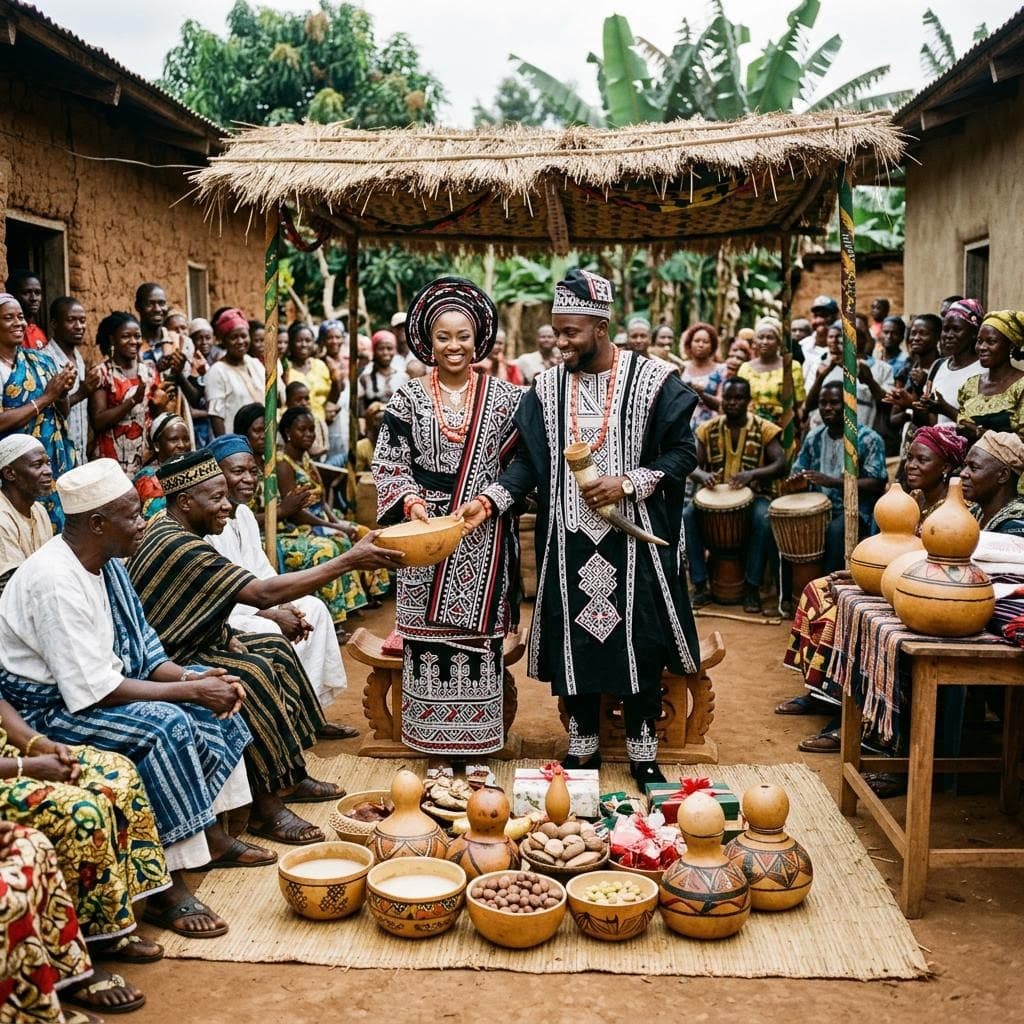
The Cameroonian dowry ceremony
The dowry ceremony marks, in many families, the official coming together of the two family groups.
Its content and course vary according to regions and communities. It can include:
- The welcome of the future groom's family.
- The presentation of the representatives.
- The official request.
- The handing over of gifts.
- Exchanges between the families.
- The presentation of the couple.
- Advice and blessings.
- The meal and dances.
A relative or a master of ceremonies can explain the different stages to the guests. To prepare this step in detail, consult our guide to the African customary wedding.
What can the dowry contain?
The list of gifts can include:
- fabrics;
- clothing;
- drinks;
- foodstuffs;
- symbolic objects;
- gifts intended for the parents;
- a contribution agreed between the families.
The exact composition depends on the family custom. A list used in one community should not automatically be reproduced for another.
It is preferable to ask the elders to explain the meaning of each item.
Preparing and presenting the gifts
Gifts can be arranged in baskets, trays, boxes or decorated suitcases.
One person should be in charge of:
- checking the list;
- purchasing the items;
- organizing transport;
- preparing the presentation;
- identifying the recipients;
- keeping any receipts.
This organization prevents last-minute omissions and arguments.
The role of the spokespeople and the elders
The spokespeople represent both families and lead the exchanges during the ceremony.
The elders can offer advice, pronounce a blessing and explain the meaning of traditions.
Before the wedding, it is necessary to determine:
- who will speak;
- in what order;
- how long the interventions will last;
- who presents the gifts;
- who thanks the guests;
- who coordinates the meal and the celebration.
A detailed programme helps keep the ceremony smooth and pleasant.
The bride's outfits
The bride may wear an outfit in pagne, bazin, an embroidered dress, a regional garment or a white dress.
Depending on her origins, she may also choose clothing inspired by the toghu or another traditional textile.
The different ceremonies can be associated with several outfits:
- an outfit for the dowry;
- a dress for the town hall;
- an outfit for the religious ceremony;
- an outfit for the reception;
- a more comfortable garment for dancing.
It is recommended to limit the number of changes so that the bride can enjoy her guests.
The groom's outfit
The groom may wear a suit, a boubou, a pagne ensemble or a traditional outfit representing his region.
Colours can be coordinated with those of the bride and the families.
A full fitting should be carried out with shoes and accessories.
If the outfit is heavy or heavily embroidered, the groom may plan a second garment for the evening dance.
Coordinated outfits for the families
Relatives may wear the same fabric or follow a colour palette.
The couple should communicate early enough:
- the chosen fabric;
- the colours;
- the available quantity;
- the possible price;
- the deadline for tailoring;
- the recommended accessories.
Each guest must be able to select a cut suited to their style and comfort.
The families of the two spouses may wear different but complementary colours.
The civil and religious ceremonies
The couple may organise a civil ceremony and a religious celebration according to their convictions.
The different stages can be spread over several days or grouped during the same weekend.
When several ceremonies follow one another, it is necessary to plan:
- travel times;
- outfit changes;
- photos;
- meals;
- the rest of the married couple;
- welcoming guests coming from afar.
A coordinator can serve as a liaison between families and suppliers.
The meal at a Cameroonian wedding
Cameroonian cuisine offers many possibilities for composing the menu.
Depending on the origins and preferences of the families, the caterer can offer:
- ndolé;
- eru;
- koki;
- poulet DG;
- grilled fish;
- barbecues;
- plantains;
- rice;
- cassava;
- various regional sauces.
The couple can prepare a buffet bringing together several specialties or select a shorter menu served at the table.
A tasting is essential to check the flavours, portions and presentation.
Drinks
The buffet can include:
- bissap;
- ginger juice;
- fruit juices;
- water;
- soft drinks;
- non-alcoholic cocktails;
- coffee or tea.
Drinks should remain accessible throughout the reception.
For a large ceremony, several service areas can reduce queues.
Cameroonian music
The music programme can represent the regions of both families while incorporating modern tracks.
It can include:
- makossa;
- bikutsi;
- traditional music;
- afrobeats;
- religious songs depending on the ceremony;
- French and international songs.
The DJ should know the music requested by the families and be able to make several generations dance.
Tracks intended for entrances, outfit changes, the first dance and the cake should be chosen before the wedding.
Entertainment and dances
The couple can plan:
- percussionists;
- dancers;
- a traditional group;
- a singer;
- a choreography by relatives;
- a photobooth;
- a video recounting the couple's story.
Each entertainment item should have a precise schedule.
It is preferable to organise a few well-prepared interventions rather than overloading the programme.
Decoration
The decoration can reprise the fabrics and colours worn by the families.
It can include:
- elements in pagne;
- flowers;
- baskets;
- artisanal objects;
- natural materials;
- golden accessories;
- a personalised photo area.
The entrance, the tables and the space reserved for the couple should form a harmonious whole.
The circulation to the buffet and the dance floor should remain clear.
Organising a Cameroonian wedding in France
A wedding organised in France can preserve the main traditions while adapting to the venue and the availability of the families.
The couple can, in particular:
- organise the dowry on a different date;
- bring together several ceremonies over a weekend;
- involve relatives living in Cameroon by video;
- explain the traditions to guests;
- offer a menu representing both families;
- provide a bilingual programme if necessary.
The hours of the venue should be communicated to the spokespeople to limit overruns.
Preparing the schedule
The schedule can include:
- Welcoming the guests.
- Presentation of the families.
- The customary ceremony.
- The handing over of the dowry.
- Speeches and blessings.
- The meal.
- Outfit changes.
- Entertainment.
- The first dance.
- The arrival of the cake.
This programme should be given to the master of ceremonies, the caterer, the DJ, the photographer and the videographer.
Finding vendors for a Cameroonian wedding
Professionals who know Cameroonian traditions, cuisine and music will be better able to meet the couple's expectations.
On DreamWeds, you can search for venues, caterers, photographers, videographers, seamstresses, decorators, DJ and other vendors to organise your Cameroonian wedding.
Frequently asked questions about the Cameroonian wedding
Do all Cameroonian families follow the same traditions?
No. Practices vary according to regions, communities, religions and families.
Is the dowry the same everywhere?
No. Its composition and course depend on the family tradition concerned.
Which outfit to choose?
The spouses can wear pagne, bazin, a regional outfit, a white dress or a suit.
What menu to offer?
Ndolé, poulet DG, grilled fish, plantain and other regional specialties can be offered according to the couple's preferences.
Can all ceremonies be grouped together?
Yes, but a precise schedule is necessary to manage travel, speeches and outfit changes.
DreamWeds
Find your dream vendors
Photographers, caterers, venues and much more — compare up to 4 vendors side by side.
Find vendors for my weddingArticles on the same topic
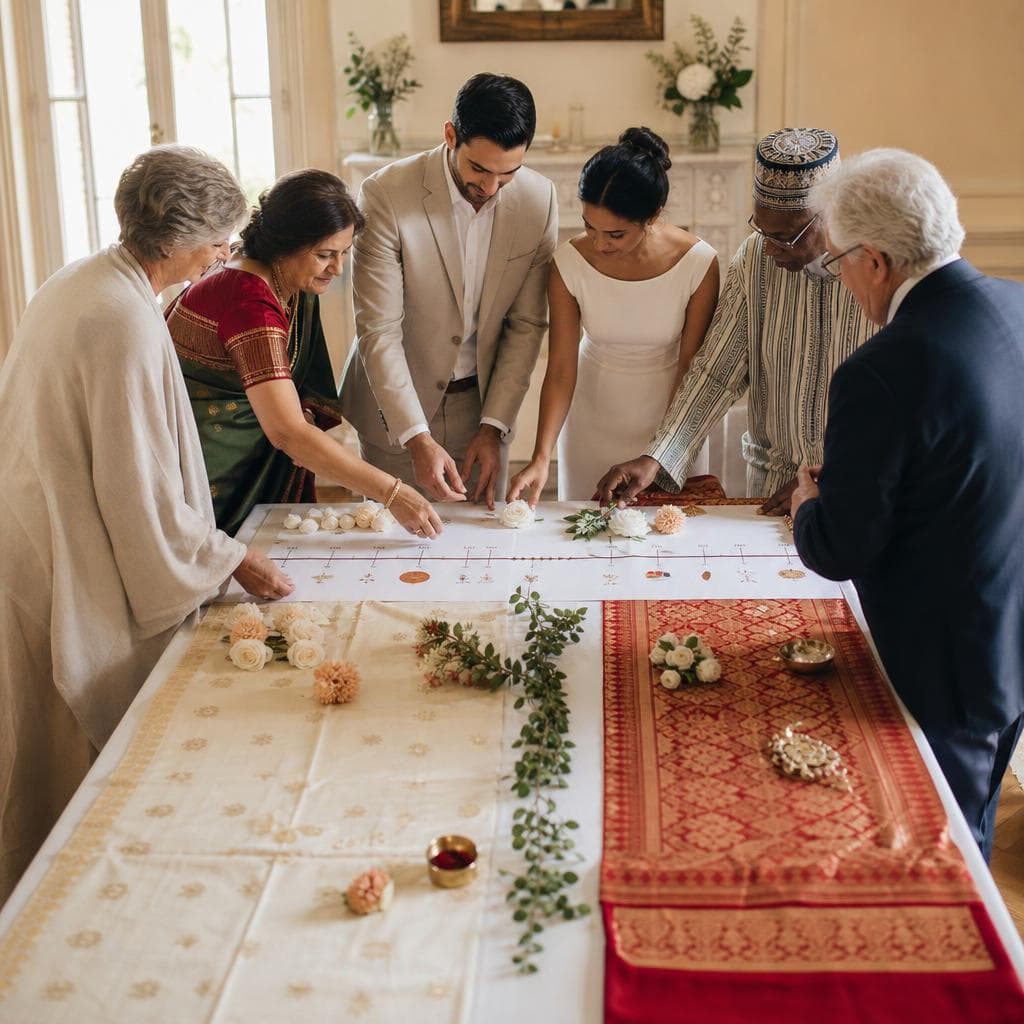
Organizing a Multicultural Wedding: Practical Tips
Blending two traditions, addressing guests from different cultures, and creating a ceremony that is meaningful for both families.
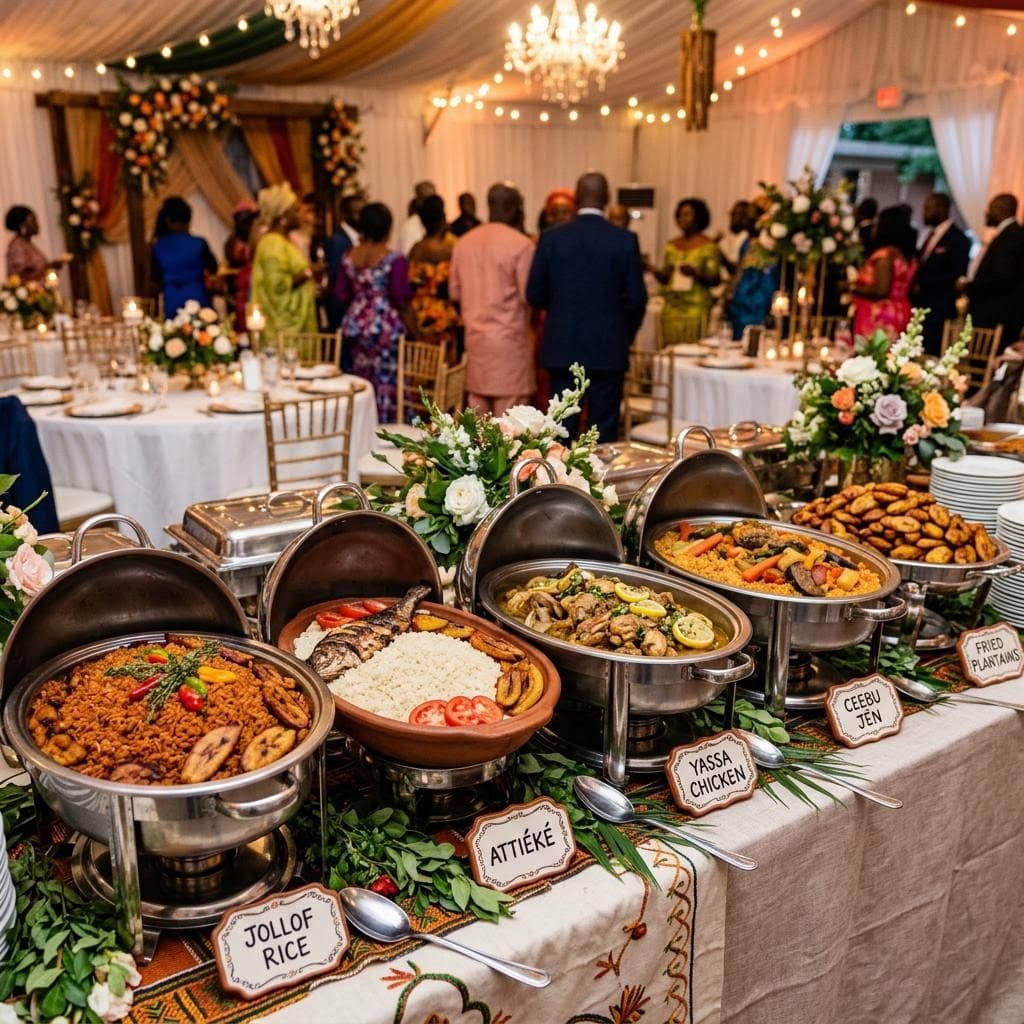
African wedding menu: dish ideas and tips for choosing your caterer
Ceebu jën, yassa, attiéké, ndolé or jollof: discover our African menu ideas and our tips for choosing your wedding caterer.
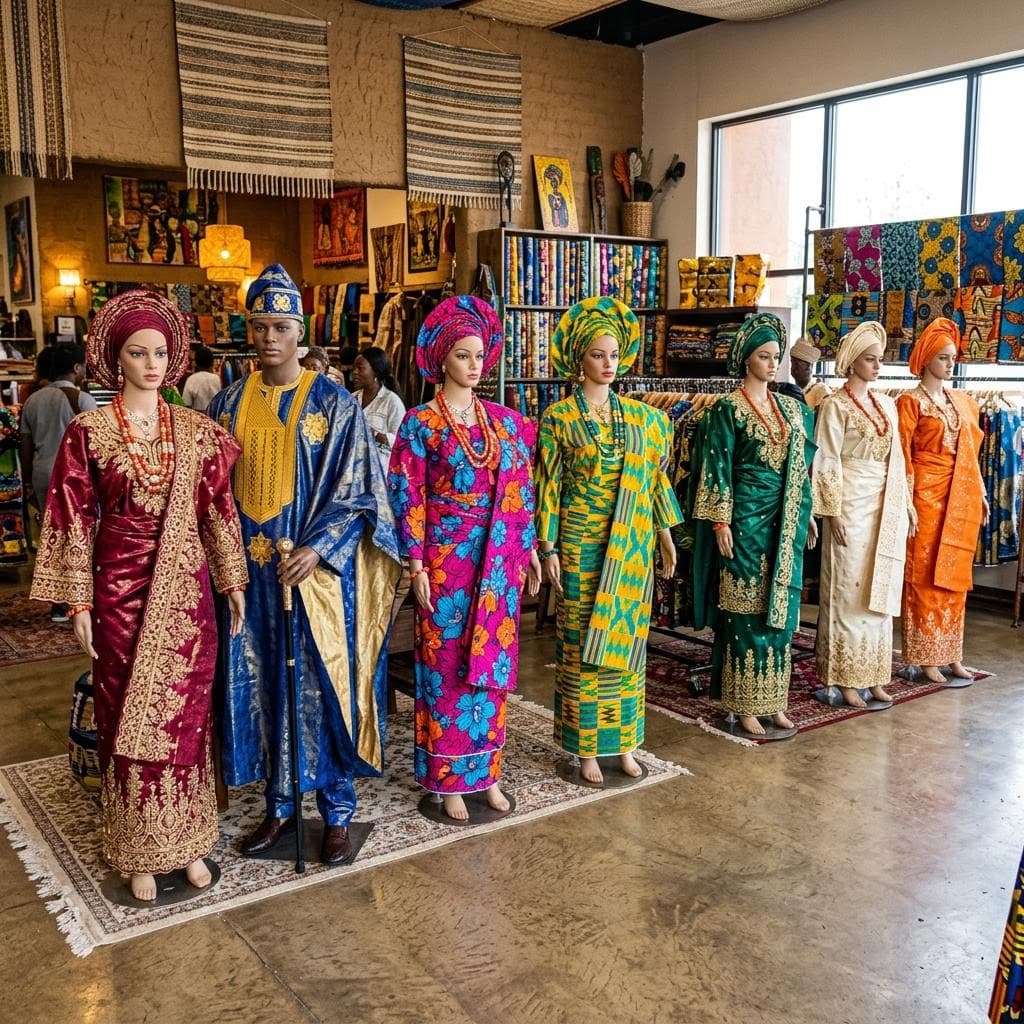
African wedding attire: pagne, bazin, kente and tips for choosing
Pagne, bazin, kente or aso oke: discover how to choose the bride and groom's outfits and coordinate families for an African wedding.