
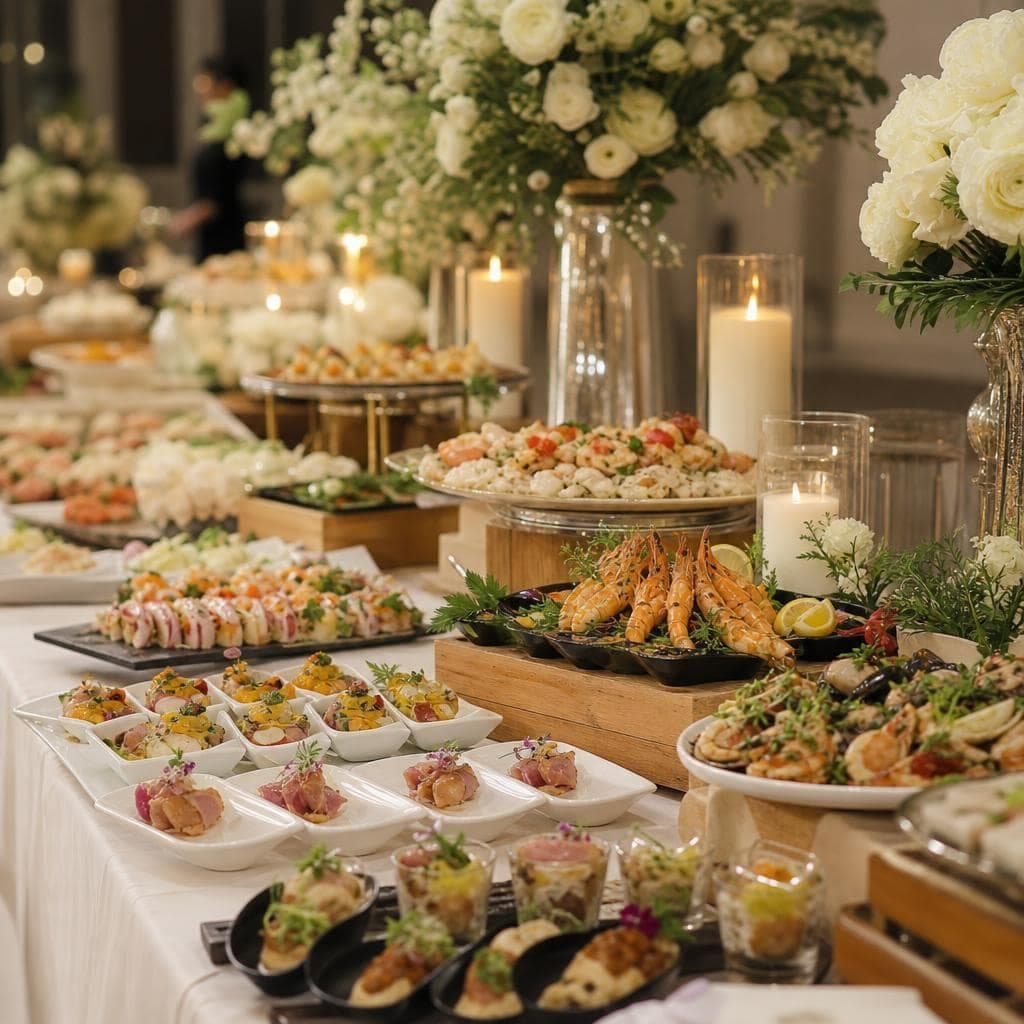
Mauritian and La Réunion wedding: traditions and menu
L'île Maurice et La Réunion partagent une même richesse : des familles d'origine indienne, africaine, malgache, chinoise et européenne, qui ont chacune apporté leurs rites. Un mariage mauricien ou réunionnais peut donc être hindou, tamoul, musulman, catholique, ou mêler plusieurs traditions. Ce qui les réunit presque toujours : une famille nombreuse, de la musique et une cuisine épicée et généreuse. Voici les repères pour l'organiser en métropole.
Plural traditions
Hindu weddings
In Mauritius, many families of Indian origin celebrate weddings according to Hindu rites. The days beforehand are marked by the geet gawai, a ceremony in which the women of the family sing in Bhojpuri, accompanied by the dholak, while performing blessing rituals. This tradition has been inscribed on UNESCO's Intangible Cultural Heritage list since 2016. Next come the haldi, the application of turmeric to the future spouses, and then the ceremony under the mandap, with the giving away of the bride by her parents and the circles around the sacred fire. For details of these rites, consult our guide to Hindu marriage.
Tamil weddings
In La Réunion as in Mauritius, families of Tamil origin, called malbars in La Réunion, celebrate their weddings at the temple or in a hall, with the tying of the thali around the bride's neck as the central moment. The rites resemble those of Tamil weddings in India and Sri Lanka, with island-specific variations. Our guide to Tamil marriage presents the main stages.
Creole and Catholic weddings
Many couples marry in church. In France, the civil ceremony at the town hall precedes any religious ceremony, whatever the tradition: plan it for the same morning or a few days before. The celebration that follows gives a large place to séga, the emblematic dance of both islands, and, in La Réunion, to maloya, which is also listed as intangible UNESCO heritage. A band or DJ familiar with this repertoire will get every generation dancing.
Weddings that mix traditions
Unions between families of different traditions are common: a Hindu ceremony and a church ceremony, a Tamil family and a Creole family. Our article on multicultural weddings offers ideas for building a program that respects everyone.
The menu: the heart of the celebration
Carri and rougail
In La Réunion, the carri reigns: carri chicken, carri fish, carri zourite (octopus), carri goat, served with rice, grains (lentils, red beans, cowpeas) and rougail, a condiment of tomatoes, chili and onions. Rougail sausage is a classic at large tables, and massalé, a spice blend of Tamil origin, flavors the goat for special occasions.
Mauritian specialties
In Mauritius, briani is often the star dish at weddings, alongside chicken or fish curries, rougaille, pickled vegetable achards and chutneys. Starters often include gateaux piments (chili fritters), samosas, bhajias and dholl puri.
The seven-curry meal
At many Mauritian Hindu weddings, a vegetarian meal of seven curries is served on a banana leaf: giraumon (winter squash), beans, potatoes, cabbage, lentils, chouchou (chayote), accompanied by rice, puri and chutney. If you want this meal in mainland France, ask the caterer if they can provide banana leaves and how many guests they can serve this way.
Desserts and drinks
Sweet potato cake, cassava cake, Napolitaines, coconut sweets and, in La Réunion, rhum arrangé for guests who drink it. Also plan tropical fruit juices for everyone, including children.
Organizing in mainland France
Finding the right caterer
The caterer must master the spices and recipes of the family's island: a Réunion carri is not a Mauritian curry, and a seven-curry meal follows its own rules. Compare Mauritian and La Réunion caterers, request a tasting and check their capacity: these weddings often bring together 200 to 400 guests.
The venue
For a Hindu or Tamil ceremony, the venue must allow the sacred fire, incense and the installation of a mandap. For the party, a large dance floor and a late end to the evening are essential. Compare reception halls and ask these questions from the first visit.
Outfits
Depending on the tradition, the bride wears a red sari, a white dress, or both during the day. For a Hindu or Tamil wedding, also plan the jewelry, bangles and the groom's outfit, often a kurta or a sherwani. Orders placed in Mauritius or India require several months.
Guests coming from the islands
Part of the family often comes from Mauritius or La Réunion. Send information very early, help find nearby accommodation and arrange shuttles between the hotel and the venue. A bilingual wedding website, in French and in English or Creole, makes organization easier for everyone.
The planning timeline
- 12 to 18 months before: date, venue, caterer, and if applicable temple or parish.
- 9 to 12 months before: photographer, séga band or DJ, decorator for the mandap.
- 6 months before: outfits, invitations, travel information for family coming from the islands.
- 1 month before: run-through of each ceremony, seating plan, welcoming guests at the airport.
Frequently asked questions
What is the geet gawai?
A ceremony of songs and rituals led by the women of the family before a Mauritian Hindu wedding, inscribed on UNESCO's Intangible Cultural Heritage list.
What menu should be served for a La Réunion wedding?
Most often several caris (chicken, fish, goat), rice, grains and rougail, with appetizers such as samosas and chili sweets.
What is a seven-curry meal?
A vegetarian meal of seven curries served on a banana leaf, traditional at many Hindu weddings in Mauritius.
Can a Hindu ceremony and a church ceremony be combined?
Yes, many couples do this, either on the same day or over two days. Plan two outfits and a schedule that leaves time between the two.
DreamWeds
Find your dream vendors
Photographers, caterers, venues and much more — compare up to 4 vendors side by side.
Discover vendorsArticles on the same topic

Portuguese wedding in France: traditions, meal and party
Padrinhos, church ceremony, long meal, bacalhau and leitão, selling the tie, rancho folclórico: the traditions of a Portuguese wedding and how to keep them alive in France.
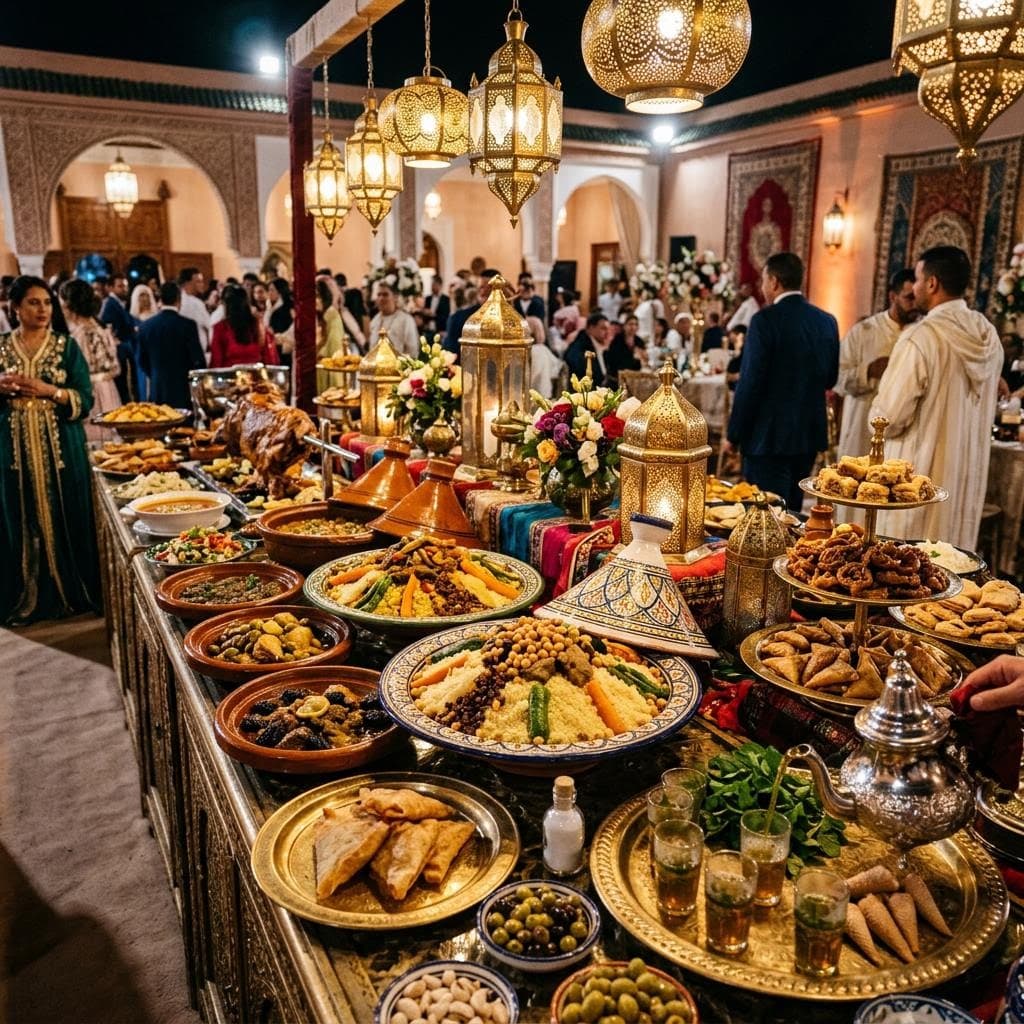
Halal catering for a wedding: what to check
Origin of the meat, certification, contamination-free cooking, hidden ingredients, contract: the points to check for a truly halal wedding meal.

Pakistani wedding in France: mehndi, baraat, nikah and walima
Dholki, mayun, mehndi, baraat, nikah, rukhsati and walima: the timeline of a Pakistani wedding over several days and how to organize it in France.