
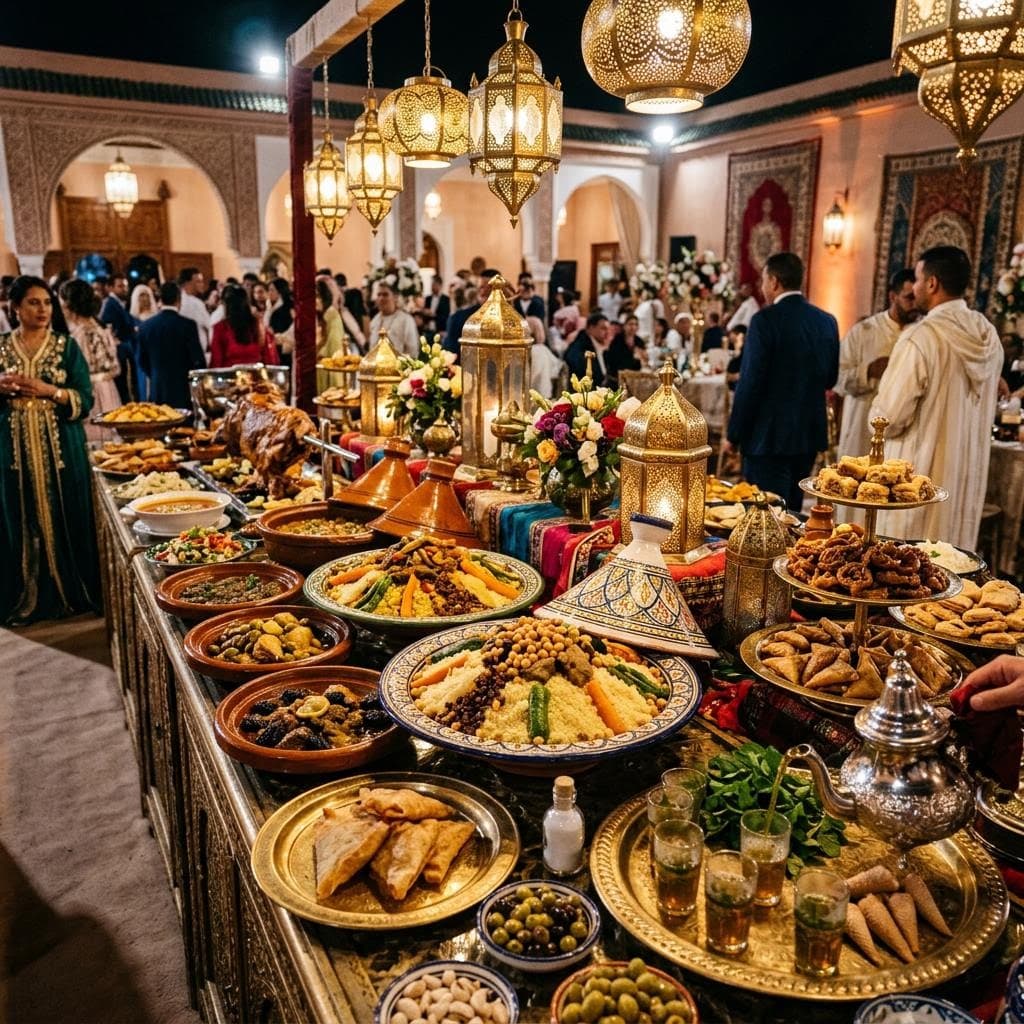
For many Muslim families, a halal wedding meal is non-negotiable. The word 'halal' on a quote, however, is not enough to guarantee everything: the origin of the meat, the way it is cooked, certain discreet ingredients and even the venue's rules matter. Here are the points to check before choosing your caterer, and what to write in the contract.
Meat: origin and certification
Where does the meat come from?
Ask the caterer for the names of their suppliers: butcher, wholesaler, slaughterhouse. A serious caterer will answer without difficulty and can show invoices or product labels. Beware of vague answers such as 'we buy halal, of course'.
Which certification?
There is no single official definition of halal in France: certifications are issued by private bodies, and their requirements are not identical, particularly regarding stunning animals before slaughter. If your family has a preference, state it clearly and ask which body certifies the products used.
All meats, not just the main course
Cold cuts in the starters, broths, sauce bases, gelatin in desserts: every animal-derived product must be halal, not just the lamb in the main course. Ask about each element of the menu, including cocktail bites.
The kitchen: avoiding cross-contamination
Equipment and preparation
A caterer who also cooks pork or uses alcohol must be able to explain how they separate preparations: utensils, work surfaces, fryers, refrigerated rooms. Some caterers work exclusively halal, which simplifies matters; others organize dedicated production days. Simply ask the question: the answer says a lot about the establishment's seriousness.
Hidden ingredients
Alcohol and pork-derived products sometimes sneak into places you wouldn't expect:
- wine or alcohol in sauces, marinades and flambés;
- pork gelatin in mousses, bavarois, certain candies and glazes;
- alcohol-based flavor extracts in pastries;
- animal rennet in some cheeses;
- bacon or meat stocks in dishes that seem vegetarian.
Ask for the list of ingredients for each dish, particularly desserts and the wedding cake, often made by another craftsman. Allergies are handled the same way: our article on the menu and dietary requirements offers a simple method to list everything.
The venue: a frequently forgotten point
The bar and alcohol
Some venues impose their own bar or a drinks package. If you want an alcohol-free reception, check that the venue contract allows it without penalty. Conversely, for a wedding where some guests drink alcohol, plan a separate bar, away from the buffet.
The venue's kitchen
If the venue has a kitchen used by other caterers, ask how it is cleaned between events. Your caterer may prefer to bring their own reheating equipment.
A mandated caterer
A venue that imposes its caterer must be able to guarantee a verifiable halal menu. If this is not the case, look for a venue that lets you choose the caterer. Our list of reception venues indicates the caterer policy when venues specify it.
Mixed weddings
When some guests do not eat halal, two solutions exist: an entirely halal menu for everyone, often the simplest and most convivial, or two clearly distinguished menus. In the second case, label each dish on the buffet, brief the staff and physically separate the serving lines. Also plan vegetarian dishes, appreciated by everyone and easy to guarantee. For other questions about a union between two cultures, see our advice for a multicultural wedding.
The contract: put it in writing
An oral commitment protects no one. Include in the contract:
- that the entire menu is halal, including meats, broths, gelatins and desserts;
- the name of the certification body if you have chosen one;
- the absence of alcohol in the dishes and, where applicable, in the service;
- what happens in case of non-compliance: compensation, partial refund or other remedy.
Keep a copy of exchanges and product specification sheets. Our article on the clauses to check in a supplier contract completes this list.
Questions to ask during the tasting
The tasting is the right time to check everything at once:
- Who are your meat suppliers, and under which certification?
- Do you also cook pork or with alcohol? If so, how do you separate preparations?
- Are desserts and the wedding cake made in-house? If not, who makes them?
- Are broths, bases and sauces homemade or bought ready-made?
- Can you provide the specification sheets for the products used?
Note the answers and compare them from one caterer to another: clarity of answers matters as much as the taste of the dishes. A caterer who hesitates or changes their story from one meeting to another deserves a second check.
Choosing your caterer
Start with kitchens that naturally work halal: oriental caterers (Moroccan, Algerian, Tunisian), Turkish caterers, Pakistani caterers or African. Request a tasting, ask the questions in this article and compare the answers as much as the prices. For traditions surrounding the meal, consult our guide to Maghrebi weddings.
Frequently asked questions
Can a caterer write 'halal' without certification?
There is no single official definition of halal in France. That is why you should ask about the origin of the meat and, if you wish, a specific certification.
Must the caterer cook only halal?
It is not mandatory, but they must be able to explain how they avoid any contamination. A fully halal caterer simplifies verification.
How can I check desserts?
Ask the pastry chef for the list of ingredients, particularly the gelatin, flavorings and glazes, and have it included in the contract.
Can alcohol be served to only some guests?
Yes, if your family accepts it: plan a separate bar, run by the venue or by a provider distinct from the caterer.
DreamWeds
Find your dream vendors
Photographers, caterers, venues and much more — compare up to 4 vendors side by side.
Discover vendorsArticles on the same topic
Mauritian and La Réunion wedding: traditions and menu
Geet gawai, Tamil or Creole weddings, séga and maloya, carri, rougail and meals on banana leaf: the traditions of Mauritian and La Réunion weddings and how to organize them in mainland France.

Portuguese wedding in France: traditions, meal and party
Padrinhos, church ceremony, long meal, bacalhau and leitão, selling the tie, rancho folclórico: the traditions of a Portuguese wedding and how to keep them alive in France.
African caterer for a 300-guest wedding: menus, quantities and logistics
Thiéboudienne, yassa, ndolé, attiéké, jollof: how to choose an African caterer able to serve 300 guests, plan quantities and avoid unpleasant surprises.