
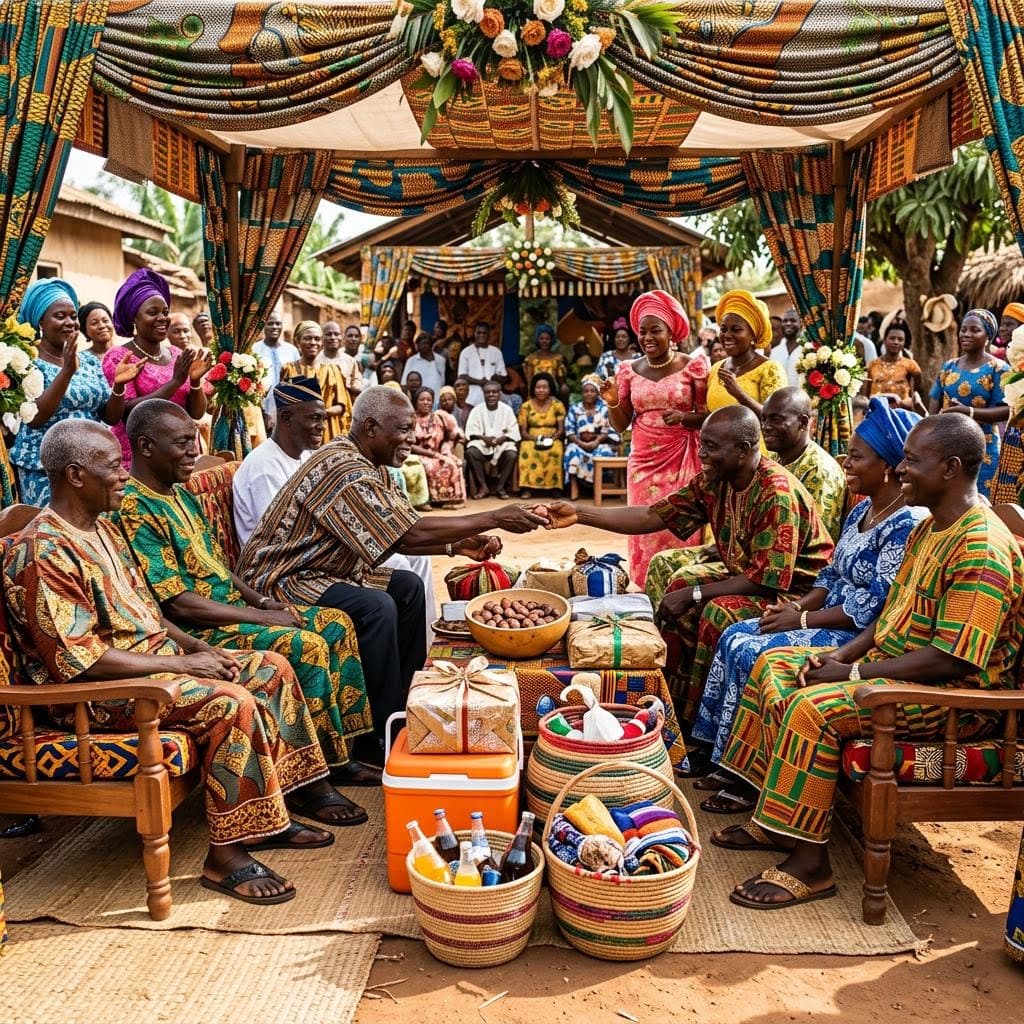
African customary wedding: steps, dowry and ceremony organization
The African customary wedding allows two families to officially celebrate the union of a couple by following traditions passed down between generations.
It can include a meeting of the families, speeches, the giving of gifts, symbolic gestures, traditional outfits and a large meal. It is often one of the important steps of an African wedding.
However, there is no single procedure common to all of Africa. Customs vary according to the country, region, community, religion and family habits. The organization must therefore always be prepared with relatives who know the traditions concerned.
What is an African customary wedding?
The customary wedding is a ceremony organized according to the usages of a family or a community. It marks the union of the future spouses, but also the coming together of their families.
Depending on the cultures, it can be regarded as one of the main stages of the wedding or as a celebration preceding the civil or religious ceremony.
The ceremony can be intimate or gather several hundred guests. It can take place at the family home, in a reception hall or in a specially arranged location.
Start by consulting the families
Before setting the schedule, the future spouses must discuss with their parents, their elders or the people responsible for passing on the customs.
They can notably ask them:
- which steps must be respected;
- who should represent each family;
- which gifts should be prepared;
- which people will speak;
- what outfits are expected;
- which songs or symbolic gestures are planned;
- how many guests will attend the ceremony.
These discussions help avoid misunderstandings and adapt the traditions to the couple's choices.
The first meeting of the families
In some families, a first meeting is organized before the main ceremony. It allows the future husband or wife to be officially introduced and to discuss the union.
This meeting can be very simple and involve only the parents. It can also take the form of a reception with food, drinks and gifts.
Families can use this moment to choose the date of the customary ceremony and to divide the various responsibilities.
The official request
According to customs, the future groom's family may make an official request to the future bride's family.
This approach can be led by a parent, an uncle, an aunt, an elder or a person designated as spokesperson.
Traditional formulas, speeches or symbolic exchanges can accompany the request. In some families, humor and staged acts also play an important role.
The procedure must be explained to the future spouses so that they can understand each step and participate freely.
Who represents the two families?
The family representatives often play a central role. They welcome the guests, speak, introduce relatives and conduct the different stages of the ceremony.
Before the wedding, it is advisable to define:
- the spokesperson for each family;
- the person responsible for opening the ceremony;
- the elders who will deliver a blessing;
- the relatives in charge of presenting the gifts;
- the person who will coordinate the schedule.
These participants should receive the schedule early enough to avoid overly long improvisations.
The dowry in the customary wedding
In some cultures, the ceremony includes the presentation of gifts commonly referred to by the term 'dowry'. Its meaning and composition vary considerably according to the families.
It can include:
- clothing;
- fabrics;
- jewelry;
- drinks;
- foodstuffs;
- symbolic objects;
- a contribution defined between the families.
In several traditions, these gifts represent the commitment of the families and the creation of a new bond between them. They should not be presented as the purchase of a person.
The consent and choices of the couple must remain at the center of the ceremony.
How to prepare the gifts?
A list can be sent to the future groom's family before the ceremony. This list must be checked in good time to allow for the purchase and preparation of the different elements.
The gifts can be presented in:
- baskets;
- boxes;
- trays;
- suitcases;
- packaging matched to the wedding colors.
It is advisable to designate a person responsible for checking and transporting the gifts. A written list helps avoid omissions on the day of the ceremony.
Symbolic gestures
The customary wedding can include various gestures representing welcome, respect, commitment or the blessing of the families.
Depending on the traditions, the future spouses may receive advice, share a drink, exchange an object, kneel before elders or take part in another family staging.
These examples are not universal. The couple should keep only the gestures that truly belong to their traditions and correspond to their convictions.
Each step can be briefly explained to the guests so that they understand its meaning.
The outfits of the future spouses
The future spouses generally wear clothing representing their origins. They can choose coordinated outfits or use different fabrics and colors.
Depending on the countries and families, clothes can be made from pagne, bazin, kente, wax, kitenge or another traditional textile.
The couple may wear:
- a traditional dress;
- a pagne outfit;
- a boubou;
- an agbada;
- a modern outfit inspired by the family heritage;
- several outfits representing the two cultures.
When several changes are planned, they must be integrated into the schedule so as not to slow down the ceremony.
Coordinated outfits for the families
Families may choose a common fabric, color or accessory. This coordination helps identify the relatives of the future spouses and creates a beautiful visual harmony.
The fabric must be selected and distributed in good time to allow for tailoring.
The following information should be communicated clearly:
- the available quantity;
- the possible price;
- the deadline;
- the colors;
- instructions regarding cuts;
- the level of formality.
Some freedom should be left so that each person can choose a comfortable outfit.
Speeches and blessings
Speeches allow families to introduce the future spouses, pass on advice and celebrate their union.
To keep this part lively, it is preferable to limit the number of interventions and their duration.
The schedule may include:
- A welcome word.
- The presentation of the families.
- The official request.
- The presentation of the gifts.
- The advice of the elders.
- The blessing of the couple.
- The thanks from the future spouses.
The master of ceremonies must know the order of the speakers and have a microphone.
The meal of the customary ceremony
The meal can bring together the specialties of both families. It can be served at tables or presented as a buffet.
The menu may include:
- rice;
- saucy dishes;
- chicken or grills;
- fish;
- mafé;
- yassa;
- jollof rice;
- attiéké;
- alloco;
- ndolé;
- regional specialties.
The caterer must know the number of guests, the desired dishes and the scheduled time for the meal.
Vegetarian options should also be planned and information about food allergies collected.
Music and dances
Music accompanies the arrival of the families, the presentation of the spouses and the festive moments.
The couple can choose:
- a DJ;
- singers;
- percussionists;
- a traditional band;
- a family playlist;
- several animations representing the two cultures.
The important tracks must be given to the DJ before the ceremony. In particular, plan the music for the entrance, the presentation of gifts, outfit changes and the opening of the dance floor.
Combining the customary wedding with other ceremonies
The customary wedding can be organized before or after the civil or religious ceremony. Some couples choose a different date for each event, while others group several celebrations.
To choose the best format, consider:
- the budget;
- the availability of the families;
- the number of guests;
- travel arrangements;
- outfit changes;
- the total duration of the ceremonies.
When several events take place on the same day, a coordinator is strongly recommended.
Organizing a customary wedding in France
Families living in France can adapt the ceremony to the venue, available time and travel constraints.
It is possible to keep the most important elements while simplifying certain steps.
The couple can notably:
- organize the family meeting at home;
- rent a venue for the main ceremony;
- involve relatives living abroad by video;
- explain the traditions to the guests;
- bring together the kitchens and music of both families;
- provide a bilingual program if necessary.
Adapting does not take away the value of the ceremony when it is decided with the families.
What budget should be planned?
The budget depends on the number of guests, the venue and the importance given to gifts, outfits and the meal.
The main expenses can concern:
- the venue;
- the caterer;
- customary gifts;
- fabrics;
- outfits;
- decoration;
- music;
- a photographer;
- the videographer;
- transport.
It is advisable to create a budget separate from that of the civil ceremony or the main reception.
Finding vendors for a customary ceremony
Professionals who know the couple's traditions will be better able to anticipate speeches, gift presentations, outfit changes and the families' expectations.
On DreamWeds, you can search for venues, caterers, photographers, videographers, tailors, decorators, DJ and other vendors to prepare your African customary wedding.
Frequently asked questions about the African customary wedding
Are all customary ceremonies identical?
No. The steps vary according to the country, region, community and family habits.
Is the dowry mandatory?
This depends on the traditions concerned and the choices of the couple and their families.
Who organizes the ceremony?
Organization is generally shared between the couple, the parents and the representatives of both families.
Can two different customs be combined?
Yes. The program can represent the traditions of both families in a balanced way.
Should a master of ceremonies be hired?
It is not mandatory, but one can facilitate speeches, transitions and respect for the schedule.
DreamWeds
Find your dream vendors
Photographers, caterers, venues and much more — compare up to 4 vendors side by side.
Find vendors for my weddingArticles on the same topic
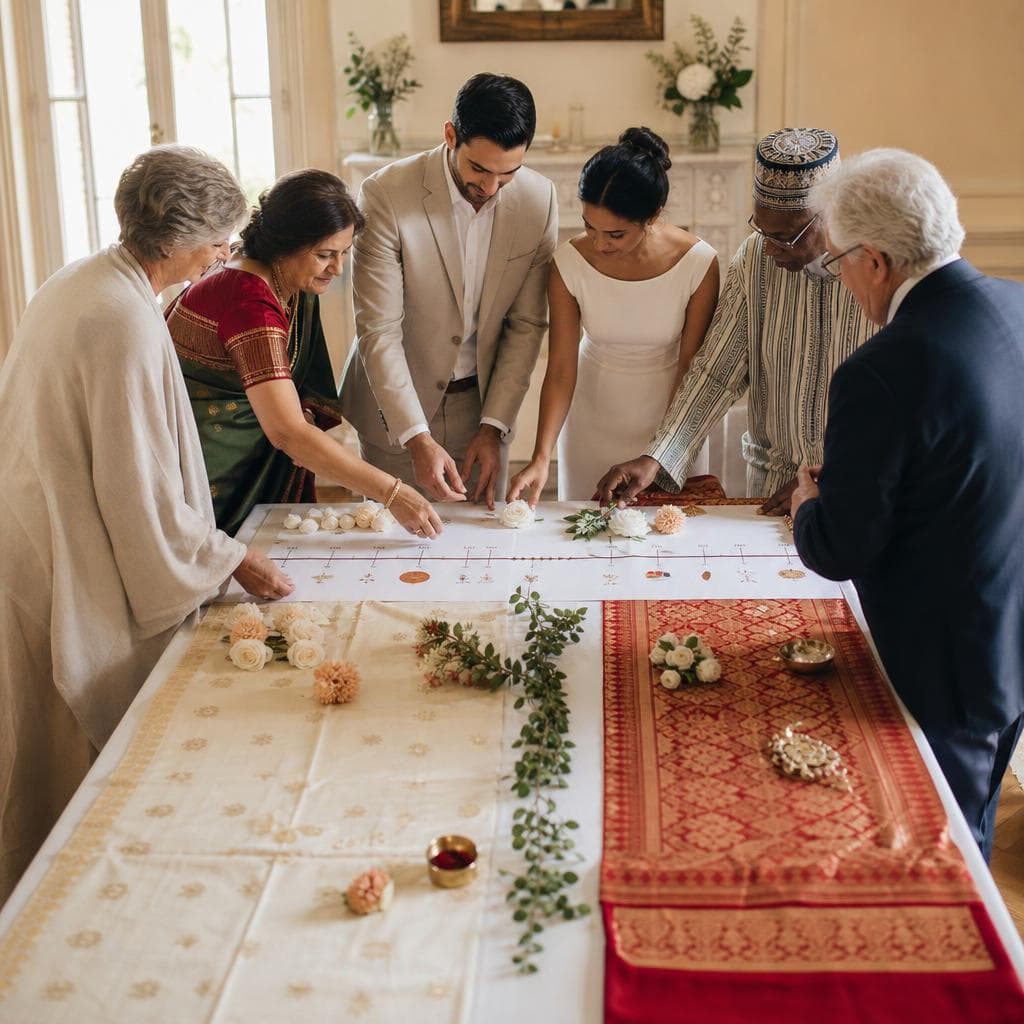
Organizing a Multicultural Wedding: Practical Tips
Blending two traditions, addressing guests from different cultures, and creating a ceremony that is meaningful for both families.
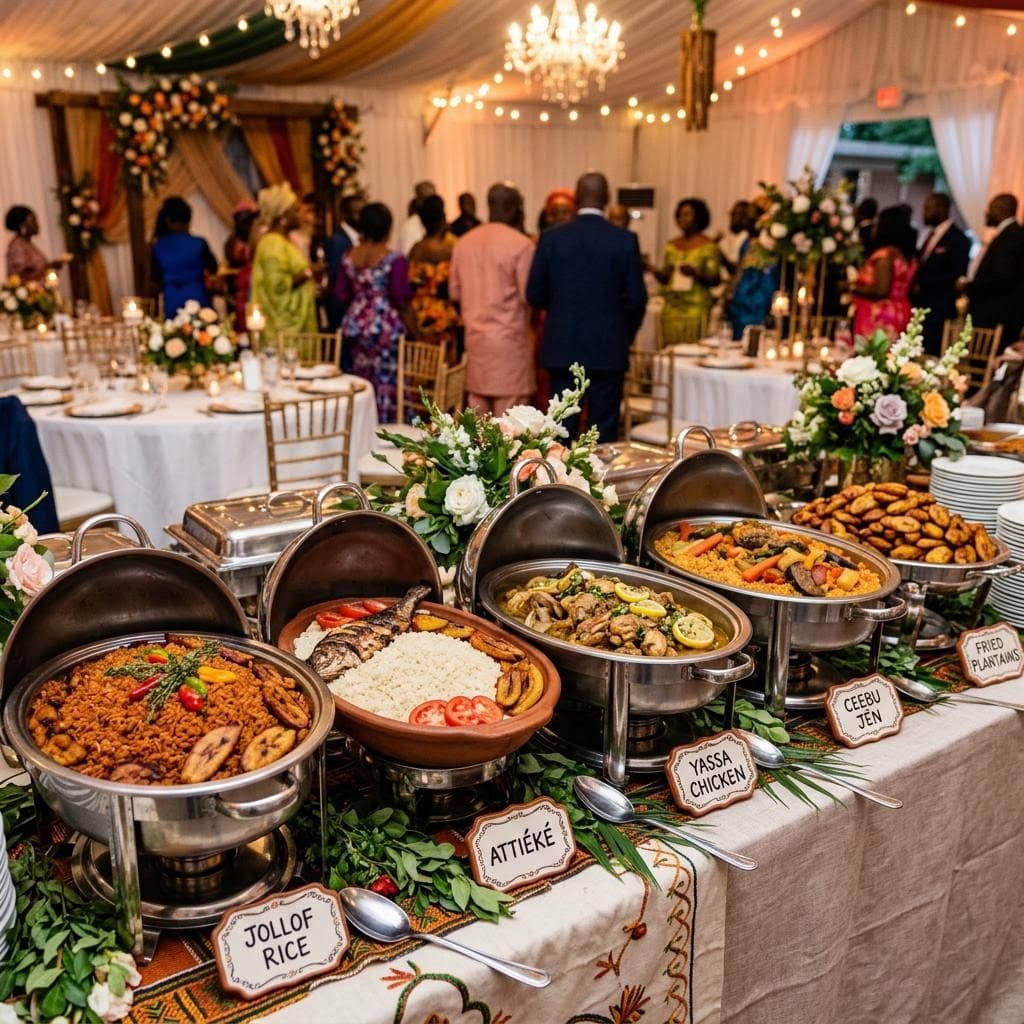
African wedding menu: dish ideas and tips for choosing your caterer
Ceebu jën, yassa, attiéké, ndolé or jollof: discover our African menu ideas and our tips for choosing your wedding caterer.
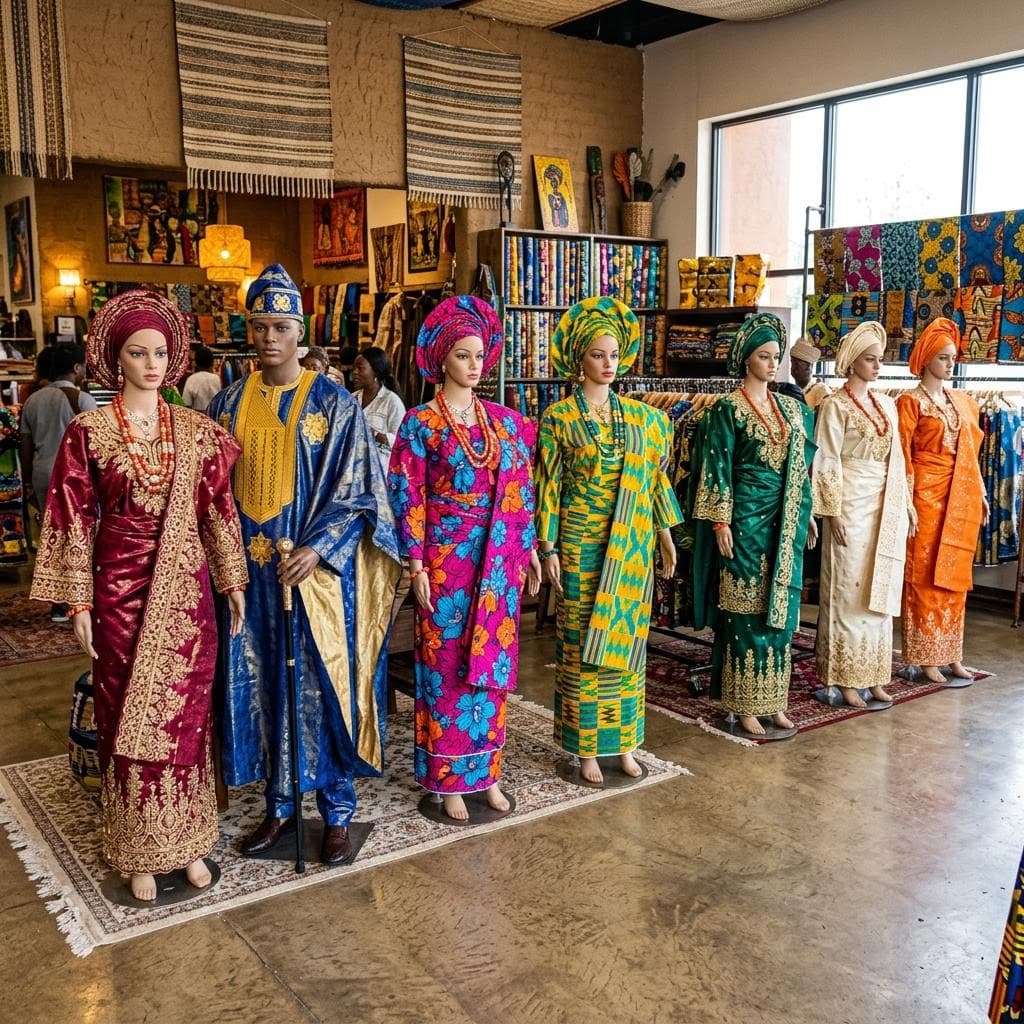
African wedding attire: pagne, bazin, kente and tips for choosing
Pagne, bazin, kente or aso oke: discover how to choose the bride and groom's outfits and coordinate families for an African wedding.