
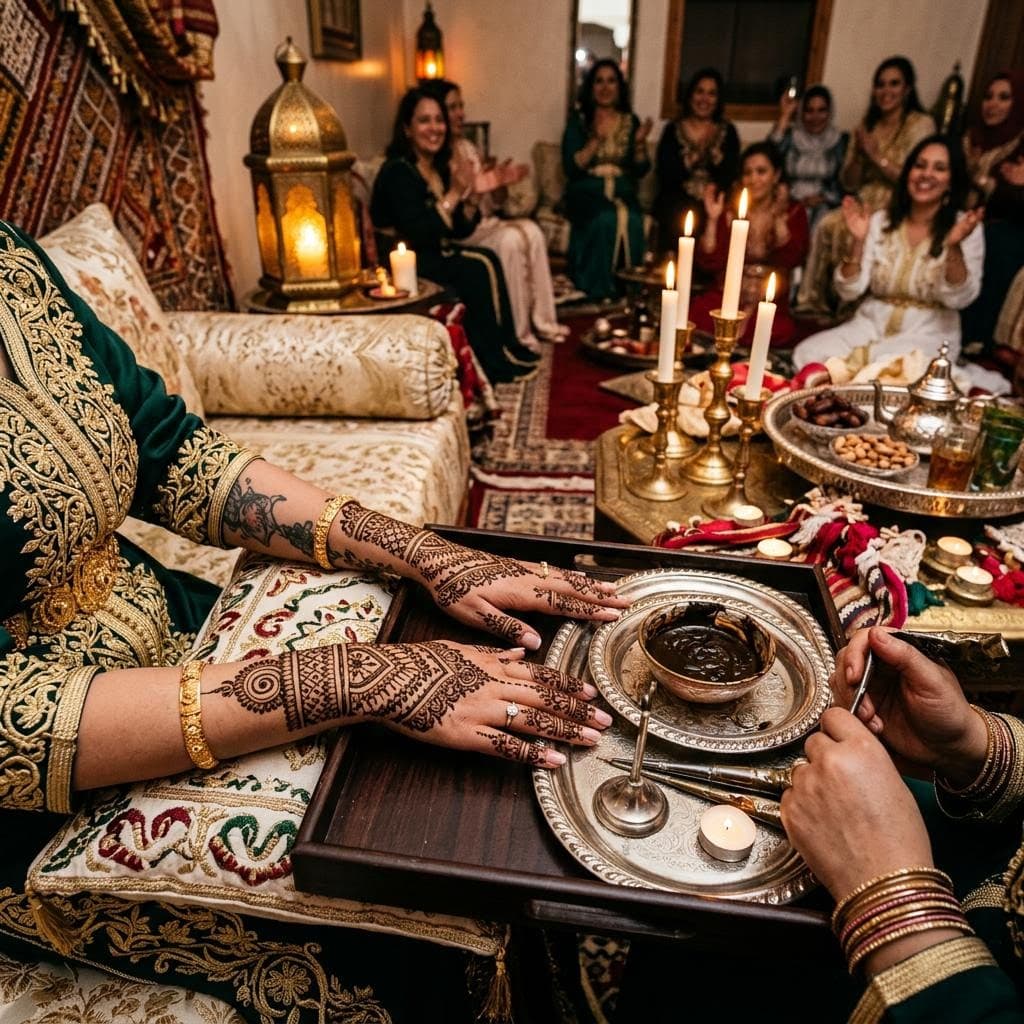
Henna Ceremony: Traditions and Organization Before the Wedding
The henna ceremony is one of the most symbolic moments in the preparations for a North African wedding. Held a few days before the wedding or on the eve of the reception, it brings together the bride-to-be, her family and close friends in a warm and festive atmosphere.
This tradition can take different forms depending on the Moroccan, Algerian or Tunisian origins of the families. Some ceremonies remain intimate, while others become full evenings with decoration, music, meals and traditional outfits.
What is the meaning of the henna ceremony?
Henna is a plant-based preparation used for generations to temporarily decorate the skin. In many families, it represents joy, protection, prosperity and the blessing of the upcoming marriage.
Applying henna to the hands of the bride-to-be symbolically marks her passage to a new stage of life. According to family traditions, a small amount may also be applied to the groom or offered to female guests.
The henna ceremony is above all a cultural tradition. It is not mandatory and each couple can choose to keep it, modernize it or not organize it.
When should the henna evening be organized?
The ceremony is generally held between a few days and a week before the wedding. Some families prefer to celebrate it the night before the reception, while others choose a more distant date so the bride can rest before the big day.
The best timing depends in particular on:
- the number of guests;
- the planned duration of the ceremony;
- the availability of the families;
- the time needed to prepare outfits and decoration;
- the overall wedding schedule.
When the evening brings together many guests, it is preferable to plan it as a standalone event.
Who attends the henna ceremony?
Traditionally, the henna ceremony mainly gathers the women of the family and the bride's friends. They sing, dance, give advice and share a moment of complicity with her.
Today, formats are much more varied. Some couples organize a mixed evening with both families, while others keep a first part reserved for women before welcoming all guests.
There is no imposed rule. The essential thing is to choose a format that matches the bride-to-be's wishes and her family's habits.
How does a henna ceremony unfold?
The sequence can vary, but the evening usually begins with welcoming guests with drinks, pastries and music.
The bride-to-be then makes her entrance in traditional attire. She sits in a specially decorated area so that the henna artist can create designs on her hands and, sometimes, on her feet.
During the application, guests can sing, dance and take photos. In some families, guests also give jewelry, clothing, money or other gifts to the bride-to-be.
A ceremony can therefore include:
- Welcoming the guests.
- The entrance of the bride-to-be.
- Presentation of the henna.
- Application of the designs.
- Songs and dances.
- Presentation of gifts.
- The meal or buffet.
- Photos with family and friends.
A simple schedule helps avoid dead time and fully enjoy each moment.
What to wear for a henna evening?
The bride-to-be usually wears traditional attire representing her origins or those of her family. She can choose a caftan, a takchita, a karakou, a Kabyle dress, a Tunisian outfit or another traditional creation.
The most commonly used colors are green, gold, red or white, but the bride remains free to select the palette that matches her theme.
Jewelry, hair and makeup complete the outfit. It is advisable to choose sleeves that allow easy access to the hands and forearms during the henna application.
Guests can also wear traditional outfits, especially when the couple wants to create an especially elegant and colorful evening.
How to decorate a henna ceremony?
The decoration should create a warm space while highlighting the bride-to-be. The chair or settee on which she will be seated generally forms the focal point.
Decoration can include:
- a traditional chair or settee;
- a floral arch;
- lanterns;
- golden trays;
- decorative cushions;
- candles;
- rugs;
- floral arrangements;
- a table dedicated to henna;
- a personalized sign with the couple's first names.
Green and gold colors are popular, but it is also possible to choose a white, terracotta, dusty pink or fully personalized palette.
To imagine your decor in detail: North African wedding decoration: ideas and tips for an elegant venue
Soft lighting and a well-placed decorative background will also help obtain beautiful photos. A decorator familiar with traditional ceremonies can assist you with this staging.
What music to choose?
Music accompanies the important moments of the evening: the bride's arrival, the henna application, the presentation of gifts and the opening of the dance floor.
The musical selection can mix traditional songs, chaâbi, raï, Kabyle, Moroccan or Tunisian music as well as more modern tracks.
The couple can hire a DJ, a music group or percussionists. For a more intimate ceremony, a playlist prepared in advance may also suffice.
It is important to include songs appreciated by different generations so that the whole family can take part in the celebration.
What food to offer during the ceremony?
The food depends on the number of guests and the duration of the event. For a small ceremony, a buffet composed of pastries, fruit, mint tea and drinks can be suitable.
For a larger evening, organizers can provide:
- savory bites;
- bricks;
- salads;
- traditional dishes;
- a hot buffet;
- traditional oriental pastries;
- fresh fruit;
- tea, coffee and juices.
Service should remain practical so as not to interrupt the henna application and activities. A caterer knowledgeable about North African specialties can compose an appropriate buffet.
Differences between family traditions
The henna ceremony does not take place in the same way in all families. The designs, songs, outfits and gifts can vary depending on the country, the region or the customs passed down between generations.
In some Moroccan families, the organization of outfits and the bride's entrance may be accompanied by a professional specialized in traditional ceremonies. In several regions of Algeria, the evening has its own songs, dresses and family rituals. Tunisian families also have particular traditions and outfits.
A couple from two different cultures can bring together the customs of both families during the same evening.
How to modernize a henna ceremony?
It is entirely possible to preserve the symbolism of the tradition while creating a modern evening.
The couple can for example plan:
- contemporary decoration;
- a henna bar for guests;
- a personalized photo area;
- small gifts for guests;
- a modern buffet combined with traditional specialties;
- musical entertainment mixing several cultures;
- a guestbook intended to collect messages from loved ones.
The ceremony should above all represent the personality of the bride-to-be and the story of both families.
What budget to plan?
The budget depends mainly on the number of guests and the services selected. A ceremony organized at home with simple decoration will naturally cost less than a large evening in a hall.
The main expenses can concern:
- venue rental;
- the henna artist;
- the bride's outfit;
- hair and makeup;
- decoration;
- the caterer;
- the photographer;
- the DJ or musicians;
- gifts for guests.
Before making bookings, it is advisable to set a maximum budget and request several detailed quotes.
Finding vendors for your henna ceremony
An experienced henna artist, a decorator familiar with the traditions and a photographer attentive to family moments can contribute to the success of the evening.
On DreamWeds, you can search for different providers to prepare your henna ceremony and your wedding according to your wishes, traditions and budget.
Frequently asked questions about the henna ceremony
Is the henna ceremony reserved for women?
Traditionally, many evenings are organized among women. However, the engaged couple can choose a mixed ceremony bringing together both families.
Who applies the henna to the bride?
Henna can be applied by a specialized professional or by a family member familiar with the tradition.
How much time should be planned?
An intimate ceremony can last a few hours. An evening that includes a meal, music and entertainment can extend until the end of the night.
Can guests also receive henna?
Yes. It is possible to create a dedicated area where guests choose small designs during the celebration.
Is it mandatory to rent a venue?
No. A henna ceremony can be organized at home, in a garden, in a reception hall or in a privatized space.
DreamWeds
Find your dream vendors
Photographers, caterers, venues and much more — compare up to 4 vendors side by side.
Find vendors for my weddingArticles on the same topic
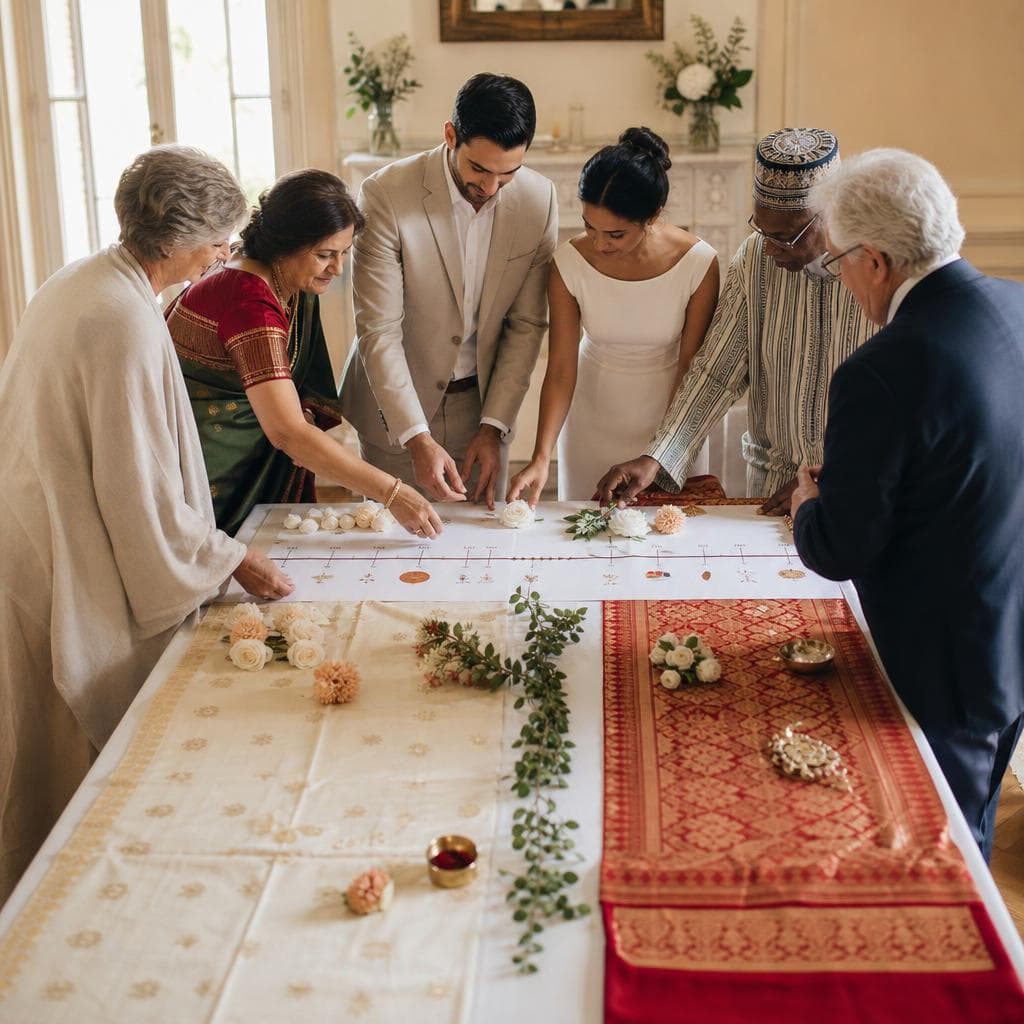
Organizing a Multicultural Wedding: Practical Tips
Blending two traditions, addressing guests from different cultures, and creating a ceremony that is meaningful for both families.
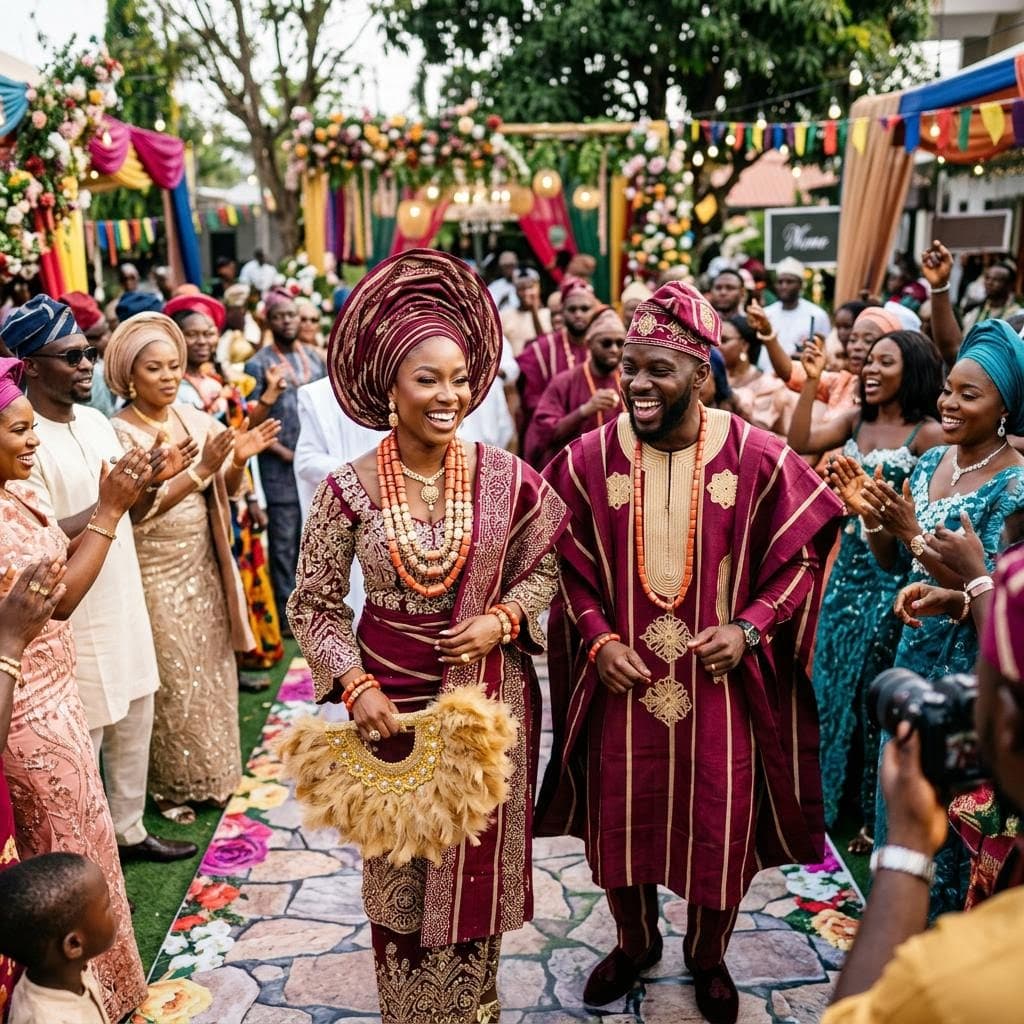
Nigerian wedding: Yoruba, Igbo and Hausa traditions
Discover Nigerian wedding traditions: Yoruba, Igbo and Hausa ceremonies, outfits, aso ebi, food, music and organization.
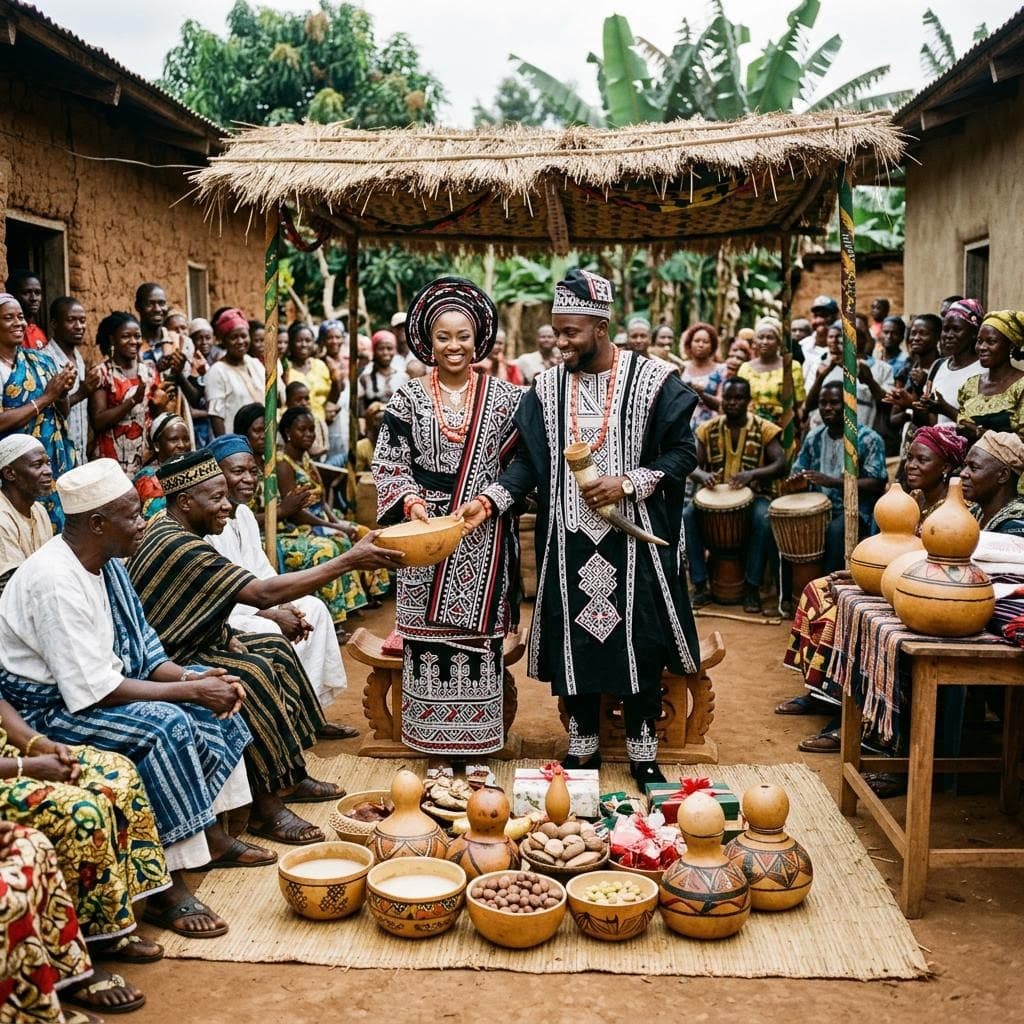
Cameroonian wedding: traditions, dowry, outfits and timeline
Discover the traditions of a Cameroonian wedding: meeting of the families, dowry ceremony, outfits, meal, music and organization.