
Maghrebi wedding: traditions, rituals and tips for organizing it well
Colorful, warm and deeply family-centred, the Maghrebi wedding is a celebration rich in emotions. It generally brings close relatives together around several traditions: meeting of the families, henna ceremony, traditional outfits, music, dances and a large festive meal.
However, there is not a single model for a Maghrebi wedding. Customs can vary between Morocco, Algeria and Tunisia, but also according to regions, families and the wishes of the bride and groom. Today, many couples choose to preserve the traditions that matter to them while organizing a modern and personalized reception.
Preparations for the Maghrebi wedding
Preparation for a Maghrebi wedding often begins several months in advance. The number of guests can be large and some suppliers in high demand must be booked quickly.
The future bride and groom must notably choose:
- the reception hall ;
- the caterer ;
- the photographer and the videographer ;
- the decoration ;
- the traditional outfits ;
- the makeup artist and hairdresser ;
- the DJ or the band ;
- the evening entertainment.
Before booking suppliers, it is advisable to define an overall budget and to determine which traditions the couple wishes to keep. This discussion helps avoid misunderstandings between the families and build a wedding that truly reflects the couple.
To prepare your budget in detail: Budget for a Maghrebi wedding: expected expenses and tips to save
The meeting of the families and the engagement
In many Maghrebi families, the official meeting of the two families is an important step. It allows relatives to be introduced, to discuss the wedding project and to celebrate the upcoming union.
According to customs, the groom's family may bring flowers, pastries, gifts, jewelry or outfits. Some families also organize a reading of the Fatiha or an engagement ceremony.
These practices are not the same everywhere. They can be adapted depending on beliefs, origins and the couple's preferences.
The henna ceremony
The henna ceremony is one of the best-known traditions of the Maghrebi wedding. It is generally organized a few days before the wedding or the day before the reception.
Surrounded by her close relatives, the bride-to-be wears a traditional outfit and receives henna on her hands, sometimes also on her feet. Henna is traditionally associated with joy, protection and blessing.
The evening can be accompanied by music, songs, pastries and gifts. Some families organise an intimate ceremony reserved for women, while others prefer a large party bringing together all the guests.
To learn all about this tradition: Henna ceremony: traditions and organisation before the wedding
The traditional outfits of the bride and groom
Outfits play a central role in the Maghrebi wedding. They showcase the family origins and the cultural heritage of the couple.
A bride of Moroccan origin may notably wear a caftan or a takchita.
To go further: Moroccan wedding: traditions, outfits and ceremony flow In Algerian weddings, there are different outfits according to the regions, such as the Algerian karakou, the chedda of Tlemcen or the Kabyle dress. Tunisian weddings also have their own traditional garments, embroideries and jewelry.
Many brides change outfits several times during the evening. They may alternate between a white gown, a caftan, a regional traditional dress and a modern outfit.
The groom, for his part, may wear a suit, a gandoura, a djellaba, a jebba or another outfit representing his origins.
For a complete guide: Maghrebi wedding outfits: guide for the couple and guests
The flow of the reception
The flow of a Maghrebi wedding depends on the couple's choices. The reception usually begins with welcoming the guests, followed by the entrance of the bride and groom.
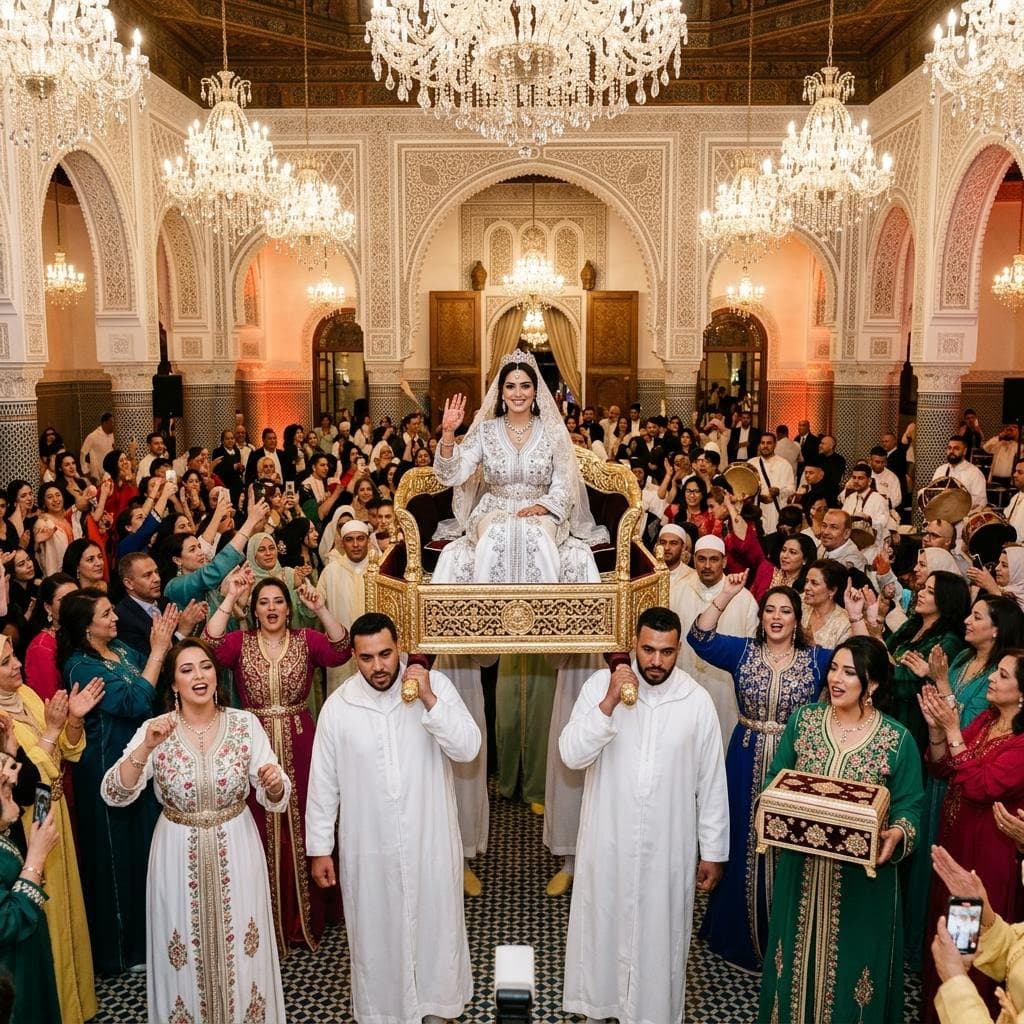
This entrance can be accompanied by traditional music, singing, percussion or a spectacular presentation. In some Moroccan weddings, the couple can make their appearance carried on decorated seats, called amariya.
After the entrance usually come the meal, outfit changes, photo sessions, entertainment and dances. The croquembouche or the wedding cake is often presented at the end of the evening.
To keep the reception flowing smoothly, it is important to establish a precise schedule with the hall, the caterer, the DJ, the photographer and the other suppliers.
The meal at a Maghrebi wedding
The meal is one of the most anticipated moments of the celebration. It should be generous, tasty and adapted to the number of guests.
Depending on the families' origins, the menu can include:
- bricks or assortments of salads ;
- a chorba ;
- a pastilla ;
- a couscous ;
- a tajine ;
- a mechoui ;
- various dishes based on meat, fish or vegetables ;
- oriental pastries ;
- mint tea or coffee.
It is also recommended to provide vegetarian alternatives and to ask guests to report their allergies or dietary restrictions.
Choosing a caterer familiar with Maghrebi cuisine makes it easier to prepare an authentic menu while guaranteeing service adapted to a large event.
To compose your menu in detail: Maghrebi wedding menu: dish ideas and tips for choosing your caterer
Music and dances
Music greatly contributes to the atmosphere of the wedding. The musical program can combine modern tracks with different traditional styles, according to the couple's origins: chaâbi, raï, malouf, Kabyle music, gnawa or Tunisian music.
The couple can choose a DJ, a traditional band or combine both. It is advisable to prepare in advance a list of important tracks:
- entrance music for the bride and groom ;
- first dance ;
- cake arrival ;
- family traditional songs ;
- tracks intended to get all generations on the dance floor.
A good supplier must know how to adapt the atmosphere to the flow of the evening and to the guests' expectations.
How to organize a successful Maghrebi wedding?
The first step is to define the couple's priorities. Do you want to organize a traditional reception, a modern wedding with a few rituals or a celebration bringing together several cultures?
It is then advisable to:
- Determine the available budget.
- Prepare an initial guest list.
- Choose the traditions to keep.
- Book the venue and the main suppliers.
- Prepare a detailed schedule for the day.
- Designate a person in charge of coordinating the suppliers.
- Confirm times and services a few days before the wedding.
Families can naturally participate in the preparations, but final decisions should remain faithful to the wishes of the bride and groom.
Finding suppliers for your Maghrebi wedding
A sufficiently large hall, a caterer mastering the desired specialties, a photographer knowing the traditional moments and a DJ able to bring generations together can transform the couple's experience.
To prepare your musical atmosphere: Maghrebi wedding music: DJ, orchestra and entertainment
On DreamWeds, you can search for wedding suppliers and compare the services offered in order to prepare a celebration adapted to your culture, your desires and your budget.
Frequently asked questions about the Maghrebi wedding
How long does a Maghrebi wedding last?
The main reception usually lasts one day or one evening. Some families, however, organize several celebrations, such as the engagement, the henna ceremony and the wedding.
Is the henna ceremony mandatory?
No. It is a cultural tradition that each couple is free to keep, adapt or not organize.
How many outfits should the bride plan for?
There are no rules. Some brides wear only a gown, while others choose several traditional and modern outfits.
When should suppliers be booked?
It is best to book the hall, the caterer, the photographer and the DJ several months in advance, especially when the wedding is planned during high season.
Can several traditions be mixed?
Yes. Many couples combine Moroccan, Algerian, Tunisian, French or other cultural traditions in order to create a celebration that represents both families.
DreamWeds
Find your dream vendors
Photographers, caterers, venues and much more — compare up to 4 vendors side by side.
Find vendors for my weddingArticles on the same topic
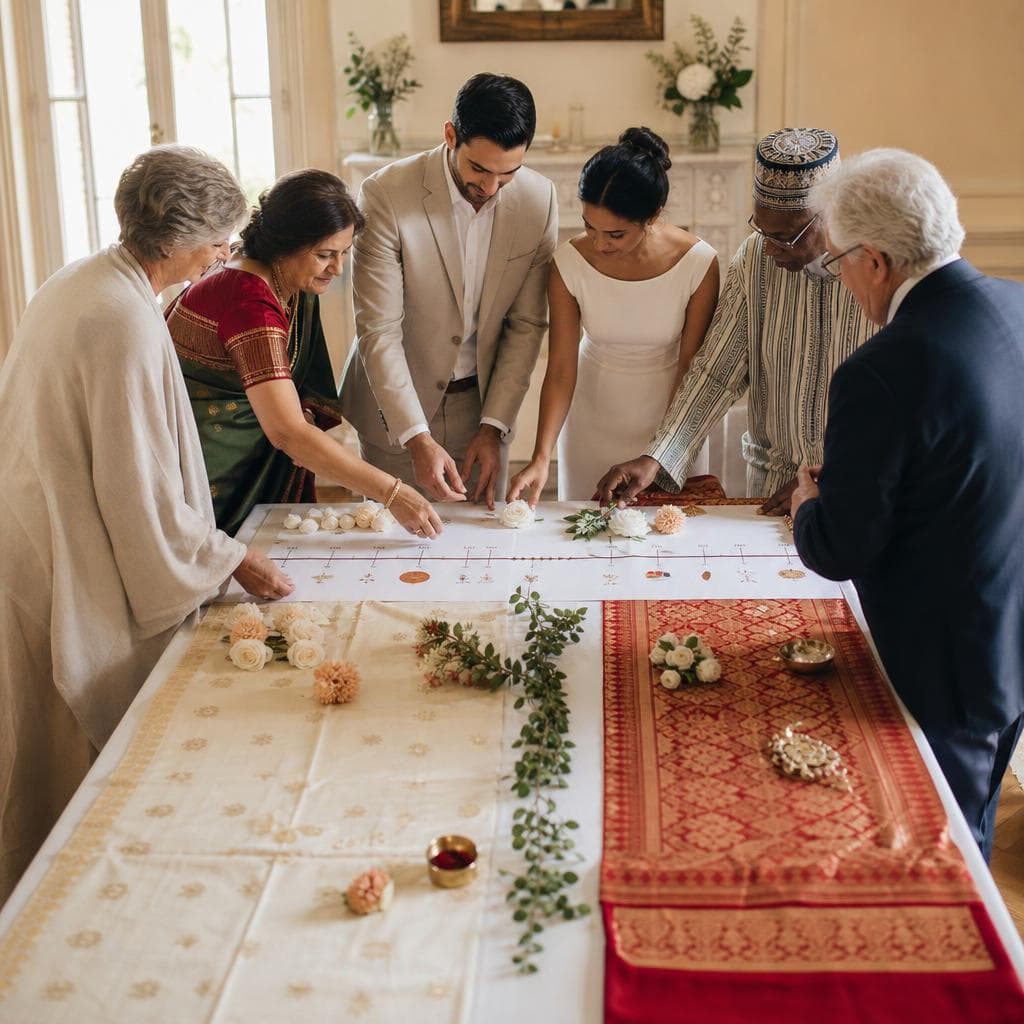
Organizing a Multicultural Wedding: Practical Tips
Blending two traditions, addressing guests from different cultures, and creating a ceremony that is meaningful for both families.
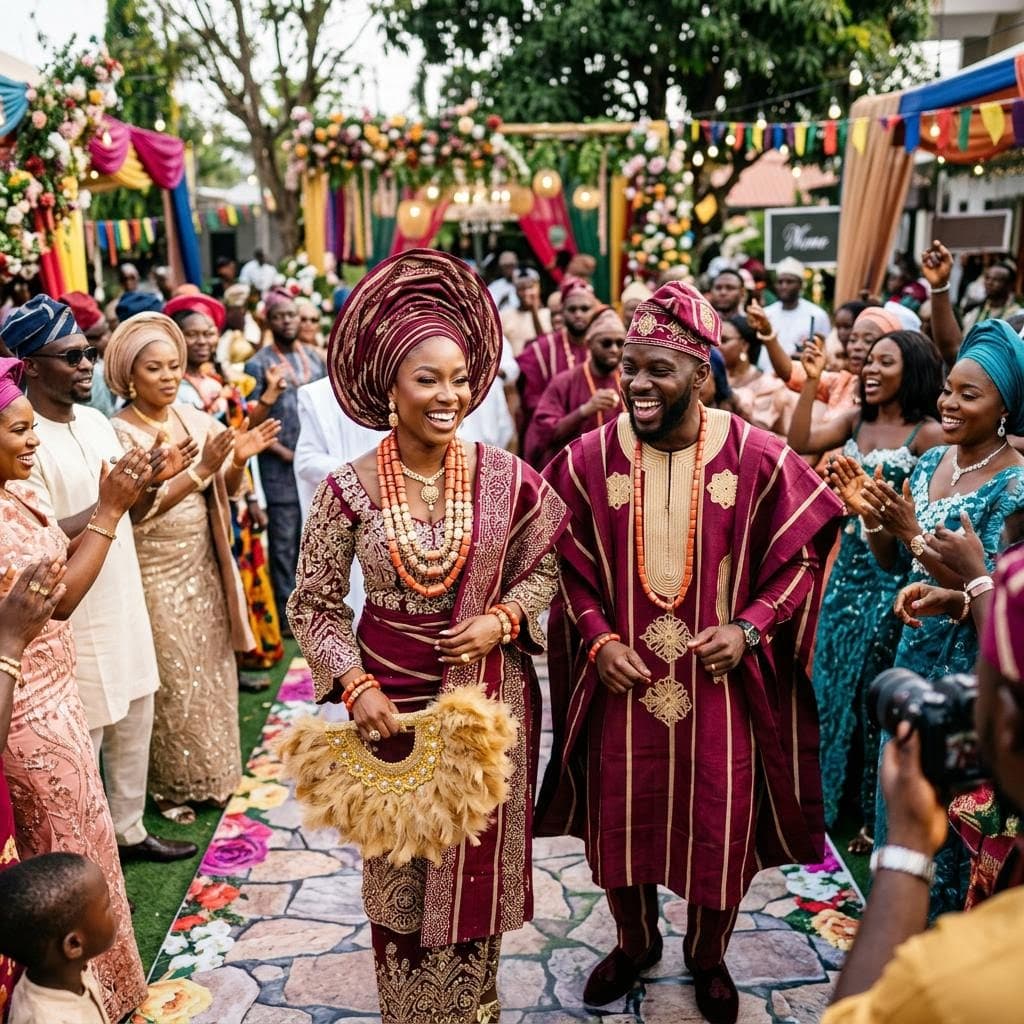
Nigerian wedding: Yoruba, Igbo and Hausa traditions
Discover Nigerian wedding traditions: Yoruba, Igbo and Hausa ceremonies, outfits, aso ebi, food, music and organization.
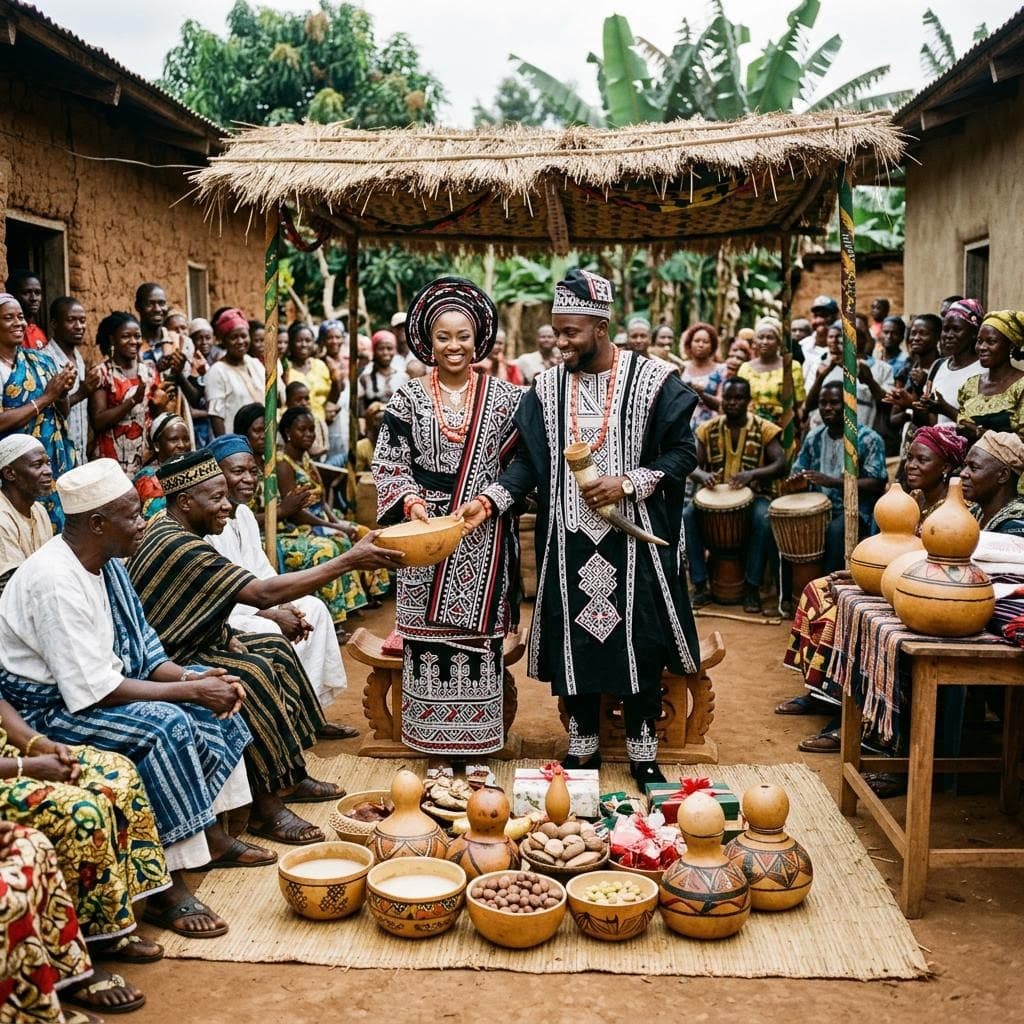
Cameroonian wedding: traditions, dowry, outfits and timeline
Discover the traditions of a Cameroonian wedding: meeting of the families, dowry ceremony, outfits, meal, music and organization.