
Moroccan wedding: traditions, outfits and ceremony proceedings
A Moroccan wedding is a family celebration known for its refined outfits, symbolic rituals, music and festive atmosphere. It can bring together several generations for a carefully organized reception and is sometimes preceded by various steps, such as the engagement and the henna ceremony.
Traditions vary according to cities, regions and families. A wedding held in Casablanca, Marrakech, Fès, Rabat, Tangier or in an Amazigh region will not necessarily follow the same customs.
Couples can thus preserve the traditions that matter to them while creating a modern and personal reception.
For an overview of Maghreb traditions: Maghrebi wedding: traditions, rituals and tips for organizing it well
The engagement and the meeting of the families
Before the wedding, many families organize an official meeting. This step allows the relatives of the future spouses to get to know each other and to discuss the preparations.
The groom’s family may bring flowers, pastries, gifts, clothes or jewelry. The contents and presentation of these gifts depend on family habits.
Some families organize a large engagement party, while others prefer a more intimate meeting. This step can also be used to discuss the date, the number of guests and the different traditions that will be integrated into the wedding.
The henna ceremony before the wedding
The henna ceremony is generally organized a few days before the reception. Surrounded by her relatives, the bride wears a traditional outfit and receives henna on her hands, sometimes also on her feet.
Henna is commonly associated with joy, protection and prosperity. During its application, relatives may sing, dance, take photos and give gifts to the bride.
The ceremony can be hosted at home or in a hall. Some families choose a women-only evening, while others invite both families.
Today, it is also possible to provide a henna bar allowing guests to choose small motifs.
What is the role of the negafa?
The negafa is a professional specialized in the preparation and accompaniment of the bride during a Moroccan wedding. Her services can include outfits, jewelry, accessories, outfit changes and coordination of the various entrances.
She notably helps the bride choose outfits adapted to her origins, her theme and her body shape. Her team can also assist her throughout the reception.
Depending on the chosen service, the negafa can provide:
- several caftans or takchitas;
- the jewelry and crowns;
- traditional accessories;
- the wedding seats;
- the amariya;
- help with outfit changes;
- the organization of traditional entrances.
Before booking, it is important to consult the available collections and to check precisely which services are included in the price.
The bride’s outfits
The bride may change outfits several times during the evening. Each outfit has its own colors, embroideries, jewelry and accessories.
Among the most appreciated garments are the caftan and the takchita. The takchita is generally made of several layered pieces and completed by an ornate belt.
Some brides also choose an outfit representing their region or family heritage. The reception can thus highlight different Moroccan, Arab, Andalusian, Sahrawi or Amazigh influences.
The white dress can be worn at the beginning or at the end of the evening. The number of changes depends entirely on the bride’s preferences: a single traditional outfit can be enough to create an elegant celebration.
For a complete guide: Maghrebi wedding outfits: guide for the couple and guests
The groom’s outfit
The groom can wear a classic suit, a djellaba, a gandoura, a jabador or an outfit matching the bride’s.
Some grooms also change outfits during the evening to alternate between a modern style and a traditional outfit.
The choice must take comfort into account, since the reception can last several hours and include many moments of dancing and moving around.
The entrance of the newlyweds
The entrance of the newlyweds is one of the highlights of the reception. It can be accompanied by an orchestra, percussionists or a dakka marrakchia.
The newlyweds may enter together or separately, depending on the chosen program. The music, lights and animations help create a spectacular arrival in front of the guests.
It is essential to coordinate this entrance with the DJ, the photographer, the videographer and the venue manager. Everyone must know the schedule, the couple’s route and the location planned for photos.
The tradition of the amariya
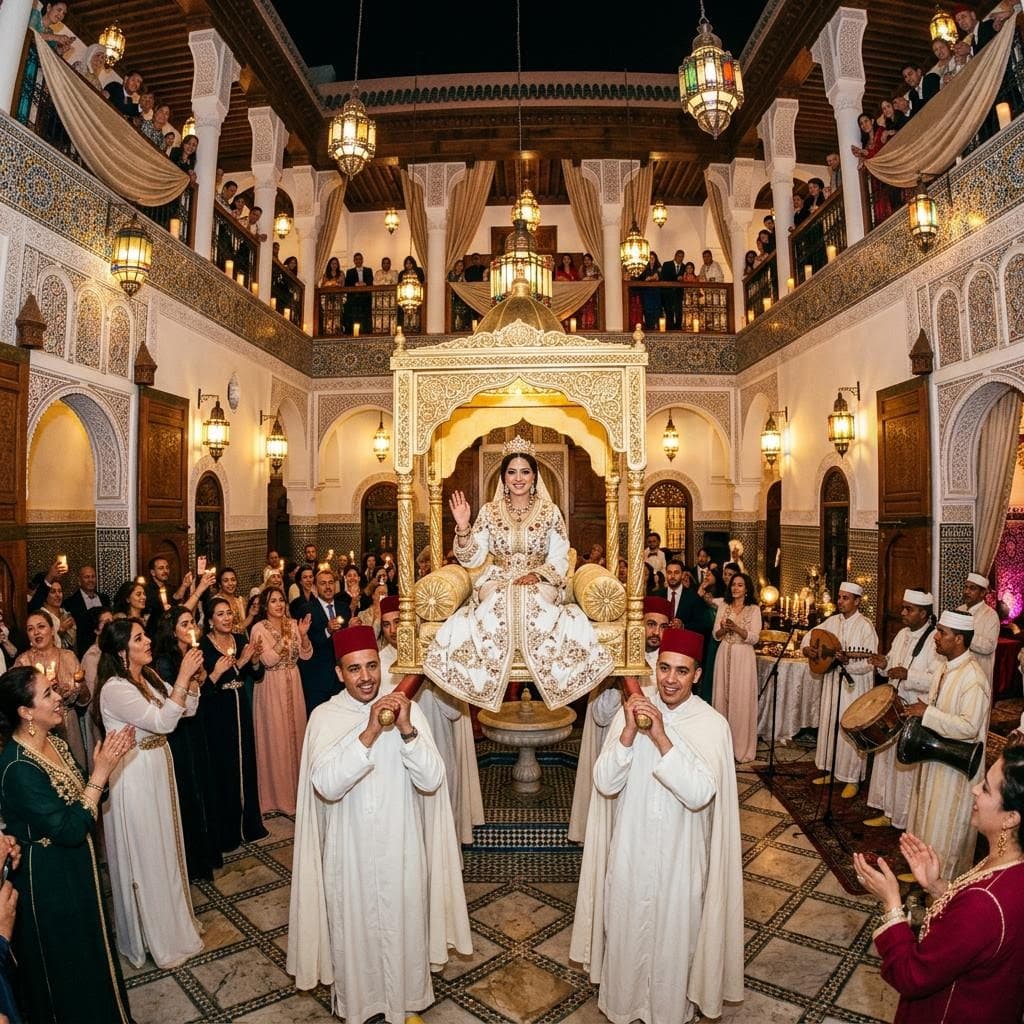
The amariya is a decorated ceremonial seat on which the bride, and sometimes the couple, is carried by several people. This presentation allows the newlyweds to greet the guests while dancing to the rhythm of the music.
It is a particularly appreciated moment for photos and videos. To ensure it runs smoothly, you must provide enough space in the hall and check the stability of the equipment.
The amariya is not mandatory. Couples who want a more sober reception can choose a walk-in entrance, a choreography or another staging.
The Moroccan wedding meal
Gastronomy occupies an important place in the reception. The menu varies according to regions, family preferences and the number of guests.
A Moroccan wedding meal can notably offer:
- Moroccan salads;
- a pastilla;
- a tajine;
- chicken with olives and preserved lemon;
- a méchoui;
- couscous;
- fruits;
- Moroccan pastries;
- mint tea.
The meal can be served at the table or presented as a buffet. It is advisable to provide vegetarian alternatives as well as solutions for food allergies reported by guests.
The caterer must also know the evening program in order to coordinate the service with the entrances, outfit changes and animations.
To compose your menu in detail: Maghrebi wedding menu: dish ideas and tips for choosing your caterer
Music at a Moroccan wedding
The music must reflect the couple’s tastes while allowing different generations to participate in the celebration.
To prepare your musical atmosphere: Maghrebi wedding music: DJ, orchestra and animations
The program can include:
- chaâbi music;
- Amazigh music;
- Gnawa music;
- aïta;
- regional traditional pieces;
- oriental music;
- international and modern tracks.
The couple can hire a DJ, an orchestra, a dakka or combine several animations. A list of important tracks should be sent before the wedding, notably for the entrance, the amariya, the first dance and the cake arrival.
Venue decoration
The decoration can be inspired by Moroccan craftsmanship without necessarily transforming the entire hall.
Lanterns, arches, golden trays, geometric patterns, rugs, candles or floral arrangements can create an elegant atmosphere.
Several styles are possible:
- traditional Moroccan decoration;
- white and gold ambiance;
- modern oriental theme;
- romantic floral decoration;
- minimalist style;
- mix of Moroccan and European traditions.
The decoration must remain consistent with the outfits and the colors chosen by the couple.
To imagine your decor in detail: Maghrebi wedding decoration: ideas and tips for an elegant hall
How to organize a Moroccan wedding?
To prepare the reception calmly, it is recommended to start with the budget and the approximate number of guests.
The main steps are as follows:
- Choose the wedding date.
- Establish the guest list.
- Determine the traditions to keep.
- Book the venue.
- Choose the caterer.
- Select the negafa and the outfits.
- Book the photographer, the videographer and the musicians.
- Prepare the detailed schedule of the evening.
- Confirm the times with all providers.
- Appoint a person in charge of coordination on the wedding day.
It is preferable to allow a buffer between the different steps. Outfit changes, photos and meal service can indeed take more time than expected.
Finding your Moroccan wedding providers
The choice of providers directly influences the organization and the atmosphere of the reception. It is important to compare their offers, their work, the services included and their booking conditions.
On DreamWeds, you can search for venues, caterers, photographers, videographers, decorators, DJ and other professionals to prepare a Moroccan wedding that matches your traditions and your budget.
Frequently asked questions about the Moroccan wedding
How long does a Moroccan wedding last?
The main reception can last the whole evening. The engagement and the henna ceremony can be organized separately during the days or weeks beforehand.
How many outfits does the Moroccan bride wear?
There is no obligation. Some brides wear several outfits, while others choose a white dress and a single caftan.
Is the negafa indispensable?
No. She facilitates outfit changes and the organization of traditions, but the couple can also buy or rent their clothes and accessories directly.
Is the amariya mandatory?
No. It is an optional tradition that the couple can integrate or replace with another entrance.
What budget should be planned for a Moroccan wedding?
The budget mainly depends on the number of guests, the venue, the menu, the outfits and the entertainment. It is recommended to request several quotes before booking.
DreamWeds
Find your dream vendors
Photographers, caterers, venues and much more — compare up to 4 vendors side by side.
Find vendors for my weddingArticles on the same topic
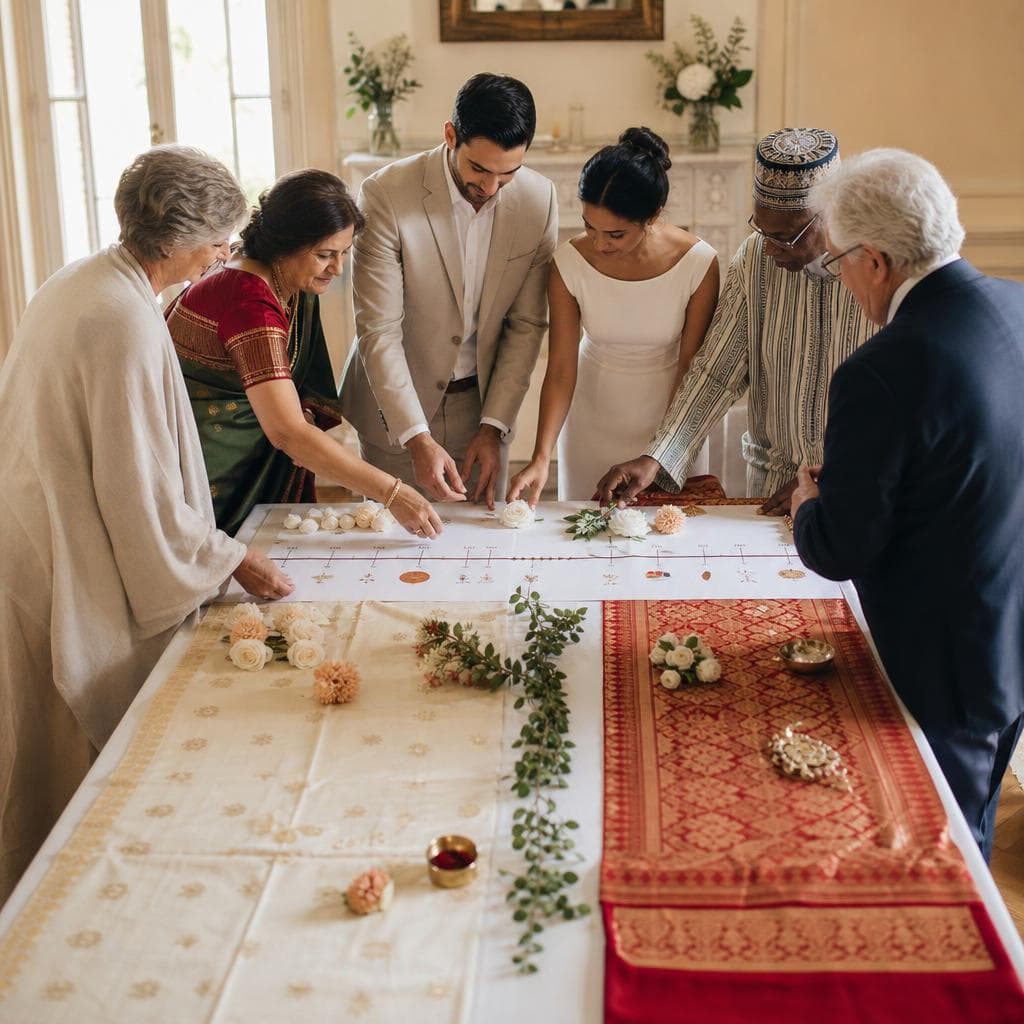
Organizing a Multicultural Wedding: Practical Tips
Blending two traditions, addressing guests from different cultures, and creating a ceremony that is meaningful for both families.
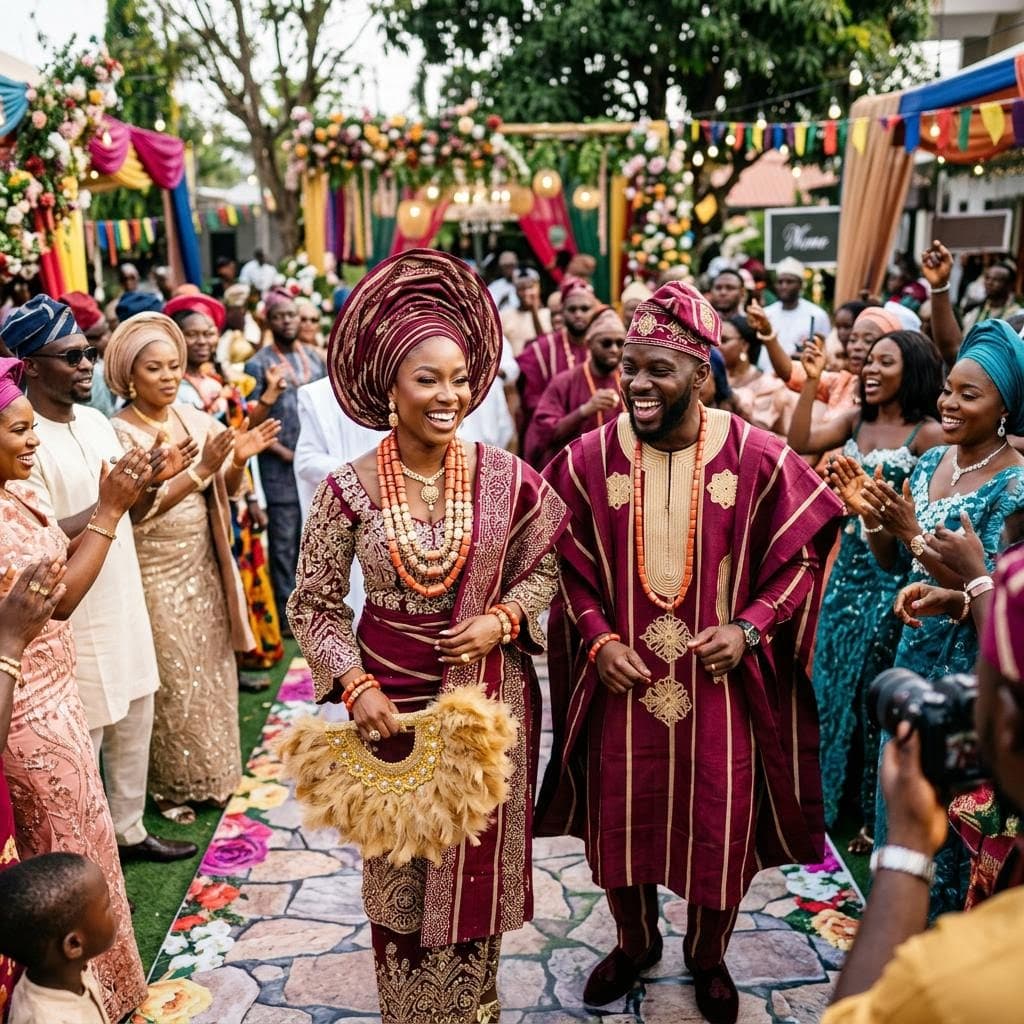
Nigerian wedding: Yoruba, Igbo and Hausa traditions
Discover Nigerian wedding traditions: Yoruba, Igbo and Hausa ceremonies, outfits, aso ebi, food, music and organization.
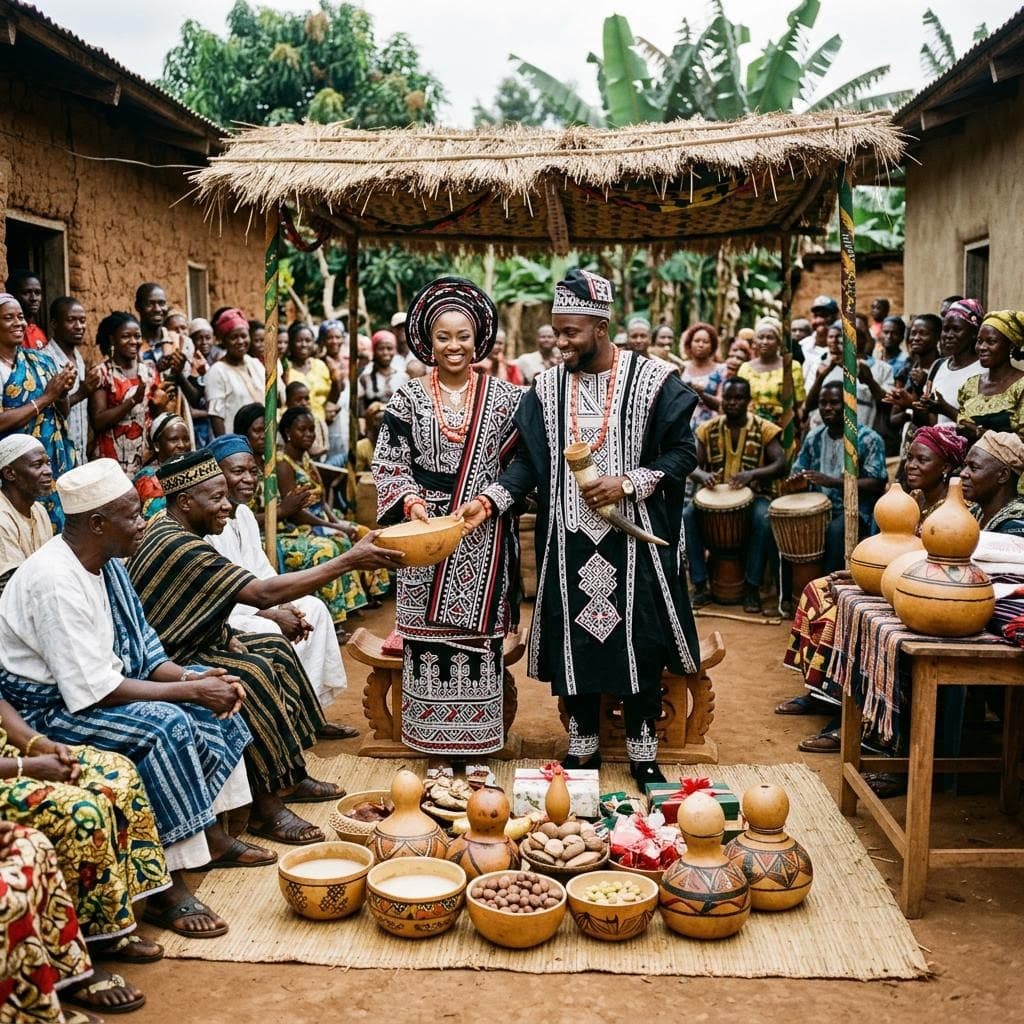
Cameroonian wedding: traditions, dowry, outfits and timeline
Discover the traditions of a Cameroonian wedding: meeting of the families, dowry ceremony, outfits, meal, music and organization.