
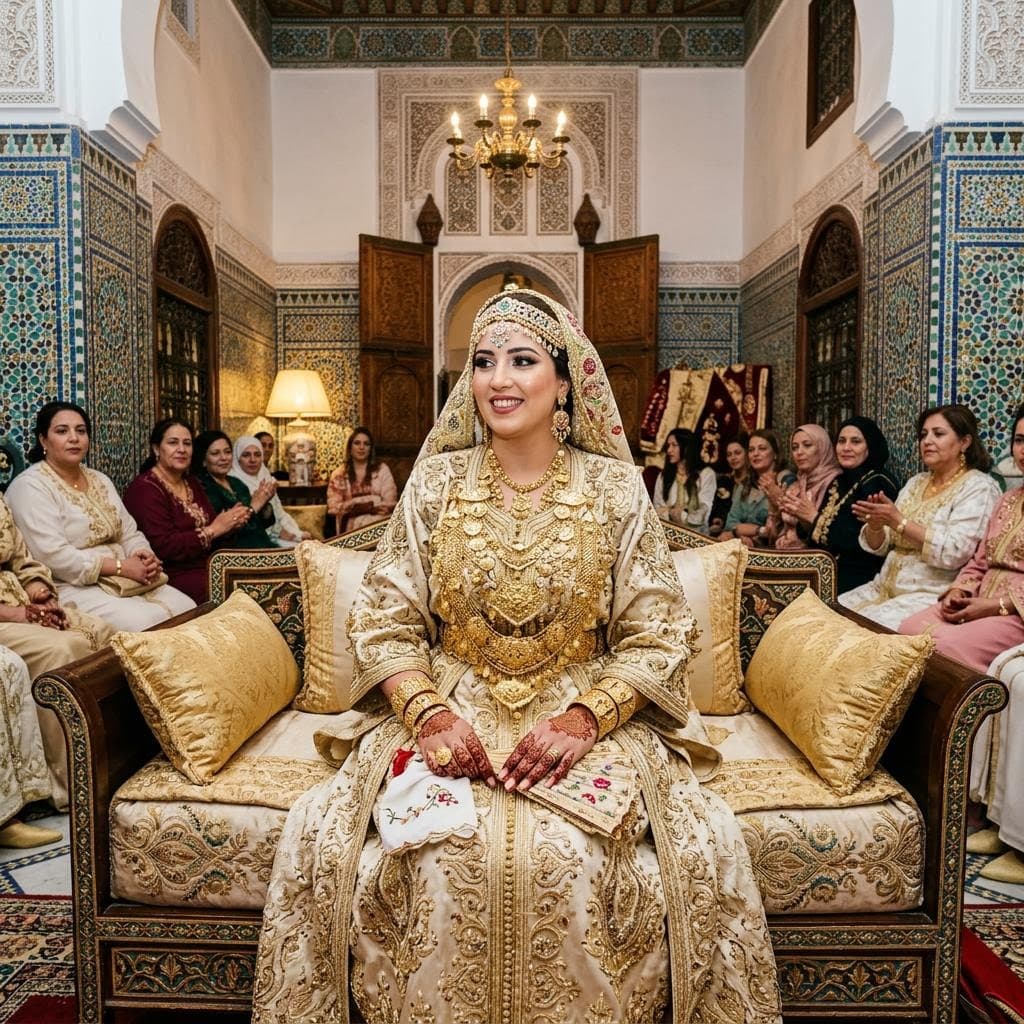
Tunisian wedding: traditions, attire and the course of the festivities
The Tunisian wedding is a family celebration rich in color, music and traditions. Depending on the families, the festivities can extend over several days and include different stages such as the hammam, the henna evening and the grand reception.
Customs are not identical throughout Tunisia. They can vary between Tunis, Sfax, Sousse, Monastir, Bizerte, Djerba and other regions of the country.
Couples can also choose a more modern ceremony while keeping only a few traditions that represent their origins and family history.
For an overview of Maghreb traditions: Maghreb wedding: traditions, rituals and tips to organize it well
The meeting of the families and the engagement
The official meeting of the families allows relatives to be introduced and to discuss the wedding project. According to family customs, it can be accompanied by pastries, flowers, gifts or jewelry offered to the future bride.
Some families organize a large engagement party, while others prefer an intimate meeting.
This step also allows discussion of the date, the budget, the number of guests and the different traditions the couple wishes to include in the festivities.
Wedding preparations
Preparations can begin several months before the reception, especially when the couple plans a large number of guests.
The future spouses generally need to organize:
- the reception venue ;
- the caterer ;
- the outfits ;
- the decoration ;
- the hair and makeup ;
- the music ;
- the photos and videos ;
- any ceremonies preceding the wedding.
It is recommended to prepare a precise schedule in order to spread out expenses and to book the most sought-after vendors early enough.
The hammam tradition
In some Tunisian families, a day at the hammam is organized for the future bride before the wedding. She goes accompanied by women from her family and her friends.
This symbolic moment is dedicated to preparing the bride, but also to sharing and conviviality. It can be accompanied by songs, ululations (youyous) and various beauty treatments.
Today, some brides replace the traditional hammam with a day at a spa or a treatment session with their loved ones.
This tradition remains optional and can be adapted according to the future bride's wishes.
The Tunisian henna ceremony
The henna evening is one of the best-known moments of the Tunisian wedding. It is generally organized before the main reception.
The future bride wears a traditional outfit and receives henna on her hands, sometimes also on her feet. Henna is commonly associated with joy, protection and prosperity.
The ceremony can include:
- the entrance of the future bride ;
- the application of henna ;
- traditional songs ;
- dances ;
- the presentation of gifts ;
- a meal or buffet ;
- photos with relatives.
Depending on the families, the future groom may also participate in a henna ceremony.
Jelwa in some regions
In some families and Tunisian regions, a ceremony called jelwa can be organized. It puts the bride in the spotlight through a traditional outfit, jewelry and songs passed down through generations.
Its course and meaning can vary according to family origins. It can be integrated into the henna evening or organized separately.
Couples wishing to preserve this tradition can ask their parents and grandparents to help them respect the customs specific to their region.
The bride's outfits
The bride can wear several outfits during the different days of celebration. She may alternate between a white dress, an evening gown and traditional clothing.
Depending on the regions and families, one can notably find:
- the fouta and the blouza ;
- embroidered dresses ;
- regional costumes ;
- outfits accompanied by traditional jewelry ;
- modern creations inspired by Tunisian heritage.
Some outfits are particularly elaborate and decorated with golden or silver embroidery. The choice depends on the bride's origins, her theme and the number of changes desired.
It is advisable to allow enough time between the different appearances so that the bride can enjoy her evening.
For a complete guide: Maghreb wedding outfits: guide for brides, grooms and guests
Also read: Moroccan wedding: traditions, outfits and ceremony course and Algerian wedding: traditions, outfits and ceremony course
The groom's outfit
The groom can wear a classic suit, a jebba or another traditional outfit.
The jebba can be accompanied by matching accessories and shoes. It allows the groom to showcase his cultural heritage during part of the ceremony.
Some grooms start the evening in a suit, then wear a traditional outfit for an entrance or a photo session.
The couple's entrance
The couple's entrance is generally accompanied by music, percussion and ululations (youyous). It can be traditional, modern or built around a choreography prepared in advance.
To succeed in this moment, the couple must coordinate:
- the entrance music ;
- the lighting ;
- the route through the hall ;
- the positioning of the photographer ;
- the involvement of the musicians ;
- the reception by the families.
It is preferable to carry out a check with the venue before the guests arrive in order to avoid circulation or sound problems.
The meal at a Tunisian wedding
The meal occupies an important place in the festivities. The menu can be served at tables or presented as a buffet.
Depending on the couple's tastes, it may include:
- bricks ;
- Tunisian salads ;
- couscous ;
- dishes based on lamb, chicken or fish ;
- regional specialties ;
- fruits ;
- Tunisian pastries.
Makrouds, baklavas and other pastries may be offered with coffee or tea at the end of the meal.
The caterer must take into account the number of guests, the duration of the reception and any dietary requirements.
To compose your menu in detail: Maghreb wedding menu: dish ideas and tips for choosing your caterer It is recommended to provide a vegetarian option and to clearly identify dishes containing allergens.
Music and dances
Music brings together all generations on the dance floor. The couple can choose a DJ, an orchestra, percussionists or several types of entertainment.
The programming can combine:
- mezoued ;
- malouf ;
- regional folk music ;
- modern Tunisian songs ;
- oriental music ;
- international hits.
A list of important tracks should be prepared for the entrance, outfit changes, the first dance and the cake presentation.
The DJ should also know the traditions of both families in order to adapt the atmosphere to each moment.
To prepare your musical atmosphere: Maghreb wedding music: DJ, orchestra and entertainment
Reception decoration
The decoration can adopt the colors and patterns of Tunisian craftsmanship or follow a more contemporary style.
To imagine your decor in detail: Maghreb wedding decoration: ideas and tips for an elegant hall
The couple can notably choose:
- a white and gold decoration ;
- a Mediterranean vibe ;
- a blue and white theme ;
- lanterns and candles ;
- floral arrangements ;
- elements inspired by Tunisian ceramics ;
- a modern and minimalist decoration.
The area reserved for the couple, the tables, the hall entrance and the backdrop for photos should form a harmonious whole.
How to organize a Tunisian wedding?
Before starting bookings, the couple must define their budget and the traditions they really want to keep.
The main steps are as follows:
- Choose the date.
- Draw up the guest list.
- Define the overall budget.
- Select family traditions.
- Book the hall and the caterer.
- Choose the outfits.
- Book the photographer, the videographer and the DJ.
- Organize the hammam and the henna ceremony.
- Prepare the detailed schedule of the festivities.
- Confirm schedules with each vendor.
When the festivities are spread over several days, it is advisable to set a separate budget for each event.
Finding vendors for a Tunisian wedding
Vendors familiar with Tunisian traditions will better anticipate important moments, outfit changes and the needs of the families.
On DreamWeds, you can search for halls, caterers, photographers, videographers, decorators, makeup artists, DJs and other professionals to organize a Tunisian wedding that matches your wishes and your budget.
Frequently asked questions about the Tunisian wedding
How many days does a Tunisian wedding last?
The festivities can be organized over a single day or spread over several days with the hammam, the henna and the main reception.
Is the hammam mandatory?
No. It is a cultural tradition that the bride can keep, modernize or choose not to organize.
How many outfits does the Tunisian bride wear?
There are no rules. The bride can wear a single dress or plan several traditional and modern outfits.
What menu should be offered?
The menu can include bricks, salads, couscous, meat or fish dishes and Tunisian pastries.
Can Tunisian and French traditions be mixed?
Yes. Many couples create a multicultural reception bringing together the traditions important to both families.
DreamWeds
Find your dream vendors
Photographers, caterers, venues and much more — compare up to 4 vendors side by side.
Find vendors for my weddingArticles on the same topic
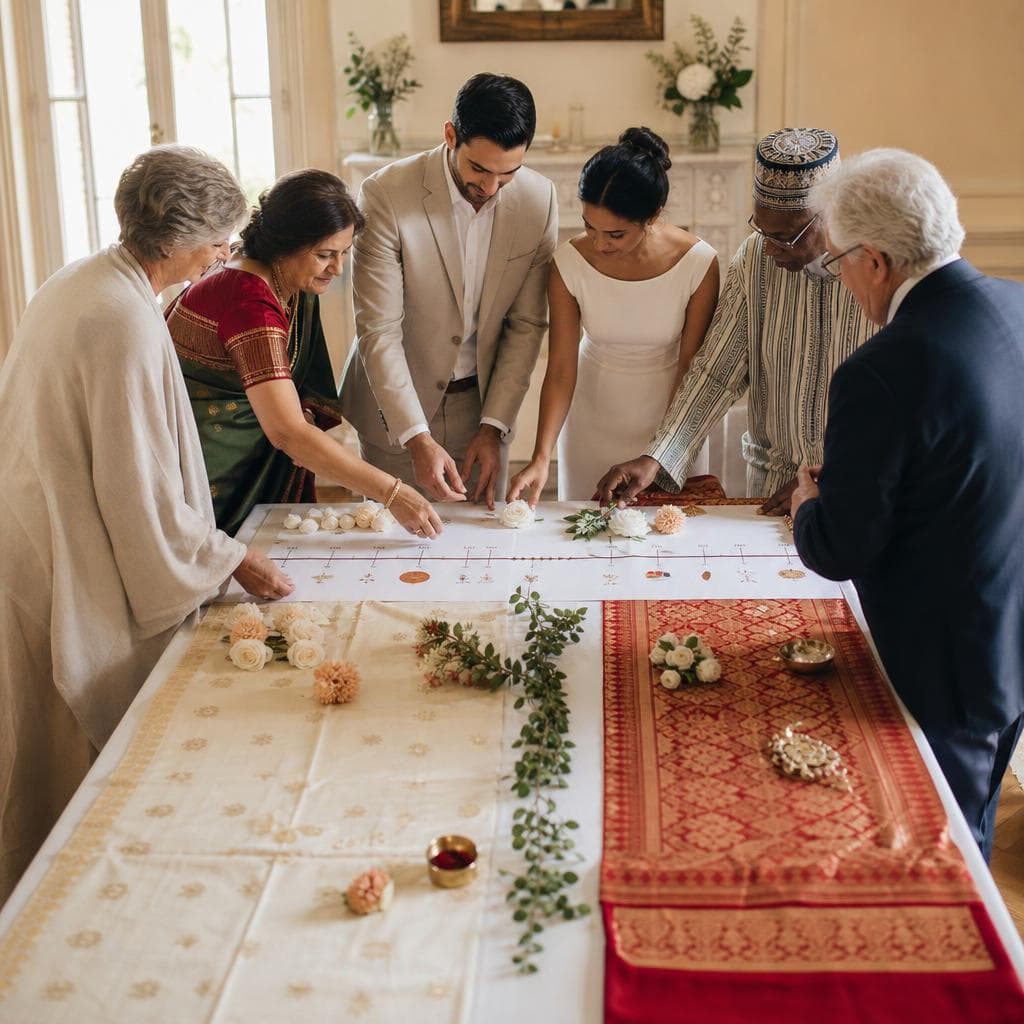
Organizing a Multicultural Wedding: Practical Tips
Blending two traditions, addressing guests from different cultures, and creating a ceremony that is meaningful for both families.
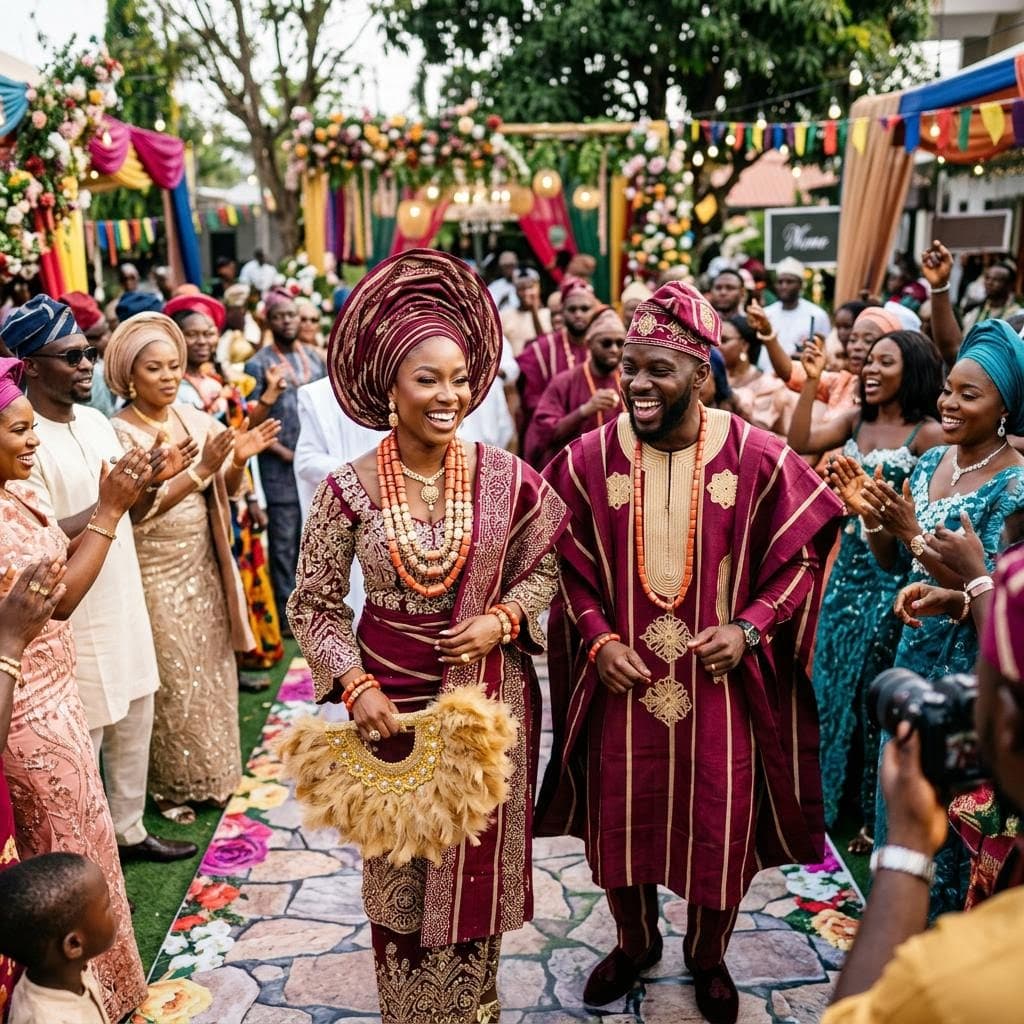
Nigerian wedding: Yoruba, Igbo and Hausa traditions
Discover Nigerian wedding traditions: Yoruba, Igbo and Hausa ceremonies, outfits, aso ebi, food, music and organization.
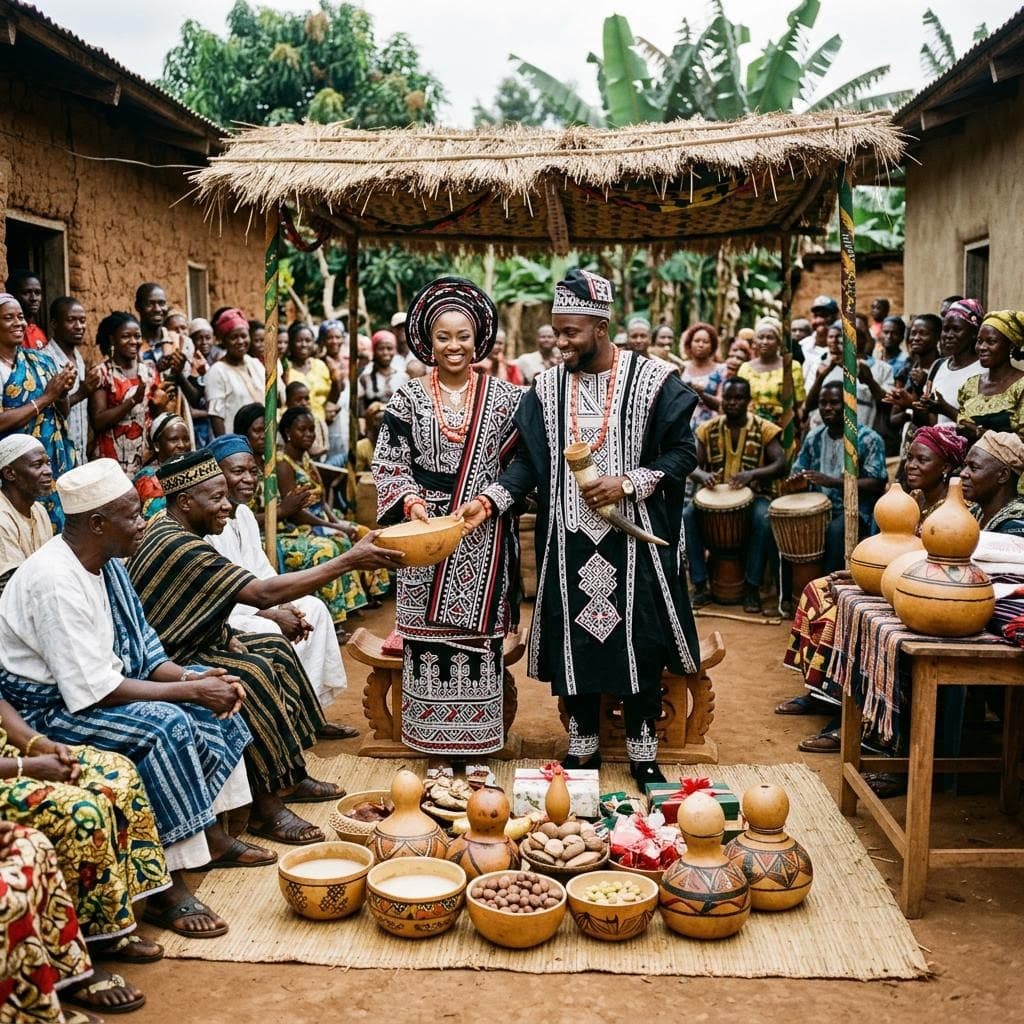
Cameroonian wedding: traditions, dowry, outfits and timeline
Discover the traditions of a Cameroonian wedding: meeting of the families, dowry ceremony, outfits, meal, music and organization.