
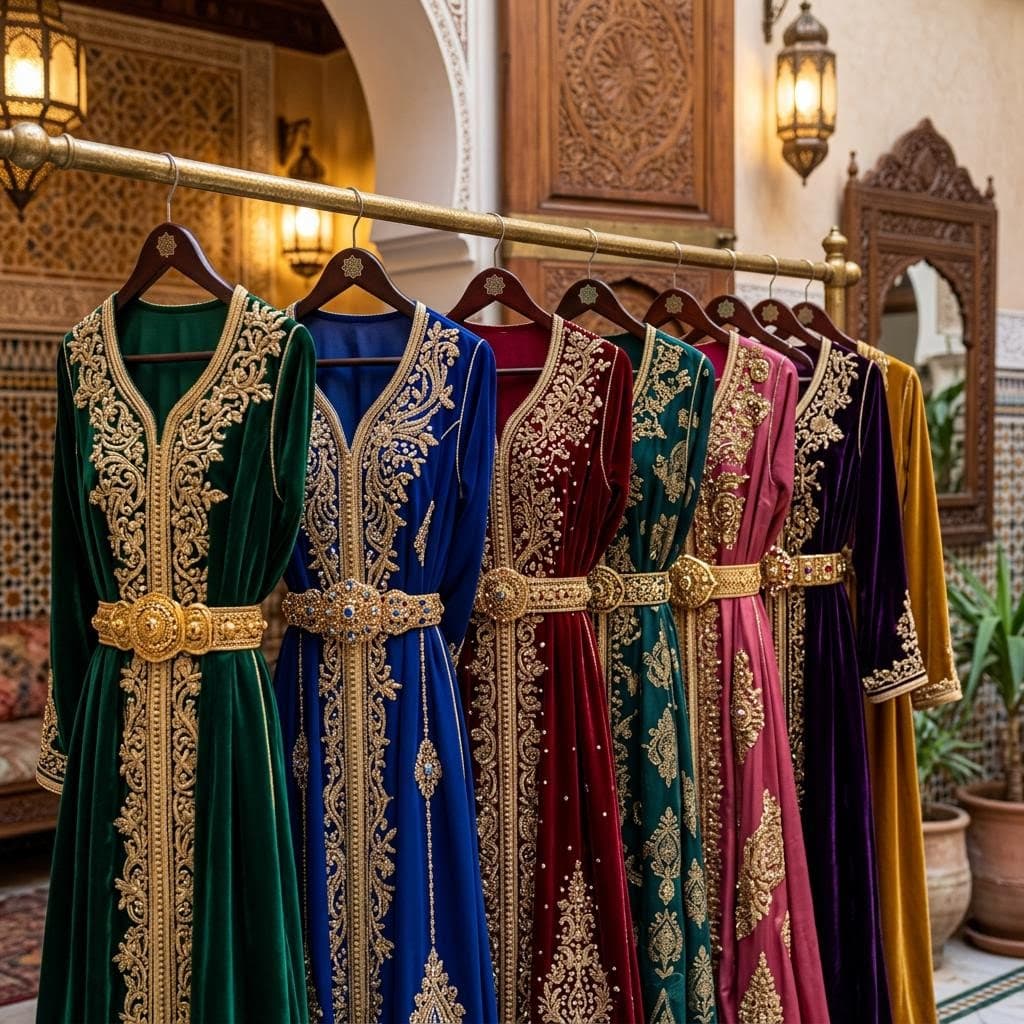
Maghrebi wedding outfits: guide for the bride, groom and guests
Outfits play a central role in a Maghrebi wedding. They allow the bride and groom to showcase their origins, family heritage and personality.
Moroccan caftan, Algerian karakou, Tunisian outfit or white dress: the possibilities are many. Some couples choose a single outfit, while others arrange several changes during the reception.
There is no obligation. The choice should above all take into account family traditions, the budget and the comfort of the bride and groom.
How to choose your wedding outfits?
Before starting fittings, the future bride and groom must determine the overall style of their reception.
Several questions can help them:
- Which origins do they want to represent?
- Do they want to wear a white dress?
- How many outfit changes do they plan?
- Will the clothes be bought, made or rented?
- Which accessories and jewelry will be necessary?
- How much time can be devoted to the changes?
The outfits must also correspond to the season, the temperature of the venue and the different movements planned during the reception.
The Moroccan caftan
The Moroccan caftan is one of the best-known outfits at Maghrebi weddings. It is distinguished by its embroidery, finishes and belt, which structure the silhouette.
It can be made from different fabrics such as velvet, silk, satin or brocade. Colors and ornaments are chosen according to the bride's style.
A caftan can be traditional, modern, simple or heavily embellished. It can be worn during the henna ceremony, the couple's entrance or another part of the reception.
The Moroccan takchita
The takchita is generally composed of several layered pieces. It is often more ceremonial and may include numerous embroideries, beads or decorative stones.
It is accompanied by a belt called mdamma, which can be matched to the jewelry and other accessories.
To remain comfortable, the bride should check the weight of the outfit, sleeve length and freedom of movement before the wedding.
A full fitting with shoes and jewelry allows one to anticipate any alterations.
Also read: Moroccan wedding: traditions, outfits and ceremony flow
Algerian bridal outfits
Algeria has a great diversity of regional outfits. The bride can select clothes corresponding to her origins or organize a tasdira presenting several regions.
Among the best-known outfits are:
- the Algiers karakou;
- the Tlemcen chedda;
- the Oran blouza;
- the Kabyle dress;
- the Constantine gandoura;
- the Chaouia melhfa.
Each outfit has its own materials, colors, embroidery and accessories. Some are accompanied by imposing jewelry or a traditional headdress.
The bride should plan for someone to help her during changes, especially when the outfit includes several pieces.
Traditional Tunisian outfits
Tunisian outfits also vary according to regions and family traditions. The bride can wear a fouta and blouza, an embroidered dress, a regional costume or a modern creation inspired by Tunisian heritage.
Fabrics can be decorated with gold or silver embroidery and accompanied by traditional jewelry.
Some brides wear a Tunisian outfit during the henna evening, then choose a white dress for the main reception. Others alternate several styles during the same evening.
Also read: Tunisian wedding: traditions, outfits and event flow
The white dress
The white dress can perfectly be paired with traditional outfits. It can be worn for the couple's arrival, the first dance, the civil ceremony or the end of the reception.
The model should be chosen according to the bride's style and the planned schedule. A very voluminous dress can be spectacular, but less practical for dancing or moving between tables.
Some brides plan a second, lighter dress in order to comfortably enjoy the dance floor.
How many outfits to plan?
There is no required number. A bride can wear a white dress and a traditional outfit, or arrange several changes to represent different regions.
Before multiplying outfits, take into account:
- the time needed for each change;
- the cost of rental or making;
- the alterations;
- the jewelry and accessories;
- the hairstyle;
- the organization of the meal and entertainment.
Too many changes can prevent the bride from enjoying her guests. It is therefore preferable to favor a few truly important outfits.
The groom's outfits
The groom can wear a classic suit or choose a traditional outfit corresponding to his origins.
He can notably opt for:
- a jabador;
- a gandoura;
- a djellaba;
- a Tunisian jebba;
- a burnous;
- a regional traditional suit.
It is possible to start the reception in a suit, then wear a traditional outfit for an entrance, a photo session or an entertainment.
Colors can be matched to those of the bride without being necessarily identical.
Jewelry and accessories
Accessories complete the outfit and can sometimes entirely transform the bride's style.
Depending on the clothes chosen, she may wear:
- an ornate belt;
- a crown;
- a tiara;
- earrings;
- a necklace;
- bracelets;
- a veil;
- a traditional headdress.
Jewelry must be tried on with the outfit to check their weight and comfort. An imposing headdress or necklace can become difficult to wear for several hours.
Accessories should also be stored and identified separately to facilitate changes.
Buy, rent or have your outfits made?
Buying allows you to keep the outfit after the wedding and to fully personalize it. It can however represent a significant budget.
To prepare your budget in detail: Budget for a Maghrebi wedding: expenses to expect and tips to save
Renting gives access to several models without having to finance their full making. You should nevertheless check the condition of the outfit, the deposit conditions and alteration or cleaning fees.
Custom tailoring allows you to choose the fabric, colors, embroidery and cut. This solution requires starting early enough to carry out fittings and corrections.
Before signing, it is advisable to request a quote specifying:
- the elements included;
- the accessories provided;
- the alterations;
- the rental duration;
- the amount of the deposit;
- the conditions in case of damage.
What to wear as a guest?
Guests can wear a traditional outfit or an elegant evening outfit. It is preferable to check the theme and level of formality indicated by the couple.
A female guest can choose a caftan, a takchita, a karakou, a traditional dress or an evening gown. A male guest can wear a suit, a traditional ensemble or smart attire.
It is advised to avoid an outfit too close to the bride's and to respect any color guidelines communicated on the invitation.
Comfort is also important, particularly when the reception is expected to last the whole evening.
When to start fittings?
For a made-to-measure outfit, it is preferable to start several months before the wedding. This time allows you to choose fabrics, follow progress and carry out several alterations.
For a rental, models must also be reserved in advance, especially during the high season.
A final fitting should be organized shortly before the reception with the shoes, jewelry and undergarments planned for the wedding day.
Finding a professional for your outfits
A designer, a tailor or a specialized rental service can help the couple choose clothes that match their origins, body shape and budget.
On DreamWeds, you can search for wedding professionals and compare different services to prepare your outfits, your beauty prep and your entire reception, from decoration to photos.
Frequently asked questions about Maghrebi wedding outfits
Does a bride have to change outfits several times?
No. She can wear a single outfit throughout the reception or plan several changes according to her desires.
What is the difference between a caftan and a takchita?
The caftan is generally composed of a single main piece, while the takchita includes several layered pieces.
Can traditional outfits be rented?
Yes. Many professionals offer rentals including jewelry, belts and some accessories.
When should a made-to-measure outfit be ordered?
It is advisable to start several months before the wedding in order to have enough time for making and alterations.
Can outfits from several cultures be mixed?
Yes. Couples can choose different outfits representing both families and their shared story.
DreamWeds
Find your dream vendors
Photographers, caterers, venues and much more — compare up to 4 vendors side by side.
Find vendors for my weddingArticles on the same topic
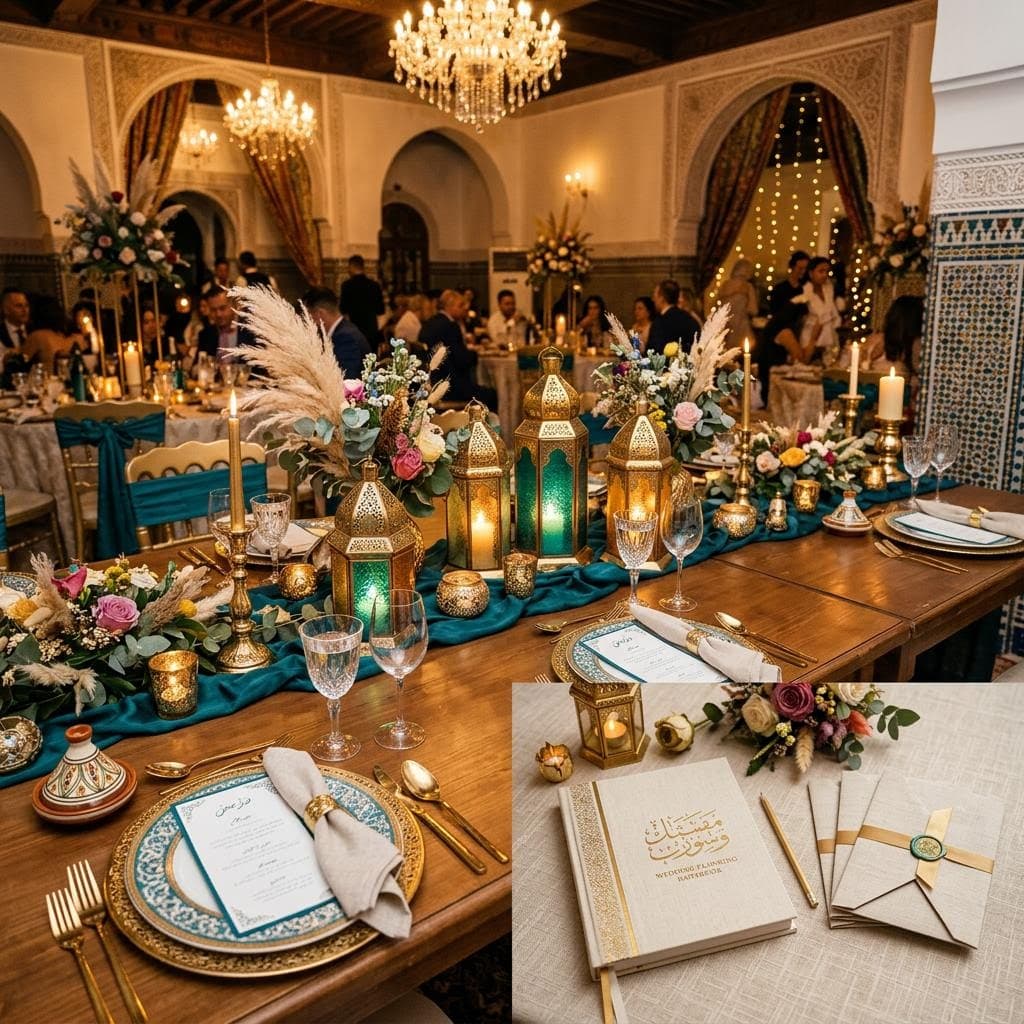
Budget for a Maghrebi wedding: expected expenses and tips to save
Venue, caterer, outfits and decoration: discover how to calculate the budget for your Maghrebi wedding and avoid unexpected expenses.
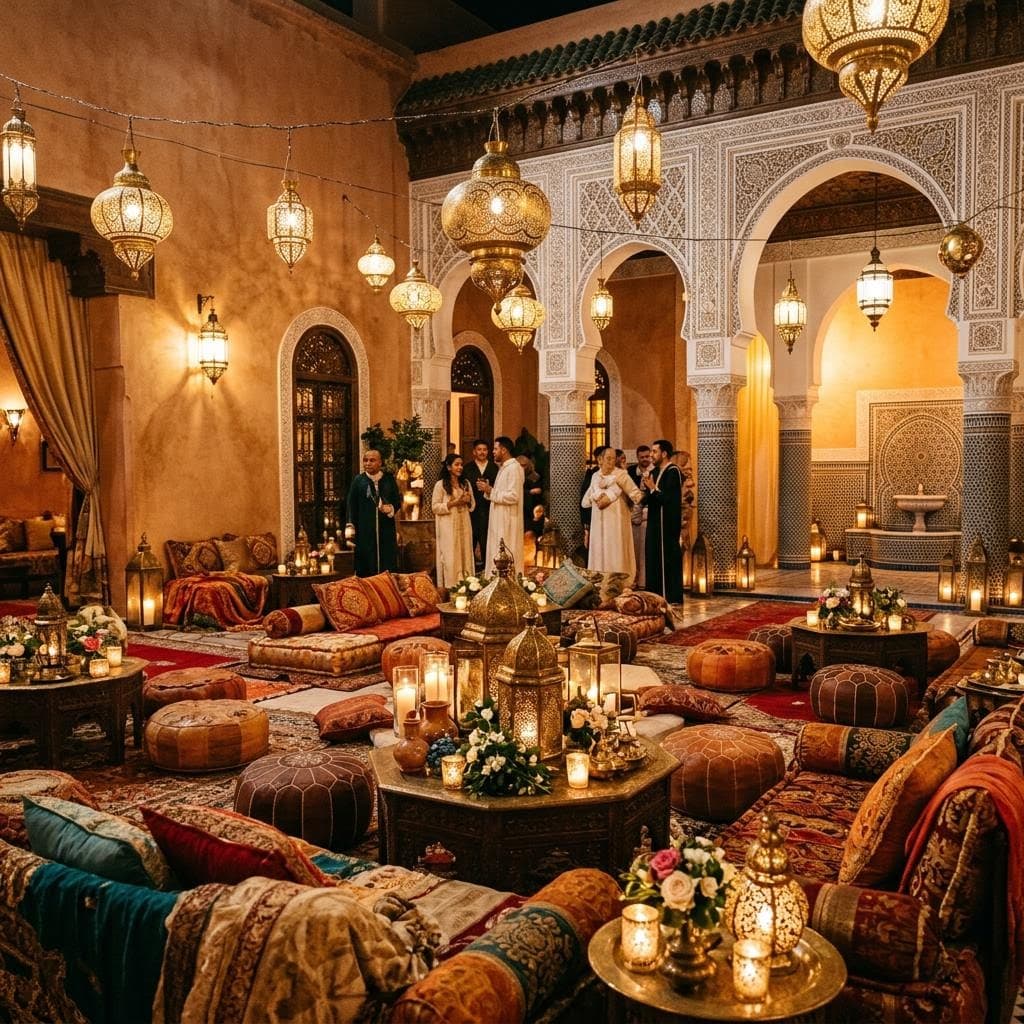
Maghrebi wedding decoration: ideas and tips for an elegant hall
Discover our decoration ideas for a Maghrebi wedding: colors, couple area, tables, flowers, lighting and the henna ceremony.
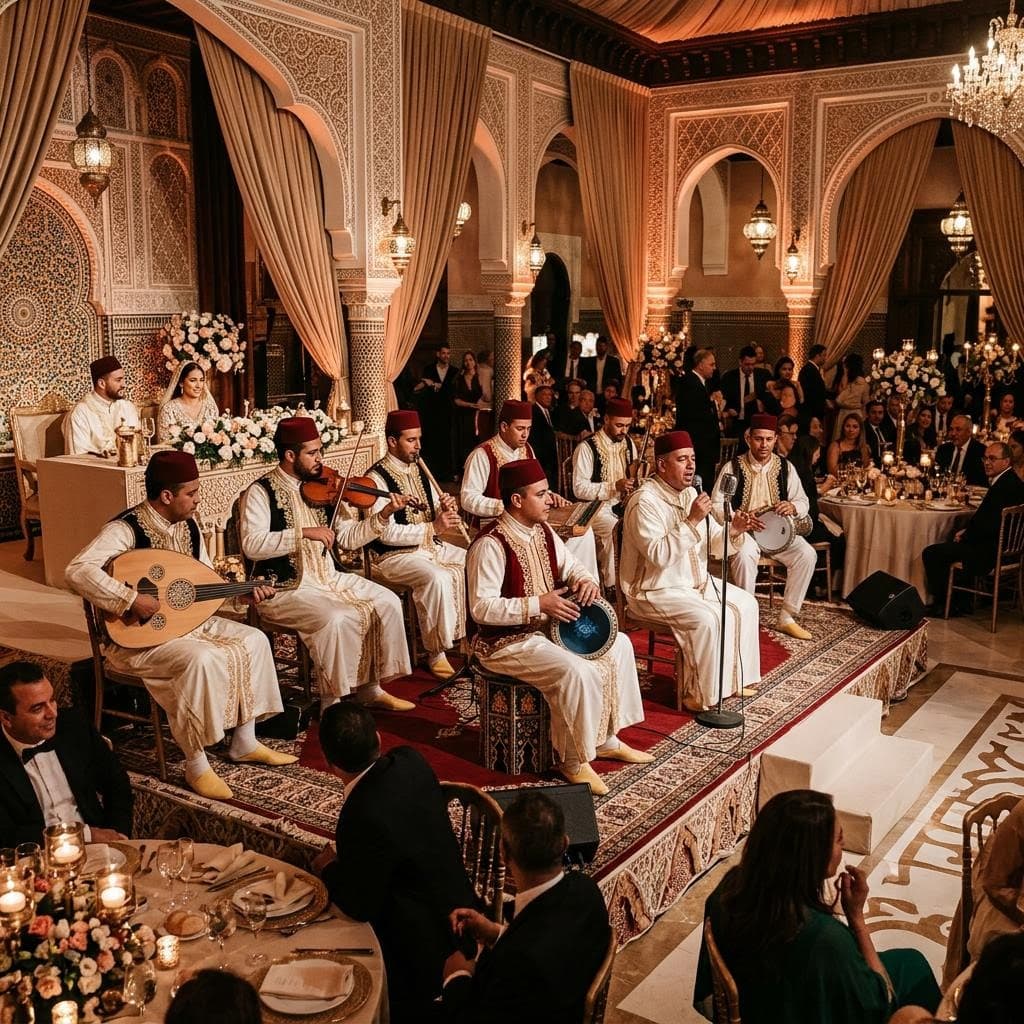
Maghrebi wedding music: DJ, orchestra and entertainment
DJ, orchestra, dakka and traditional music: discover how to create the perfect atmosphere for your Maghrebi wedding.