
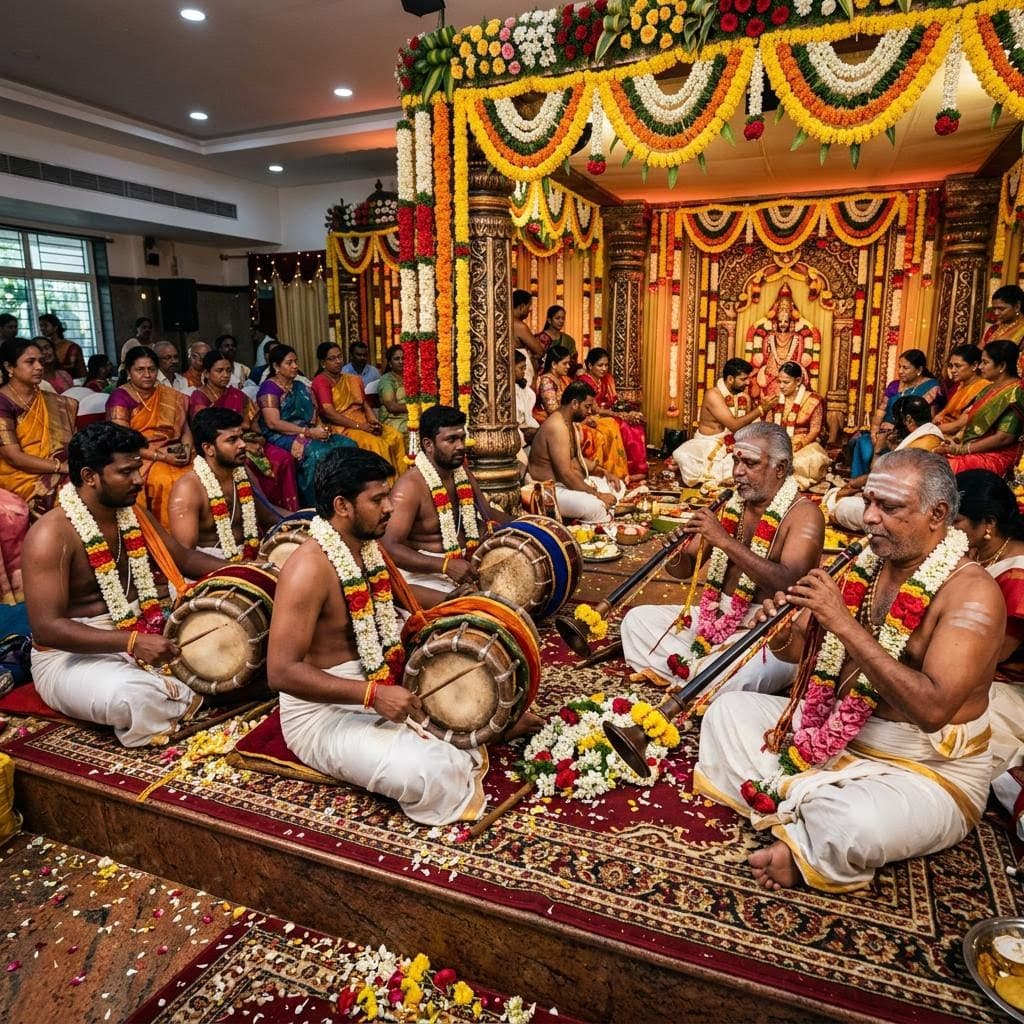
Nadaswaram and Thavil: the traditional music of the Tamil wedding
From the first notes, their sound is immediately recognizable.
The Nadaswaram and the Thavil are instruments traditionally associated with Hindu ceremonies and celebrations in South India.
At a Tamil Hindu wedding, they can accompany different key moments and help create an atmosphere that is at once traditional, festive and solemn.
But when should the musicians be called in? How long should you book them for? And how do you organize their performance with the rest of the ceremony?
What is the Nadaswaram?
The Nadaswaram, also spelled Nadhaswaram or Nadasvaram, is a traditional wind instrument from South India.
It belongs to the double-reed family and has a particularly powerful sound, suited to ceremonies and large spaces.
It is strongly associated with Carnatic music, temples and ceremonial events.
What is the Thavil?
The Thavil is a traditional percussion instrument.
It very frequently accompanies the Nadaswaram and provides the rhythmic part of the musical ensemble.
The pairing of the two instruments forms one of the most characteristic sounds of many traditional ceremonies in South India.
Why are these instruments found at weddings?
The Nadaswaram is traditionally regarded as an instrument associated with auspicious and ceremonial events.
It is notably used at weddings and religious ceremonies in South India.
In a Tamil wedding, music therefore does not only serve to entertain the guests.
It also contributes to the atmosphere of the ceremony and accompanies certain symbolic moments.
Practices can, however, vary depending on families, communities and the chosen religious proceedings.
At which moments should the Nadaswaram and the Thavil play?
There is no single program applicable to all Tamil weddings.
The timing of the musicians' interventions should ideally be defined with the priest, the families and the artists.
Here are nevertheless several moments when music can be present.
The groom's arrival
The groom's arrival can be accompanied by the musicians.
The music helps create an immediate festive atmosphere and to announce his arrival to the guests.
The photographer and videographer should be informed so they are ready before the entrance begins.
The bride's arrival
The bride's entrance is also a particularly important moment.
Depending on traditions and the couple's preferences, the musicians can accompany her arrival up to the ceremony area.
Before the wedding, specify:
- ☐ The starting point
- ☐ The bride's route
- ☐ The approximate time
- ☐ The desired duration
- ☐ The piece or style desired if necessary
During the Maalai exchange
The exchange of the Maalai, the brides' flower garlands, can also be accompanied musically.
This moment is often very lively and surrounded by relatives.
The music then helps reinforce the celebratory atmosphere.
During the Oonjal
When the Oonjal is part of the ceremony, the musicians can also accompany this moment.
The couple is seated on the swing while the families take part in the various traditional gestures.
To learn more: Oonjal dans un mariage tamoul : signification et déroulement
At the moment of the Thali
The moment of the Thali is generally one of the highlights of the ceremony.
When musicians participate in the wedding, they must know exactly when this step will take place.
The priest can give them the signal or a person in charge of coordinating the ceremony can inform them.
This coordination is essential, because the Thali moment can be relatively short.
To learn more: Le Thali dans un mariage tamoul : signification et tradition
Taking the Muhurtham into account
If certain moments of the ceremony must respect a Muhurtham, the musicians must also know the schedule.
Do not tell them only:
"The ceremony starts at 9 a.m."
Instead provide a schedule indicating the main moments.
For example:
- 08 h 30 : arrival of the musicians
- 09 h 00 : arrival of the groom
- 09 h 30 : arrival of the bride
- 10 h 00 : Maalai / rituals
- 10 h 30 : main moment around the Muhurtham
- 11 h 30 : approximate end of the ceremony
This example is for guidance only.
The real program must be defined with the priest and the families.
To learn more: Muhurtham dans un mariage tamoul : date et heure de cérémonie
How many musicians should you plan for?
The composition of the group depends on the artists and the chosen performance.
The Nadaswaram is generally paired with the Thavil, but formations can vary.
It is therefore better to ask the provider directly:
- how many musicians will be present;
- which instruments will be played;
- how long they will play;
- whether they will perform throughout the ceremony or only at certain moments.
How long should you book the musicians for?
This depends on the wedding program.
Some performances may cover only the main moments.
Others can accompany a large part of the ceremony.
Before requesting a quote, prepare:
- ☐ Desired arrival time
- ☐ Ceremony start time
- ☐ Time of the Muhurtham
- ☐ Approximate end time
- ☐ Specific moments to accompany
The provider will then be able to determine the necessary duration.
Traditional music and DJ: can you have both?
Yes.
The two services have very different roles.
Nadaswaram and Thavil
They can accompany the traditional ceremony and the main religious moments.
DJ
The DJ performs more during the reception and the evening.
It is therefore perfectly possible to organize:
Morning / ceremony: Nadaswaram + Thavil
then:
Reception / evening: DJ
This allows you to keep the traditional atmosphere during the ceremony and then completely change the mood for the party.
Can you mix traditional and modern music?
Some groups today offer different approaches, ranging from a traditional performance to more contemporary adaptations.
If you want a particular style, request it before booking.
Avoid assuming that a traditional group will automatically be able to play all the modern pieces you ask for.
Should the pieces be chosen in advance?
It depends on the provider.
Some musicians build their own program according to the ceremony.
Others may accept certain requests.
Simply ask the question:
"Should we choose the pieces or do you manage the music yourselves according to the different stages of the ceremony?"
If you have a piece that is important for your family, mention it early enough.
Where to place the musicians?
The placement must be planned with the venue and the decorator.
Musicians must have:
- enough space;
- good visibility of the ceremony;
- easy access;
- a location where they do not block the guests.
They should also not be placed directly in front of the photographers and videographers.
Plan the space from the decoration stage
When the Mandap and the different spaces are designed, think about the musicians immediately.
The decorator can provide a specific location.
To learn more: Décoration de mariage tamoul : Mandap, fleurs et inspirations
Inform the photographer and videographer
Musicians are also part of the wedding story.
It can be interesting to plan:
- shots of the Nadaswaram;
- shots of the Thavil;
- images of the musicians during the entrances;
- images during the Thali;
- reactions of the families.
The videographer will especially keep the sound and atmosphere of the ceremony.
To learn more: Photographe et vidéaste pour mariage tamoul : les moments à ne pas manquer
Check the venue's sound constraints
The Nadaswaram naturally has a strong sound projection.
It is therefore useful to inform the venue of the presence of traditional musicians.
Ask in particular:
- ☐ Are acoustic instruments allowed?
- ☐ Is there a particular sound restriction?
- ☐ Can we play outside?
- ☐ Until what time is music permitted?
- ☐ Do we need additional amplification?
This avoids any surprises on the wedding day.
Indoors or outdoors?
Musicians can potentially perform in several spaces depending on the organization.
For example:
- in front of the venue for an arrival;
- in the foyer;
- near the Mandap;
- in the ceremony space.
The program should be defined in advance to avoid moving the artists in a hurry.
Musicians for a wedding in a temple
When the ceremony takes place in a temple, check directly with the venue what the practices and possibilities are.
Some temples may have their own habits or constraints regarding musicians.
It is therefore better not to organize anything without their agreement.
How to choose your musicians?
Before booking, ask to listen to several samples.
You can look at:
- wedding videos;
- live performances;
- social networks;
- demonstrations;
- recommendations.
Do not be satisfied with only a photo of the group.
As music is the heart of the performance, it is important to actually hear the artists.
Questions to ask before booking
- ☐ Are you available on our date?
- ☐ How many musicians will be present?
- ☐ Which instruments are included?
- ☐ How many hours are included?
- ☐ Are travel costs included?
- ☐ Can you start early in the morning?
- ☐ Do you play during the Thali?
- ☐ Can you accompany the entrance of the spouses?
- ☐ Do we have to choose the pieces?
- ☐ Do you need amplification?
- ☐ How much space do you need?
- ☐ What is the deposit amount?
- ☐ What happens in case of overtime?
What budget should you plan?
The rate depends in particular on:
- the number of musicians;
- the duration;
- travel;
- the location;
- the schedule;
- any specific requests.
So ask for a detailed quote.
The price should clearly indicate:
- Musical service: ___ €
- Travel: ___ €
- Duration: ___ hours
- Number of musicians: ___
- Overtime: ___ €
You will thus be able to compare several proposals correctly.
Checklist Nadaswaram and Thavil
Before booking
- ☐ Group found
- ☐ Videos listened to
- ☐ Number of musicians confirmed
- ☐ Price confirmed
- ☐ Travel confirmed
- ☐ Duration confirmed
A few weeks before
- ☐ Schedule sent
- ☐ Muhurtham time communicated
- ☐ Thali moment communicated
- ☐ Groom's entrance communicated
- ☐ Bride's entrance communicated
- ☐ Oonjal communicated if planned
- ☐ Placement defined
With the other providers
- ☐ Venue informed
- ☐ Priest informed
- ☐ Decorator informed
- ☐ Photographer informed
- ☐ Videographer informed
- ☐ Coordinator informed
Music that fully contributes to the wedding atmosphere
The Nadaswaram and the Thavil are not simply additional entertainment.
When they are part of the traditions followed by the families, they fully contribute to the identity and atmosphere of the ceremony.
The most important thing is therefore to coordinate the musicians with the priest and the other providers so that they can accompany the right moments without disrupting the flow of the wedding.
Prepare the rest of your Tamil wedding
To continue your preparations, also consult:
- Mariage tamoul hindou : traditions et déroulement
- Préparer un mariage tamoul : la checklist complète
- Muhurtham dans un mariage tamoul : date et heure de cérémonie
Find musicians for your wedding
Are you looking for a Nadaswaram and Thavil group, a DJ or other professionals for your wedding?
On DreamWeds, discover the providers available and find the professionals suited to your event.
DreamWeds
Find your dream vendors
Photographers, caterers, venues and much more — compare up to 4 vendors side by side.
Find musicians for my weddingFind a DJArticles on the same topic
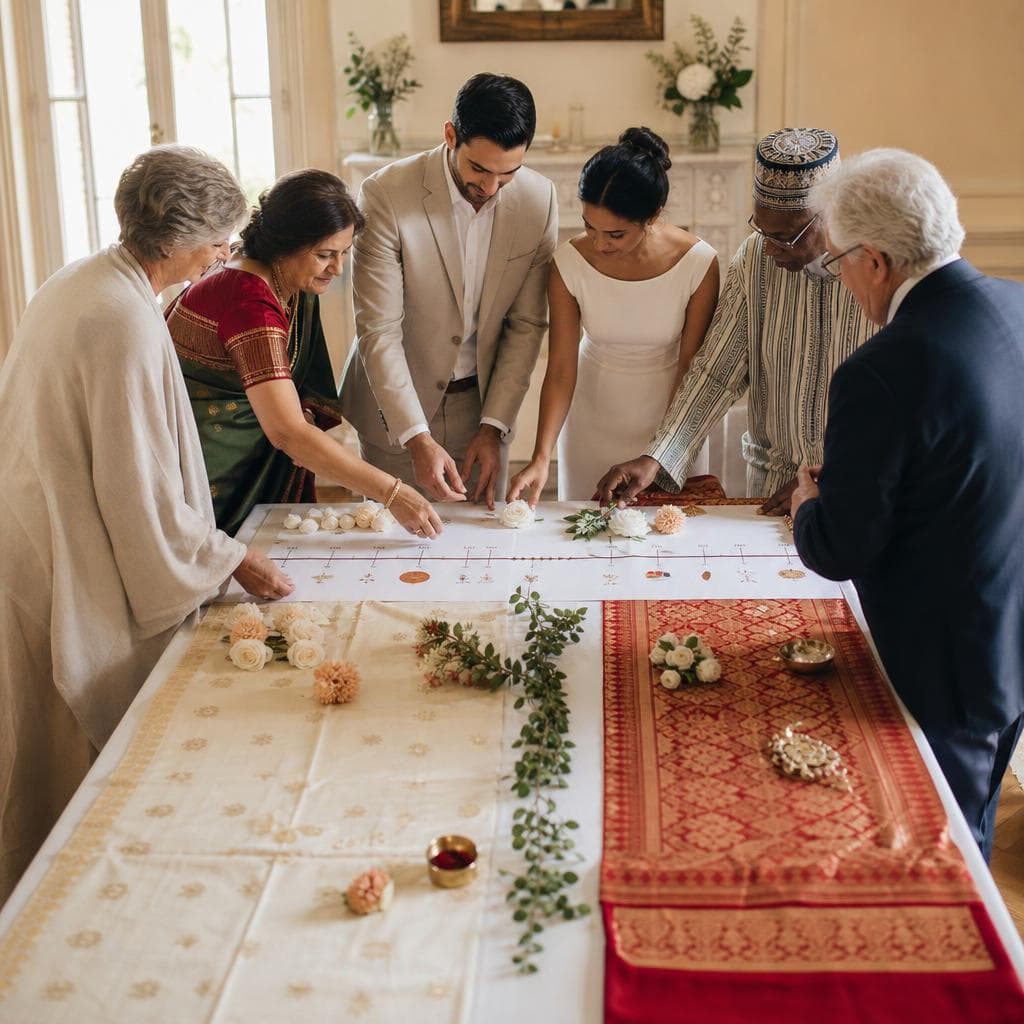
Organizing a Multicultural Wedding: Practical Tips
Blending two traditions, addressing guests from different cultures, and creating a ceremony that is meaningful for both families.
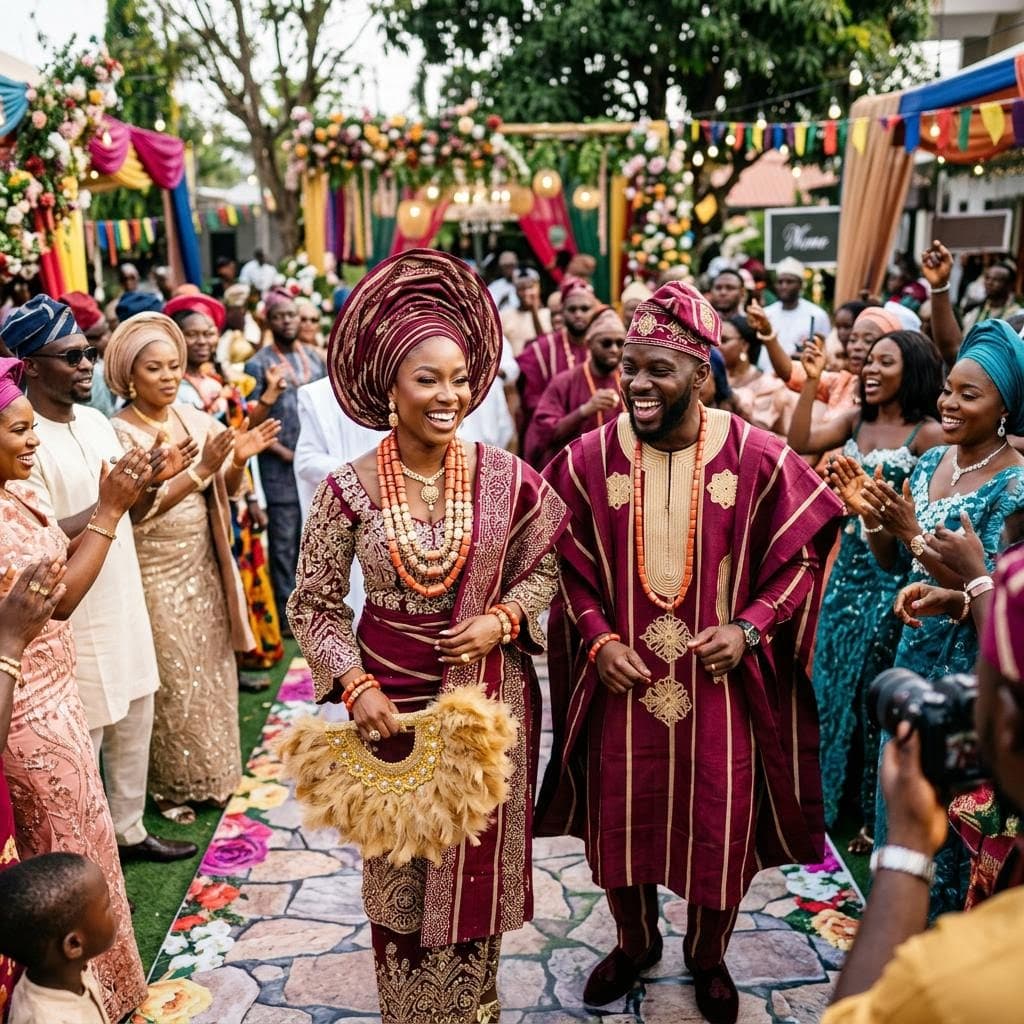
Nigerian wedding: Yoruba, Igbo and Hausa traditions
Discover Nigerian wedding traditions: Yoruba, Igbo and Hausa ceremonies, outfits, aso ebi, food, music and organization.
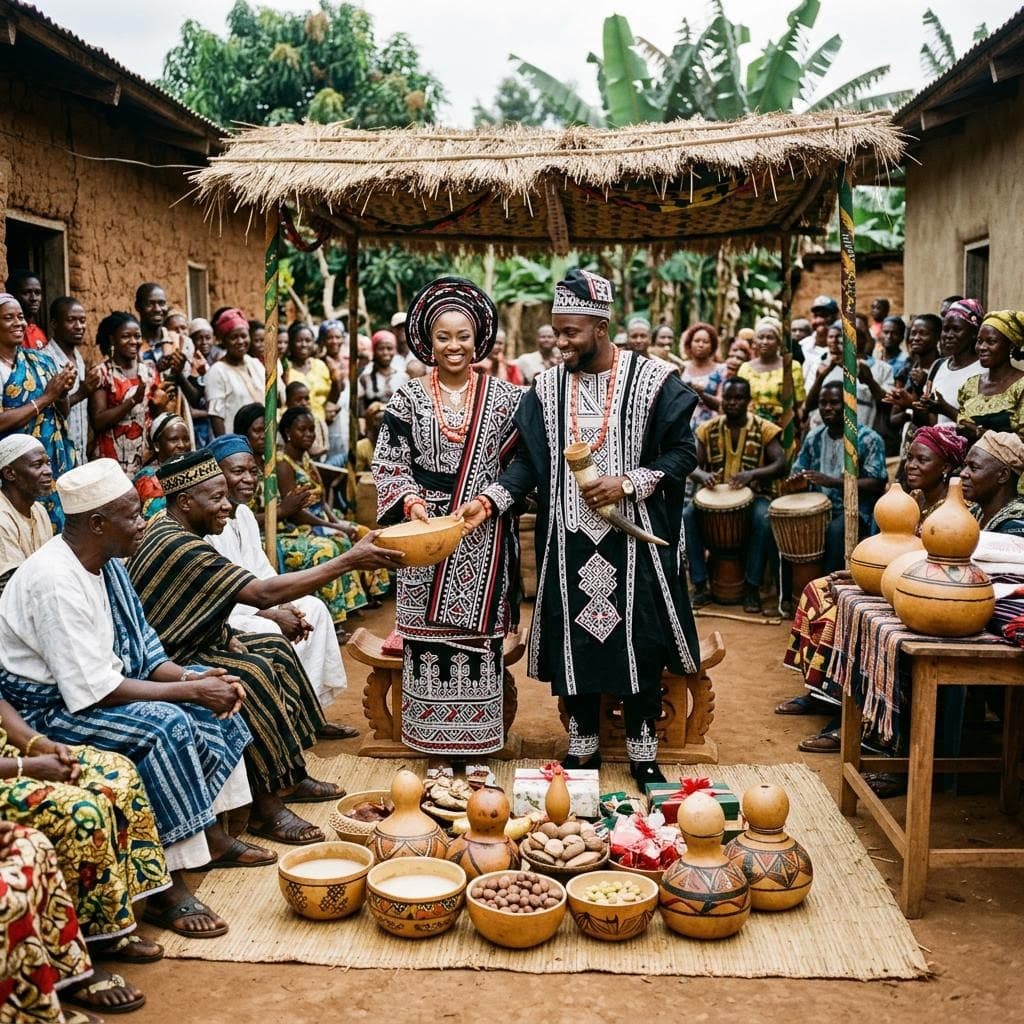
Cameroonian wedding: traditions, dowry, outfits and timeline
Discover the traditions of a Cameroonian wedding: meeting of the families, dowry ceremony, outfits, meal, music and organization.