
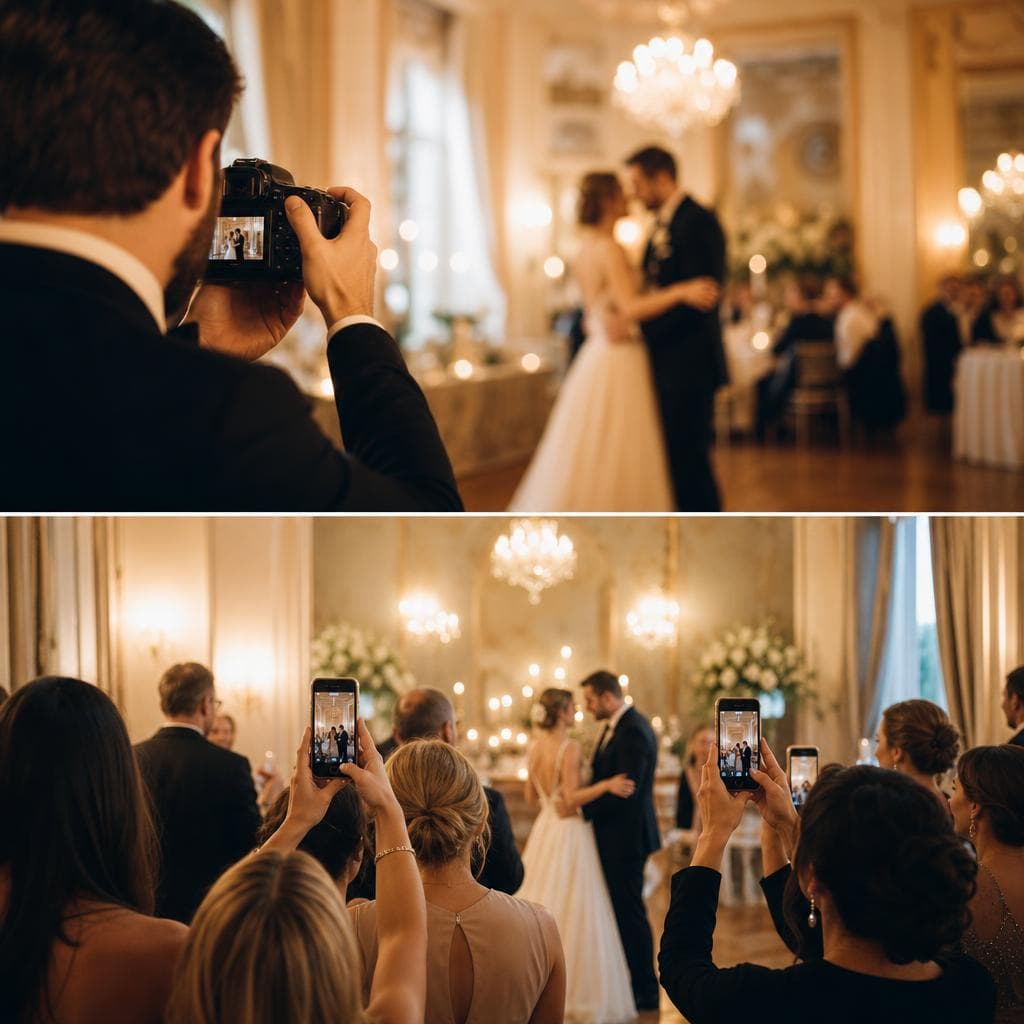
Photographer and guests' photos: two complementary perspectives for your wedding
The photos of your wedding will not all come from the same camera, and that's a good thing. The professional photographer observes, anticipates, and builds a coherent series. Your loved ones, meanwhile, capture a burst of laughter, a conversation, or a detail that the photo team didn't see. These images have different qualities: they do not replace one another, they complement each other.
Why keep both perspectives?
The wedding photographer is present with a specific intention. They know the light, watch the backgrounds, and know where to position themselves without interrupting a moment. Their work provides a narrative: the preparations, the ceremony, the portraits, the reception, and the small gestures that connect the day. They can also guide you when you no longer know where to look, while leaving room for what happens naturally.
Guests tell another part of the event. They are at the table, on the dance floor, behind the scenes of a ceremony, or beside a family member. Their phone or camera sometimes produces a less controlled image, but one that is more intimate. A photo taken by a cousin while you discover the decoration doesn't look like the selection delivered by your photographer: yet it shows a memory you might have missed.
What the professional photographer brings
Coverage planned before the big day
An initial discussion makes it possible to define the important moments, the people to photograph, and the venue's constraints. A reasonable list of group shots, family traditions, or outfit changes can be mentioned. The professional transforms this information into a realistic schedule, with time for movement and unforeseen events.
Image quality and continuity
Their equipment, experience with light, and eye provide a homogeneous series. They can work in a dark room, handle backlighting, or compose with the weather. Retouching also gives unity to the selected images. That does not mean that every photo will be perfect or that every moment will be covered: ask what is included rather than inferring a promise from the portfolio shown.
A contractual framework to check
Before signing, have the duration of presence, the number of people in the team, the deadlines, the delivery format, the indicative number of images, and the options specified. RAW files, that is the raw files from the camera, are not automatically handed over. Their delivery depends on the photographer's practice and the contract; it may be excluded, charged as an option, or replaced by finalized files. Do not consider it a given.
The contract may also specify the rights of use of the images by the professional, your own uses, and the conditions for publication in their portfolio. Read these clauses and ask your questions before the wedding. To find professionals to compare, you can consult the listed providers, then keep a written record of the answers.
What guests' photos add
Spontaneous scenes and unexpected angles
A guest can photograph friends reuniting, a grandparent's hand on a shoulder, or children inventing a game during the meal. They do not necessarily follow the program and are not trying to produce a complete gallery. That is precisely what makes these images valuable: they extend your memory with details experienced from the room, and not only from the couple's point of view.
How to make them coexist on the wedding day?
Inform without turning guests into a photography crew
You can explain that the photographer must remain free to move. Ask loved ones not to stand in front of the photographer during the exchange of vows, not to use a flash near a sensitive moment, and to follow the venue's rules. A simple note in the program or a trusted person is enough: the goal is to enjoy the celebration, not to assign everyone a task.
If you plan group portraits, let the photographer organize them. Photos taken in parallel can complement the scene, but several people giving instructions at the same time often lengthen the session and tire out families. Reserve the freer images for moments when movement is natural.
Plan a method for collecting
Choose before the reception how the files will be gathered: a shared album created by you, a storage space whose rules you know, or sending them to a person responsible for centralizing the photos. Check the maximum file size, the announced retention period, the download options, and how to remove an image. Do not promise your guests unlimited or permanent retention without having checked the service's conditions.
Also ask guests to keep their originals until you have retrieved the files. Sending by messaging can reduce quality; when possible, favor the original file or a download link. The person who centralizes them can note the author and context, because a photo without indication becomes difficult to attribute a few months later.
Respect consent and rights
A private photo is not permission to publish
Being present at the wedding does not mean consenting to appear on the internet, in a public album, or in a provider's portfolio. Ask for the agreement of recognizable people before publication, especially for children, and respect a refusal without trying to circumvent it. An image can be kept for the family circle while remaining inappropriate for a social network.
Before passing the selection to a provider, check that the people concerned know what it will be used for. For wider distribution, identify people who do not wish to appear and remove the images concerned. Venue rules, ceremony instructions, and the photographer's rights may also limit certain uses. In case of doubt, seek professional advice rather than assuming every received image is free of rights.
A simple method for your selection
Start by saving the files in two separate locations, without immediately deleting duplicates. Then create folders by moment: preparations, ceremony, groups, cocktail, meal, dance, and the next day. Separate the professional's finalized gallery from the guests' spontaneous images, then create a short selection for sharing. Keep aside files to check: identifiable person, insufficient quality, uncertain consent, or unknown author.
This organization allows you to later prepare an album that mixes the two perspectives without implying they adhere to the same specifications. To continue the series, discover how to retrieve your guests' photos, create a shared album, and organize your memories after the wedding. You can also read the guide on QR codes and photo sharing and the one dedicated to rights related to the photographer's and guests' photos on the DreamWeds blog.
Frequently asked questions
Can guests' photos replace a professional photographer?
No, not if you want planned coverage, a coherent series, and images taken in difficult conditions. Guests are not everywhere and their files depend on their device and availability. Their photos provide a valuable spontaneous perspective; they are a complement, not a guarantee of a reportage.
Must the photographer provide RAW files?
Not necessarily. RAW files, retouched high-definition files, and files intended for the web are different deliverables. Check the contract and ask for a written answer before booking. If the delivery of RAW files is not listed, do not assume it will be included.
Can we publish all the photos received from guests?
No. Ask for the authors' and recognizable persons' permission before publishing, especially when children appear. For private use, still define who can view or download the album. Removing an image after a refusal is preferable to forced distribution.
How to prevent guests from bothering the photographer?
Explain before the ceremony that the professional must keep clear angles and that flashes or multiple people giving instructions should be avoided. A trusted person can answer questions. Guests can photograph freely during moments when this does not disturb the proceedings or the people photographed.
When to gather the wedding photos?
Ask relatives to keep their files until collection, then make an initial backup as soon as you receive them. A thorough sorting can wait until you are calm again. The important thing is to distinguish originals, retouched images, and shared copies before deleting anything.
DreamWeds
Find your dream vendors
Photographers, caterers, venues and much more — compare up to 4 vendors side by side.
Discover vendorsArticles on the same topic

Wedding guestbook: 12 ideas to get messages you'll want to reread
Questions, photos, cards and digital messages: make the guestbook more personal and more lively.
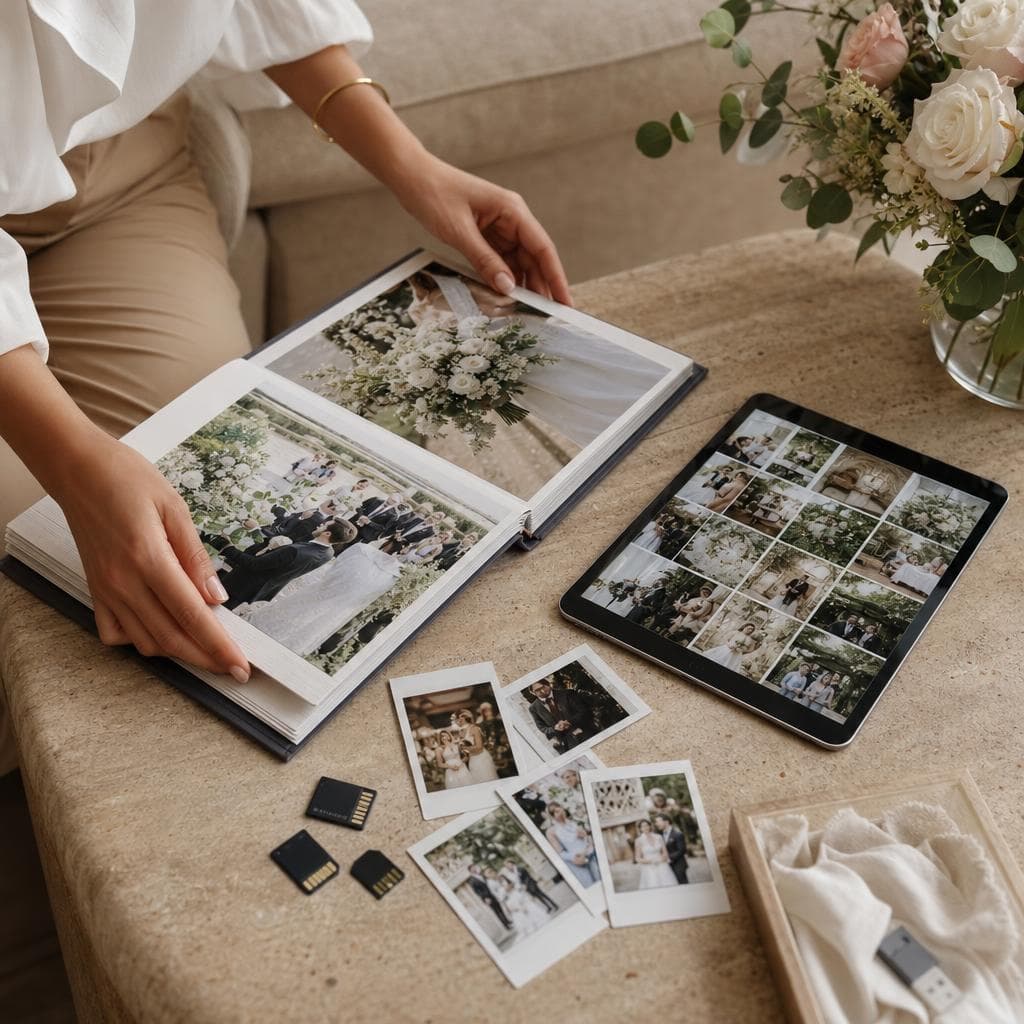
Why create a shared album for wedding photos
A shared album brings together guests' perspectives, complements the photographer's work and makes preserving memories easier.
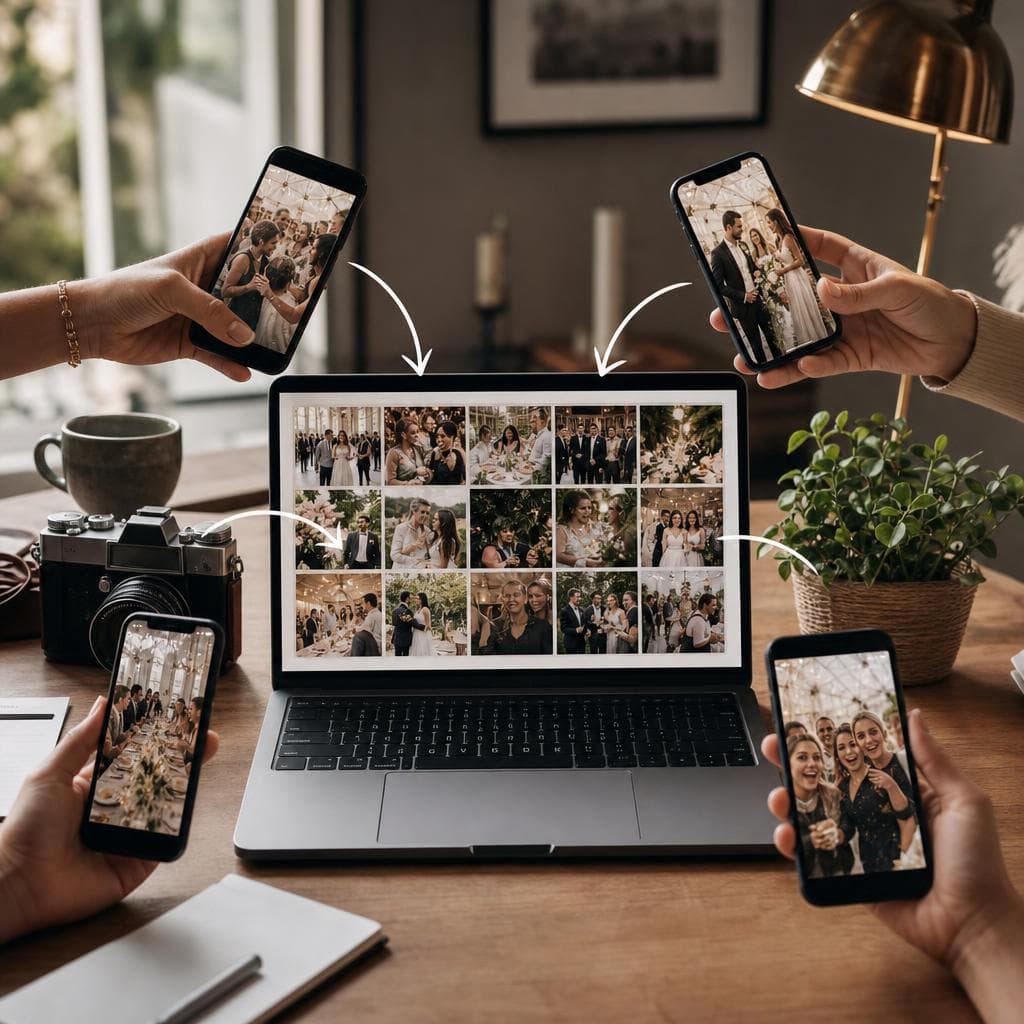
How to collect all your guests' photos after the wedding
Simple method to request, gather, sort and preserve the photos taken by your guests on the wedding day.