
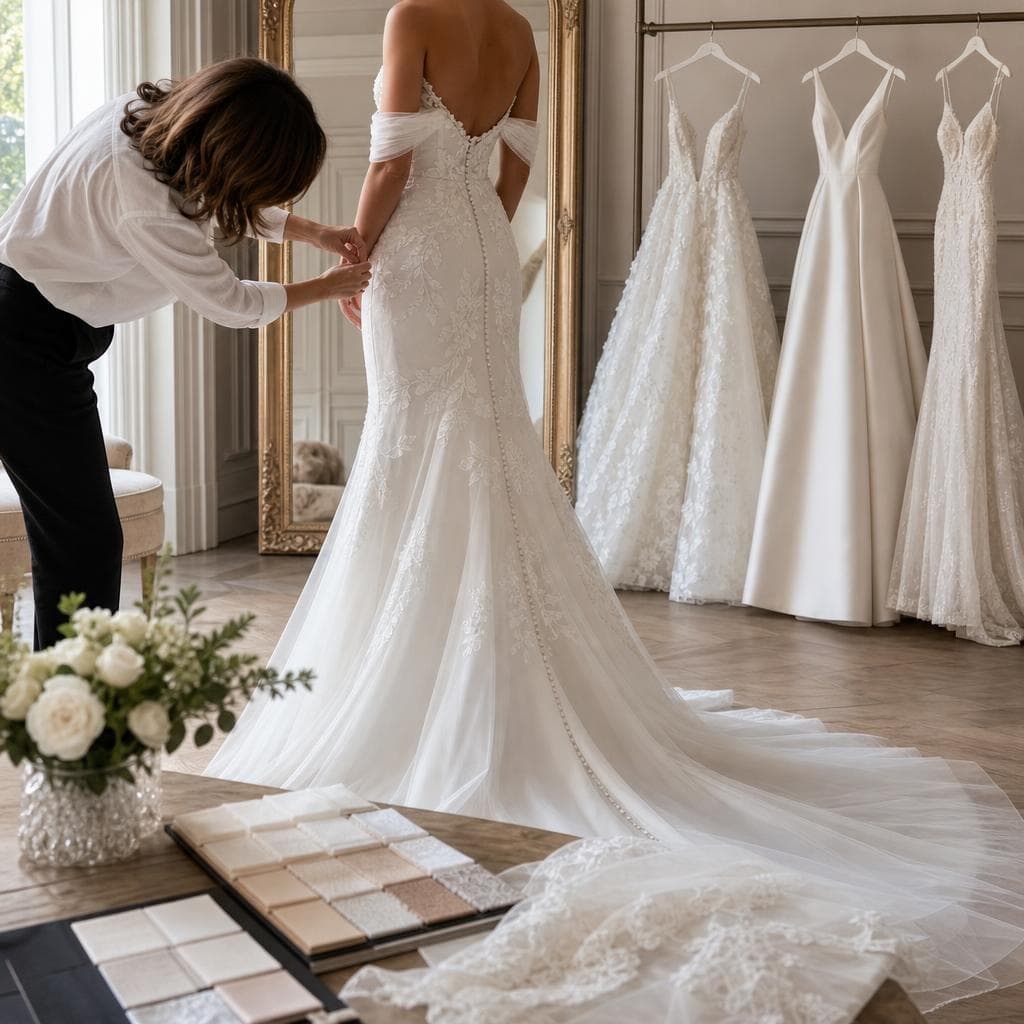
Choosing the dress often triggers a lot of emotion, but also many technical decisions: cut, fabric, budget, timing. Finding your way is less about searching for "the" perfect dress than about first clarifying what really matters to you.
Before the first fitting
Define a budget range
The price of a dress varies enormously depending on the fabric, the house and the finishes. Set a range before you enter the boutique, including alterations, accessories and possible cleaning after the wedding: these items are often added to the price shown on the tag.
Choose the wedding venue and atmosphere
A dress designed for an outdoor summer reception does not have the same constraints as a dress for a winter indoor ceremony. The venue, the season and the level of formality naturally guide the fabric and the length.
Understand the main silhouette families
Mermaid, princess, sheath, A-line
These terms mainly describe how the dress follows (or not) the silhouette at the waist and hips. No cut is universally "the best": trying several silhouettes, even those that don't initially attract you in a photo, remains the most reliable way to know what truly makes you feel comfortable.
Fabrics change everything
Lace, satin, chiffon, crepe: beyond the visual appearance, the fabric influences comfort, perceived warmth and how the dress moves during the day. A fluid fabric often suits a long, active reception better than a very structured material.
Organize the fittings
Make appointments early enough
A made-to-measure dress or a boutique order can require several months lead time, plus the final alterations. Start fittings six to nine months before the wedding to keep a comfortable margin, more for a highly worked model.
Come prepared, without overdoing it
Neutral lingerie and shoes with a heel similar to those you'll wear on the day help to project yourself more accurately. There's no need, however, to come fully made up and styled to the first fitting: the goal is first to test volumes and cuts.
Limit the number of companions
Too many opinions at once during a fitting can blur your own feelings. One or two trusted people are generally enough to give useful feedback without multiplying contradictory opinions.
Alterations, a step not to underestimate
Even a dress bought in a standard size almost always requires alterations to fit perfectly: length, hem, adjustment at the bust or waist. Plan at least one alteration fitting a few weeks before the wedding, and a final try-on with the definitive underwear and shoes.
Think about comfort as much as style
A dress worn all day, sometimes for evening dancing, must remain bearable over time. If you hesitate between two models with a similar look, comfort when seated, walking and with your arms raised can decide the choice as much as pure aesthetics.
Some brides choose a second, lighter outfit for the evening: an option to consider if the main dress is particularly structured or heavy.
Coordinate dress and groom's outfit
The dress and the groom's outfit don't need to match exactly in formality, but too big a mismatch can create an imbalance in photos. Our guide on the groom's outfit details how to harmonize the two without either having to sacrifice their style.
Accessorize without overloading
Veil, jewelry and headpiece
These elements complete the dress but can also undermine it if they compete with an already heavily worked piece. With a very ornate dress, a more discreet accessory often balances the whole better than adding another equally elaborate piece.
Try accessories with the dress, not separately
A veil or a piece of jewelry that seems perfect on its own can make the whole too dense once worn with the dress. Plan a combined fitting before the final purchase of accessories, ideally during the dress's last fitting.
Anticipate the logistics of the big day
Transporting the dress
A voluminous dress sometimes requires a specific mode of transport between the preparation location and the ceremony, notably to avoid creases. Check this point with the boutique or the seamstress, especially for a dress with a long train.
Arrange help for getting dressed
Some dresses close with many buttons or a complex lacing, difficult to manage alone. Designate in advance a person who will know the fastening system, rather than discovering it in the rush on the wedding morning.
Frequently Asked Questions
How long before the wedding should you start looking for your dress?
Six to nine months is a good benchmark for an order-made dress, more for a very elaborate custom model. A dress already in stock can be found later, but leaves less margin for alterations.
Should you buy the dress in your current size or a future size?
Buy in your current size. Alterations can adjust a slightly large dress, but taking in a dress that is too small is often more difficult, even impossible depending on the fabric.
How much do alterations cost on average?
It depends on the extent of the modifications and the fabric. Always ask for an alterations estimate before buying, as this amount can represent a significant part of the outfit budget.
Can you wear a non-white dress?
Yes, there is no obligation regarding color. More and more brides choose pastel or colored shades, or a dress already worn by a relative, altered for the occasion.
What should you do with a dress bought in-store well before the wedding?
Store it flat or hung in a breathable cover, away from direct light and humidity. A final fitting one month before the wedding allows you to check that it is still perfectly fitted.
Should you insure your wedding dress?
For a high-value dress, it can make sense, notably against theft, loss or accidental damage before the big day. Our article on wedding insurance details the cases where dedicated coverage is relevant.
DreamWeds
Find your dream vendors
Photographers, caterers, venues and much more — compare up to 4 vendors side by side.
Discover vendorsArticles on the same topic
Wedding guest attire: what to wear according to the dress code?
Understanding common dress codes, adapting to the venue and season, and avoiding classic faux pas as a guest.
Writing your wedding vows: where to start?
Structuring a personal text, avoiding blocks and delivering it with accuracy on the big day: a simple method for writing your vows.
Wedding rings: how to choose them?
Material, budget, engraving and order lead times: what to know before buying your wedding rings.