
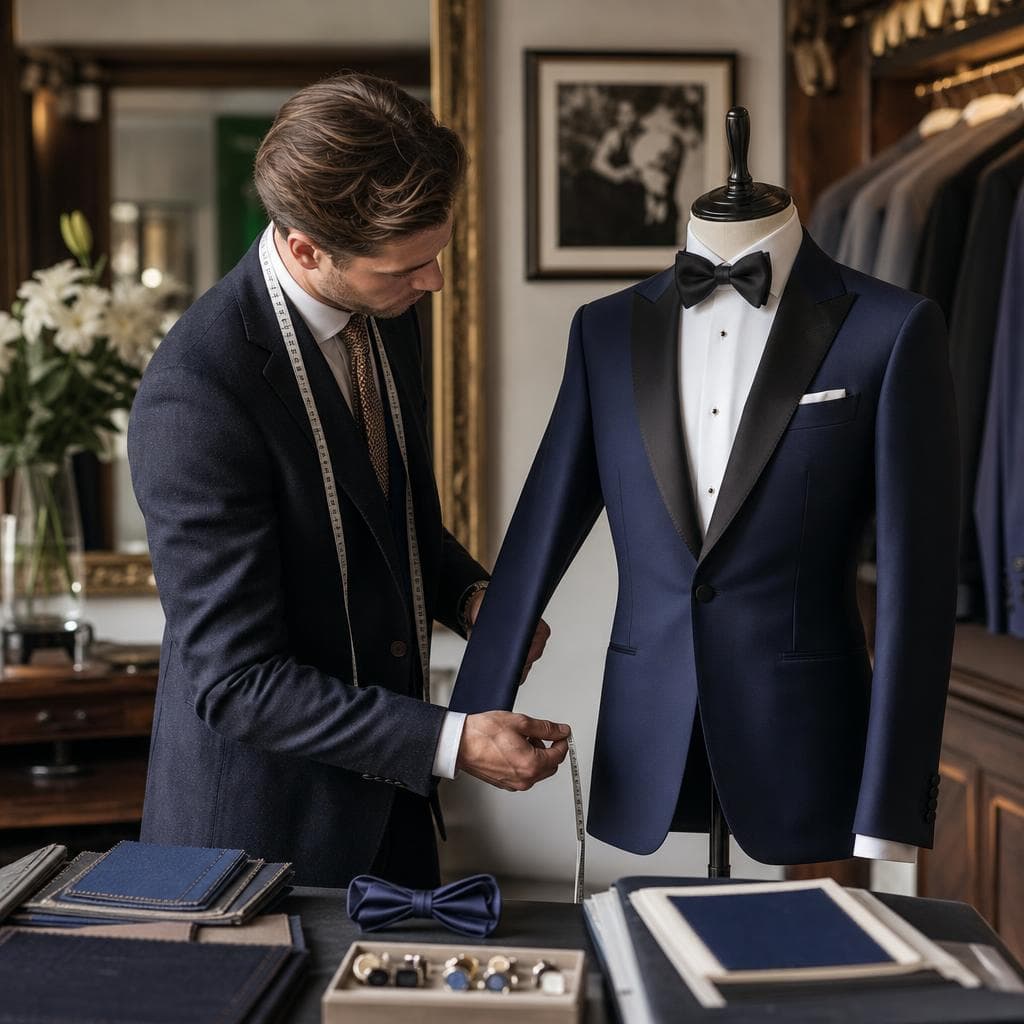
The groom's outfit often receives less attention than the dress, even though it requires the same trade-offs: budget, timing, comfort and consistency with the rest of the wedding. Treating it with the same rigor avoids last-minute choices.
Tailored or adjusted ready-to-wear
Tailored
A tailored suit is precisely adjusted to the body shape and offers full choice of fabric, cut and finishes. Allow several weeks for production and at least two intermediate fittings before final delivery.
Altered ready-to-wear
A ready-to-wear suit, later adjusted by a tailor, offers a good compromise between timing, budget and cut quality. The quality of the alterations often makes more difference to the final result than the brand of the suit itself.
Choosing color and fabric
Match the season and the venue
A lighter fabric and a paler color suit an outdoor summer ceremony, while a heavier fabric and a darker shade are better for a winter or very formal wedding. The reception venue also influences this choice: a rustic setting allows for more casualness than a classic reception hall.
Harmonize without copying the decoration's palette
The suit color does not need to exactly reproduce the decoration or the witnesses' accessories. A complementary tone, chosen with the same general palette in mind, gives a coherent result without seeming overly calculated.
Accessories that make the difference
Tie, bow tie or nothing
The choice mainly depends on the desired level of formality. A tie remains the most classic option, a bow tie brings a more marked touch, and wearing neither suits a more relaxed outfit.
Shoes and small details
Shoes deserve the same attention as the suit: a new pair should be broken in slightly before the big day to avoid discomfort. Cufflinks, a pocket square and a belt or braces complete the outfit without requiring a large budget.
Plan timing as you would for the dress
A parallel schedule
As with the dress, plan to start fittings several months in advance, especially for a tailored suit. The final fitting should take place shortly before the wedding, once weight and silhouette have stabilized.
Dressing the rest of the wedding party
If witnesses or close relatives must wear a matching outfit, communicate the style and color early enough to give them time to obtain or have their own outfit adjusted.
Think about comfort all day long
A suit worn from the ceremony until the end of the evening must remain comfortable when seated, dancing and in the warmth of a crowded room. A jacket that can be removed in the evening and kept in reserve is a simple option to gain comfort without completely changing outfits.
Coordinate with the bride
Good coordination does not mean identical levels of formality, but a visual balance that looks coherent in photos. Our guide on the wedding dress explains the same logic of silhouette, fabric and comfort from the bride's side, useful for matching the two outfits without copying one from the other.
If you are looking for a professional for making or altering, the directory of providers allows you to compare several profiles before committing.
Dress the rest of the male wedding party
Coordinate without uniformity
If witnesses or the fathers of the couple wear an outfit close to yours, a shade variation or a different detail, such as the boutonnière or the tie, lets you stand out without breaking the group's general harmony.
Communicate expectations early
Provide color and style guidance several months in advance to the people concerned, to give them time to rent or have their own outfit adjusted, especially if a common supplier is recommended.
Overall outfit budget
Beyond the suit itself, the groom's outfit budget often includes the shirt, shoes, accessories and alterations. Add up these items from the start rather than discovering them one by one, to avoid gradually exceeding the budget initially planned for the outfit.
Maintain the suit until the big day
One last trip to the dry cleaners
Plan a professional cleaning in the days before the wedding, especially if the suit has been tried on several times or stored for a while. A freshly maintained suit generally hangs better and avoids last-minute surprises.
Check the finishes before the big day
Well-secured buttons, stable hems, tested zippers: a quick check a few days before the wedding allows you to fix a minor detail before it becomes a problem on the morning itself.
Frequently asked questions
Is it mandatory to wear a classic suit?
No. The choice depends on the wedding style: a country or very casual wedding can suit a simpler outfit, as long as consistency with the rest of the day is respected.
How long before the wedding should you book a tailored suit?
Generally allow two to three months minimum, more if the tailor is busy or if the chosen fabric requires a special order.
Can you rent instead of buying?
Yes, it's a common option, especially for an outfit worn only once. Check the return deadlines and the expected condition of the suit before signing a rental agreement.
How to keep the suit comfortable all day?
Favor a breathable fabric, test the outfit when seated and in motion during the final fitting, and plan a lighter version for the evening if needed.
Should you match your socks to the outfit?
This detail often goes unnoticed but deserves a choice coherent with the rest of the outfit, especially if seated photos or a crossed-leg position are expected during the day.
How long before the wedding should the final fitting be?
Schedule this appointment two to three weeks before the wedding, once weight and silhouette have stabilized, to allow for a final alteration if necessary without rushing.
DreamWeds
Find your dream vendors
Photographers, caterers, venues and much more — compare up to 4 vendors side by side.
Discover vendorsArticles on the same topic
Writing your wedding vows: where to start?
Structuring a personal text, avoiding blocks and delivering it with accuracy on the big day: a simple method for writing your vows.
Wedding rings: how to choose them?
Material, budget, engraving and order lead times: what to know before buying your wedding rings.
How to choose your wedding dress?
Silhouette, fabric, budget and fitting timelines: the method to find a dress that reflects you without getting lost in the choices.