
African wedding menu: dish ideas and tips for choosing your caterer
The meal plays an essential role in an African wedding. It lets the newlyweds share their origins and bring families together around generous dishes.
However, there is not a single African cuisine. Senegalese, Ivorian, Cameroonian, Congolese, Nigerian, Ethiopian or South African specialties are very different.
The menu should therefore be built from the countries, regions and recipes actually connected to the families of the newlyweds.
How to build your menu?
Before choosing the dishes, the couple must define:
- the number of guests;
- the cuisines to be represented;
- the budget per person;
- the format of the meal;
- allergies;
- dietary requirements;
- the level of spiciness;
- any requirements regarding halal meat.
The menu can represent a single culture or bring together the specialties of both families.
It is better to select a few well-prepared dishes rather than offer a buffet that is too long and hard to serve.
The welcome cocktail
The cocktail lets guests wait before the entrance of the newlyweds or the start of the meal.
It can in particular offer:
- pastels or fatayas;
- mini skewers;
- savory fritters;
- fish bites;
- samosas;
- plantain bananas;
- verrines inspired by African recipes;
- small-portion grills.
The bites should remain easy to eat standing up and light enough not to replace the meal.
Multiple service areas can avoid queues.
West African dishes
A menu inspired by West Africa can include:
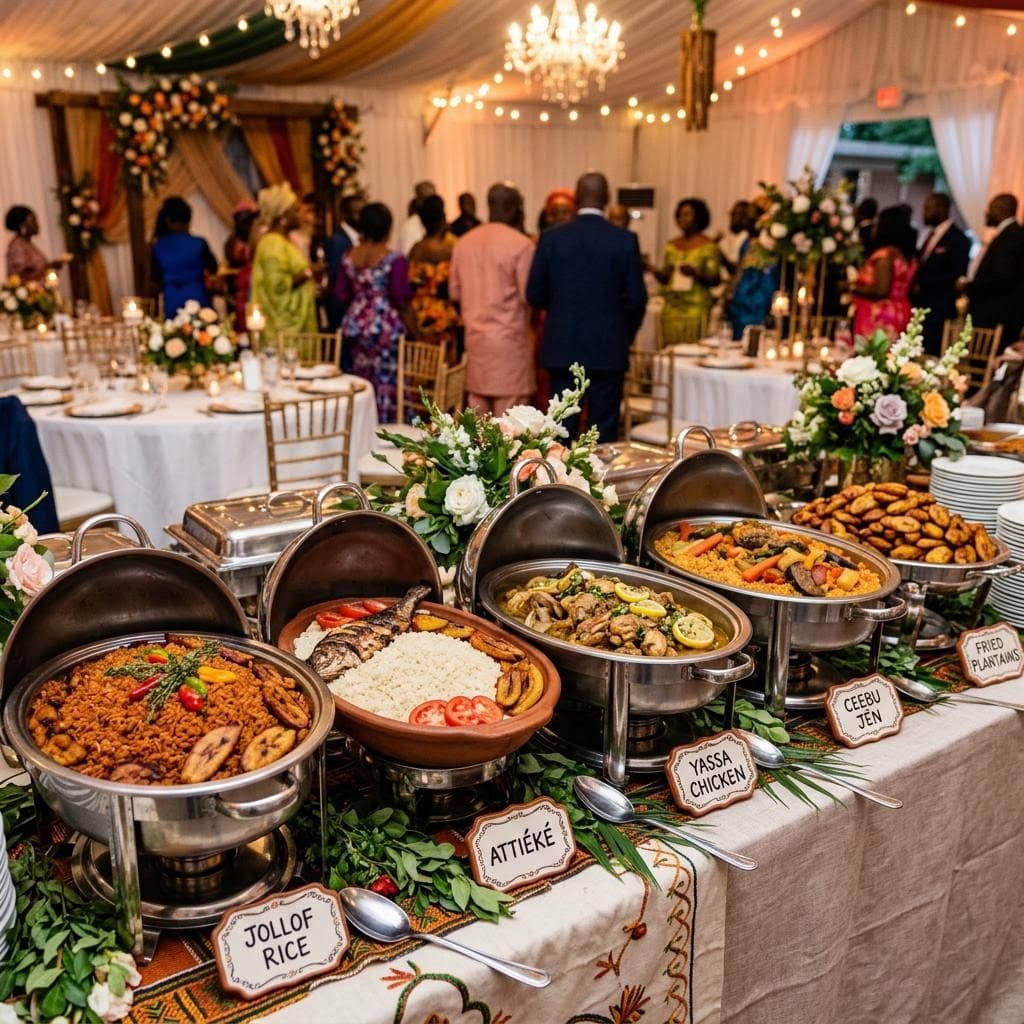
- ceebu jën or thiéboudiène;
- yassa chicken;
- mafé;
- jollof rice;
- attiéké;
- alloco;
- kedjenou;
- foutou;
- grilled meats;
- grilled fish.
The couple can select dishes that precisely represent Senegal, Côte d’Ivoire, Mali, Guinea, Ghana, Nigeria or another country.
Some recipes with similar names can be prepared differently depending on the families. A tasting allows confirming the desired result.
Senegalese ceebu jën
Ceebu jën is a Senegalese dish generally prepared with rice, fish and vegetables.
Recipes can vary by region and family. For a wedding, the caterer must have the equipment and team necessary to prepare a large quantity without losing the quality of the dish.
The couple should check:
- the choice of fish;
- the cooking of the rice;
- the vegetables;
- the level of spiciness;
- the presentation;
- the portions.
The dish can be served at the table or presented in a buffet.
Ivorian attiéké
Attiéké is made from cassava and can accompany fish, chicken, grilled meats or various sauces.
It can be offered with alloco, vegetables and condiments served separately.
For a reception, you must anticipate temperature maintenance and the rhythm of replenishing the buffet.
The caterer should also plan a presentation that allows guests to easily identify the side dishes.
Cameroonian dishes
A Cameroonian buffet can in particular include:
- ndolé;
- poulet DG;
- eru;
- koki;
- grilled fish;
- plantain bananas;
- rice;
- different regional sauces.
The couple should choose the dishes corresponding to the families' origins and avoid presenting a single recipe as representative of all of Cameroon.
Congolese dishes
A Congolese menu can offer:
- pondu or saka-saka;
- fumbwa;
- liboke;
- chikwangue;
- rice;
- fish;
- grilled meats;
- plantain bananas;
- different sauces.
Culinary traditions can vary between the DRC and the Republic of the Congo, so the couple must specify to the caterer the recipes they want.
Nigerian dishes
A Nigerian buffet can in particular include:
- jollof rice;
- fried rice;
- suya;
- moi-moi;
- pepper soup;
- small chops;
- chicken;
- plantain bananas.
The level of spiciness must be discussed with the caterer so that the dishes remain suitable for all guests.
The hottest sauces can be offered separately.
East African cuisines
When the newlyweds want to represent an East African culture, the menu can include, depending on their origins:
- injera and various stewed dishes;
- pilau;
- nyama choma;
- sambusas;
- spiced vegetables;
- preparations based on rice, meat or legumes.
These dishes should be prepared by a professional who knows the recipes in question.
Southern African cuisines
A menu inspired by Southern Africa can offer:
- braai-style grills;
- pap;
- chakalaka;
- stewed dishes;
- vegetables;
- various regional specialties.
Service can be organized as a buffet or around an area dedicated to grilling when the venue allows it.
Plan for a proper vegetarian menu
A vegetarian option must constitute a complete meal.
It can include:
- vegetable mafé;
- rice and legumes;
- a vegetable sauce;
- plantains;
- a cassava dish;
- grilled vegetables;
- injera accompanied by vegetarian preparations.
It is not enough to remove the meat from a dish that was meant to be served with it.
The number of vegetarian meals must be confirmed before the reception.
Managing allergies and spices
The newlyweds must ask guests to report their allergies and dietary constraints.
Some recipes can contain:
- peanuts;
- fish;
- shellfish;
- milk;
- gluten;
- eggs;
- chili.
Dishes must be clearly labeled on the buffet. The caterer must also explain how they limit cross-contact between different preparations.
Spicy sauces can be served separately so that everyone can adapt their plate.
Desserts
Dessert can combine several options:
- dèguè or thiakry;
- fritters;
- fresh fruit;
- coconut-based desserts;
- pastries;
- a wedding cake;
- a tiered wedding cake.
A fruit buffet offers a lighter option after a generous meal.
The cake must be coordinated with the caterer to plan its storage, cutting and service.
Traditional drinks
The buffet can offer:
- bissap;
- ginger juice;
- bouye;
- tamarind juice;
- fruit juices;
- water;
- sodas;
- non-alcoholic cocktails.
Drinks must be available throughout the reception.
An African juice bar can also become a visual attraction when decorated according to the wedding theme.
Buffet or table service?
The buffet allows offering more dishes and lets guests compose their meal.
For a large ceremony, you must plan:
- multiple service points;
- labels;
- enough staff;
- regular replenishment;
- smooth circulation;
- organization by table.
Table service creates a more formal experience and limits movement. However, it requires a sufficiently large team.
A mixed formula can combine a cocktail and starters in a buffet, then a main course served at the table.
Organize a tasting
The tasting allows checking:
- the flavors;
- the level of spiciness;
- the portions;
- the presentation;
- the cooking;
- the quality of the accompaniments;
- the drinks;
- the desserts.
The couple can come accompanied by a relative who knows the family recipes.
Modifications requested after the tasting must be confirmed in writing.
How to choose your caterer?
The caterer must master the selected dishes and have the team necessary to serve the expected number of guests.
Before booking, check:
- the menus offered;
- the number of servers;
- the tableware;
- the drinks;
- the equipment;
- the delivery;
- the setup;
- the storage;
- the cleaning;
- travel fees;
- overtime charges.
The quote must specify precisely all included elements.
Coordinate the meal with the schedule
The caterer must know the timings of the entrances, speeches, outfit changes and entertainment.
The schedule can include:
- The cocktail.
- The entrance of the newlyweds.
- The speeches.
- The service of starters.
- The main course.
- The entertainment.
- The cake.
- Hot drinks and desserts.
One person should be able to communicate with the caterer and the DJ during the reception. If your day includes a customary ceremony, consult our guide to the African customary wedding to integrate it into the schedule.
Find a caterer for an African wedding
A professional who knows the represented cuisines will be able to propose a menu faithful to the families' expectations and adapted to the number of guests.
On DreamWeds, you can search for caterers for African weddings, compare services and select a menu that matches your origins and your budget.
Frequently asked questions about an African wedding menu
Which main dish should we choose?
The choice depends on the couple’s origins. Ceebu jën, yassa, jollof, attiéké, ndolé or a Congolese dish can be suitable.
Can we mix several African cuisines?
Yes, when the menu represents both families or the couple’s story. Dishes must, however, be clearly presented.
Should we organize a tasting?
Yes. It allows checking flavors, portions and the level of spiciness before the final booking.
How to avoid queues at the buffet?
Install multiple service points, provide enough staff and organize table-by-table flow.
Does the caterer provide servers and tableware?
It depends on the package. All included services must appear in the quote.
DreamWeds
Find your dream vendors
Photographers, caterers, venues and much more — compare up to 4 vendors side by side.
Find a caterer for my weddingArticles on the same topic
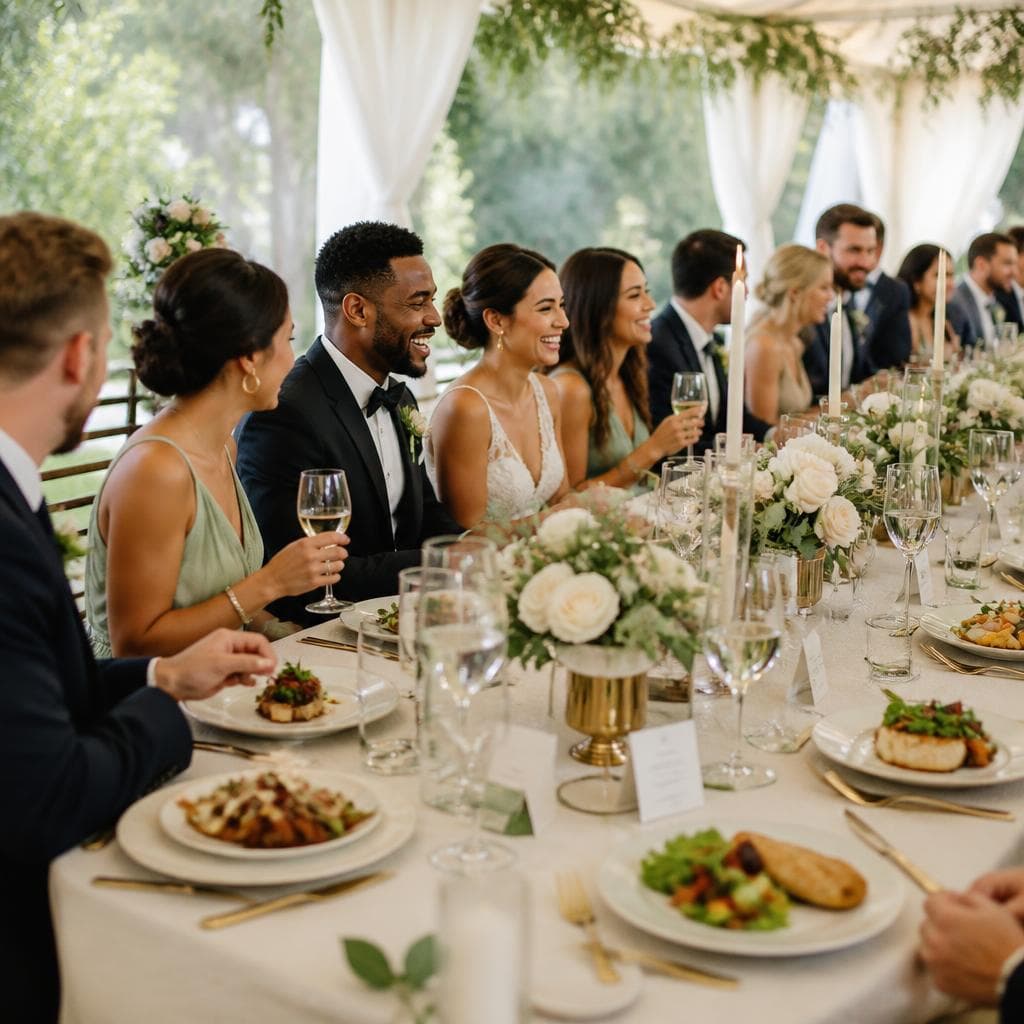
Wedding menu: managing allergies, dietary requirements and preferences
Vegetarian, allergies, no pork or other restrictions: arrange special meals without complicating the service.
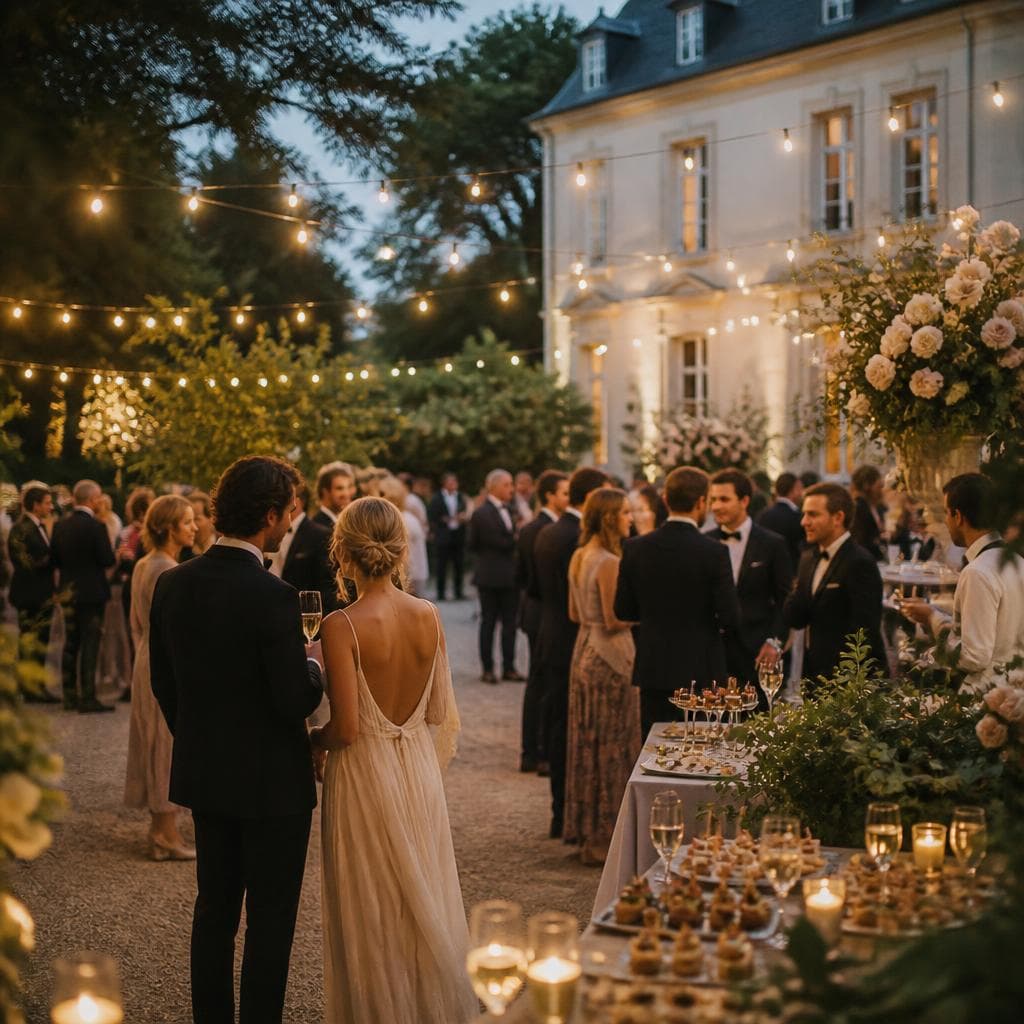
Wedding cocktail: duration, drinks, canapés and organization
How much time should you allow for the cocktail? How to choose drinks and canapés without weighing down the meal?
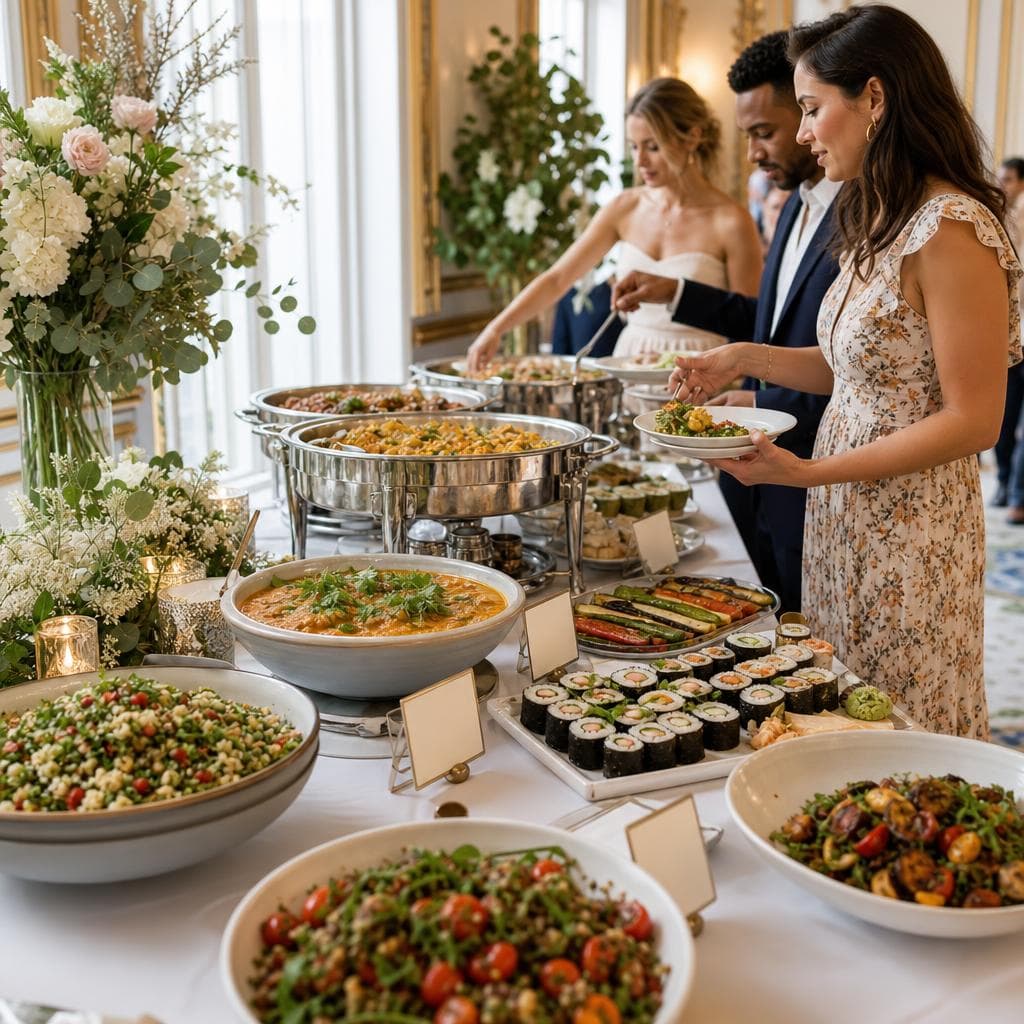
Multicultural Wedding Menu: Cuisines, Diets and Allergens
Building a generous meal when cuisines meet, while clearly identifying allergies, diets and plant-based options.