
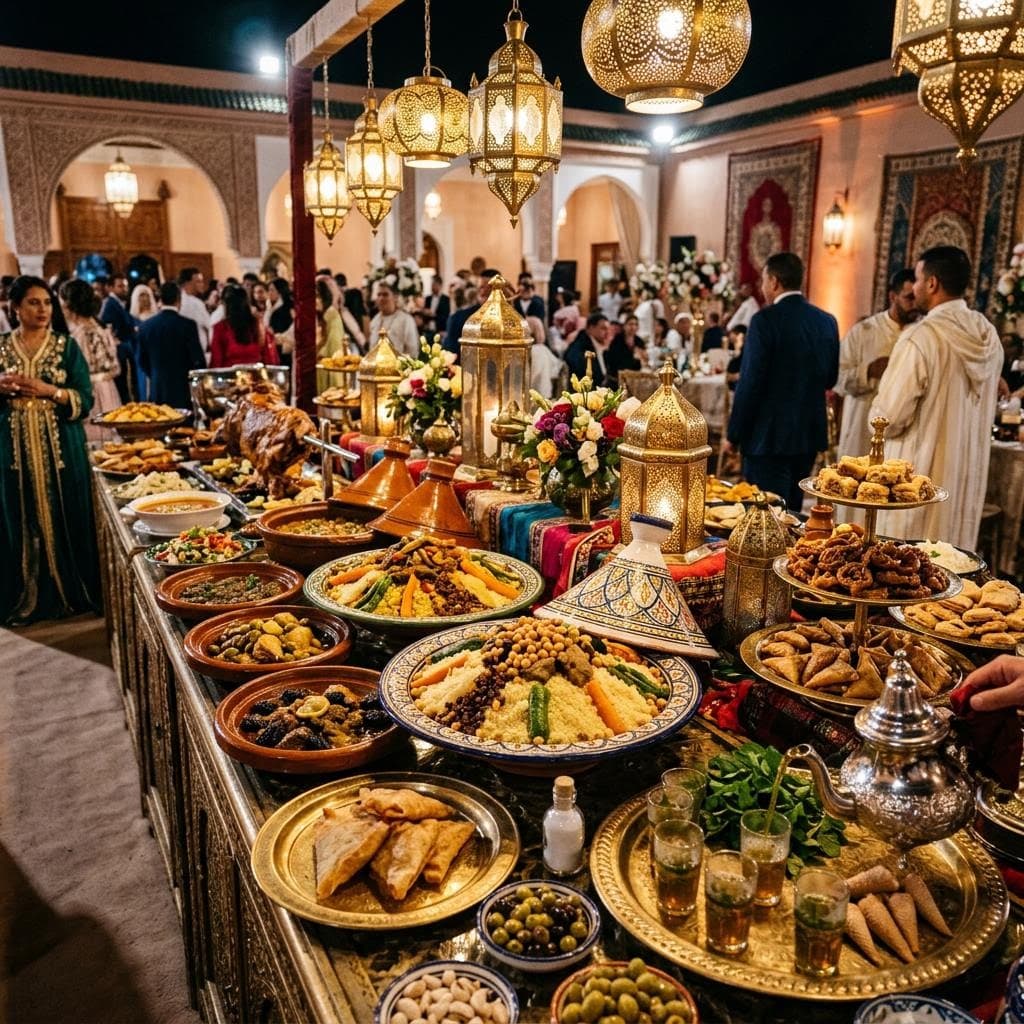
Maghrebi wedding menu: dish ideas and tips for choosing your caterer
The meal is one of the most anticipated moments of a Maghrebi wedding. It brings families together around generous dishes and specialties that reflect the origins of the newlyweds.
Couscous, tajine, pastilla, chorba, méchoui or oriental pastries: the possibilities are numerous. The menu must nevertheless be adapted to the number of guests, the budget, the season and the flow of the reception.
To prepare your budget in detail: Budget for a Maghrebi wedding: expenses to plan for and tips to save
A good caterer must be able to respect the desired traditions while ensuring smooth service throughout the evening.
How to compose your wedding menu?
Before choosing dishes, the couple must define the format of the meal. They can opt for table service, a buffet, or a formula mixing several types of presentation.
To build the menu, one must take into account:
- the number of guests ;
- the origins of the two families ;
- the duration of the reception ;
- the budget per person ;
- food preferences ;
- allergies ;
- any requirements regarding halal meat ;
- the number of courses desired.
The menu can be entirely traditional or combine Maghrebi specialties with a more modern presentation.
The cocktail and the appetizers
A welcome cocktail allows guests to wait before the arrival of the newlyweds or the opening of the meal.
It can include:
- mini-bricks ;
- skewers ;
- salads served in verrines ;
- mini-pastillas ;
- savory puff pastries ;
- vegetable bites ;
- assortments of dried fruits ;
- juices and non-alcoholic cocktails.
Portions should remain light so that guests can then enjoy the main meal.
A well-distributed buffet in the room also helps avoid queues.
Starters at a Maghrebi wedding
Starters can be served individually, presented on large platters to share, or offered as a buffet.
Among the possibilities are:
- Moroccan salads ;
- chorba ;
- chorba frik ;
- boureks ;
- pastilla ;
- Tunisian bricks ;
- grilled salads ;
- assortments of cooked vegetables.
The choice depends on the season and the main course. A light starter is preferable when the menu then includes several generous courses.
Couscous for a wedding
Couscous is an emblematic dish of the Maghreb. Each country, each region and sometimes each family has its own recipe.
It can be prepared with:
- lamb ;
- chicken ;
- multiple meats ;
- fish ;
- vegetables ;
- a fully vegetarian version.
Couscous can be served in large sharing dishes or plated individually. Before choosing it, you must check that the caterer has the experience and the necessary equipment to maintain consistent quality across a large number of portions.
Tajines and slow-cooked dishes
Tajines and slow-cooked dishes are particularly suitable for receptions that want to offer generous, aromatic cuisine.
The menu can notably include:
- a chicken tajine with olives and preserved lemon ;
- a lamb tajine with prunes ;
- a kefta dish ;
- a fish-based preparation ;
- a vegetable tajine ;
- a rechta ;
- a chakhchoukha ;
- other regional specialties.
It is preferable to limit the number of main dishes to avoid an overly long meal and reduce waste.
Méchoui and meats
Méchoui can be chosen as the main dish for a large reception. It must be prepared and served by a caterer with an organization suited to the number of guests.
Other dishes based on lamb, chicken or beef can also be offered.
When families want halal meat, the couple must ask the caterer for precise information on sourcing and preparing the products.
These elements must be confirmed before signing the quote.
Moroccan specialties
A menu inspired by a Moroccan wedding can include:
- Moroccan salads ;
- a pastilla ;
- a tajine ;
- a couscous ;
- a méchoui ;
- fruits ;
- Moroccan pastries ;
- mint tea.
The couple can choose specialties from their family region or compose a menu bringing together several influences.
Algerian specialties
For an Algerian wedding, the menu can notably offer:
- a chorba frik ;
- boureks ;
- couscous ;
- rechta ;
- chakhchoukha ;
- meat or chicken dishes ;
- makrouts ;
- tchareks ;
- griwech.
Recipes vary between regions. It is therefore important to taste the dishes and clearly explain to the caterer the desired result.
Tunisian specialties
A Tunisian wedding menu can include:
- bricks ;
- a méchouia salad ;
- couscous ;
- dishes based on lamb, chicken or fish ;
- regional specialties ;
- makrouds ;
- baklavas.
The level of spices should be discussed with the caterer so that the menu suits all guests.
Providing a vegetarian menu
Even when a traditional menu mainly relies on meat, it is essential to provide a genuine vegetarian alternative.
Guests concerned can be offered:
- a vegetable couscous ;
- a vegetarian tajine ;
- vegetable bricks ;
- an assortment of salads ;
- a dish of semolina, vegetables and legumes.
The vegetarian option must constitute a complete meal and not be limited to removing the meat from the main dish.
It is advisable to ask for dietary preferences at the time of RSVP.
Pastries and desserts
Pastries can be presented on tables, served with coffee or offered in a dessert buffet.
The selection can include:
- cornes de gazelle ;
- makrouts ;
- baklavas ;
- griwech ;
- tchareks ;
- almond pastries ;
- fresh fruit.
The couple can also plan a wedding cake, a tiered cake, or a modern dessert made by a pastry chef.
To avoid an excessive amount of sugar, the buffet can combine pastries, fruits and lighter desserts.
Drinks
Drinks should be available throughout the reception, especially when the meal is spicy or the wedding takes place in summer.
The couple can provide:
- still and sparkling water ;
- sodas ;
- fruit juices ;
- non-alcoholic cocktails ;
- mint tea ;
- coffee ;
- milk or traditional drinks according to the families.
A non-alcoholic cocktail bar can also be an entertainment appreciated by guests.
Table service or buffet?
Table service offers an elegant experience and makes it easier to control the flow of the meal. However, it requires enough staff to serve all guests within a reasonable time.
The buffet allows offering more choices and creates a more relaxed atmosphere. It is nevertheless necessary to plan several service points to avoid queues.
A mixed format can include a cocktail or starters as a buffet, then a main course served at the table.
The choice depends on the number of guests, the layout of the room and the desired style.
How to choose your caterer?
The caterer should be selected based on their experience, the quality of their cuisine and their ability to manage the expected number of guests.
Before booking, it is recommended to check:
- the dishes included in the menu ;
- the number of servers ;
- the dishes and equipment included ;
- the drinks ;
- delivery and setup ;
- clearing and cleaning ;
- service times ;
- travel fees ;
- cancellation conditions.
A tasting allows you to test the dishes, their presentation and the portions before confirming the menu.
Coordinate the meal with the entertainment
The caterer must know the reception schedule. Service should be coordinated with the entrance of the newlyweds, costume changes, speeches, photos and entertainment.
A schedule can specify:
- Arrival of guests.
- The cocktail.
- The entrance of the newlyweds.
- Service of starters.
- The main course.
- The entertainment.
- Dessert and the cake.
- Tea, coffee and pastries.
A person in charge should be able to communicate with the caterer and the DJ during the evening to adjust timings if necessary.
Finding a caterer for a Maghrebi wedding
The choice of caterer should be made early enough, especially when the wedding is scheduled during the high season.
On DreamWeds, you can search for caterers and other wedding professionals, compare the services offered and select a formula suited to your reception and your budget.
Frequently asked questions about a Maghrebi wedding menu
Which main dish should be chosen?
Couscous, tajine, méchoui or a regional specialty can be suitable. The choice depends on the origins of the couple and the format of the reception.
Should a tasting be organized?
Yes. A tasting allows you to check the quality, the flavors, the presentation and the portions before booking definitively.
Can different cuisines be mixed?
Yes. The menu can bring together Moroccan, Algerian, Tunisian, French dishes or dishes from another culture.
How to manage food allergies?
Guests must be able to report their allergies in advance. This information should then be passed on to the caterer.
Does the caterer provide servers and tableware?
It depends on the formula. You should ask for a detailed quote specifying precisely the staff, equipment and services included.
DreamWeds
Find your dream vendors
Photographers, caterers, venues and much more — compare up to 4 vendors side by side.
Find a caterer for my weddingArticles on the same topic
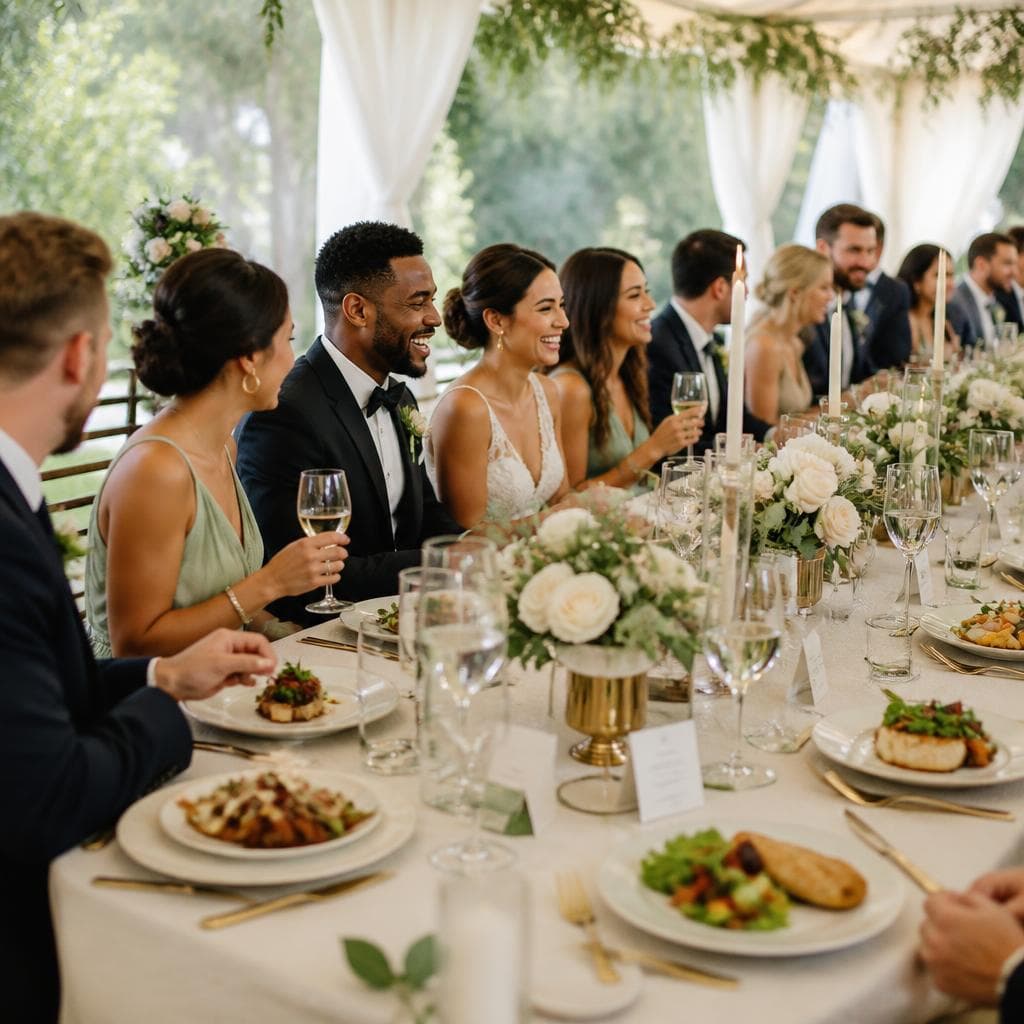
Wedding menu: managing allergies, dietary requirements and preferences
Vegetarian, allergies, no pork or other restrictions: arrange special meals without complicating the service.
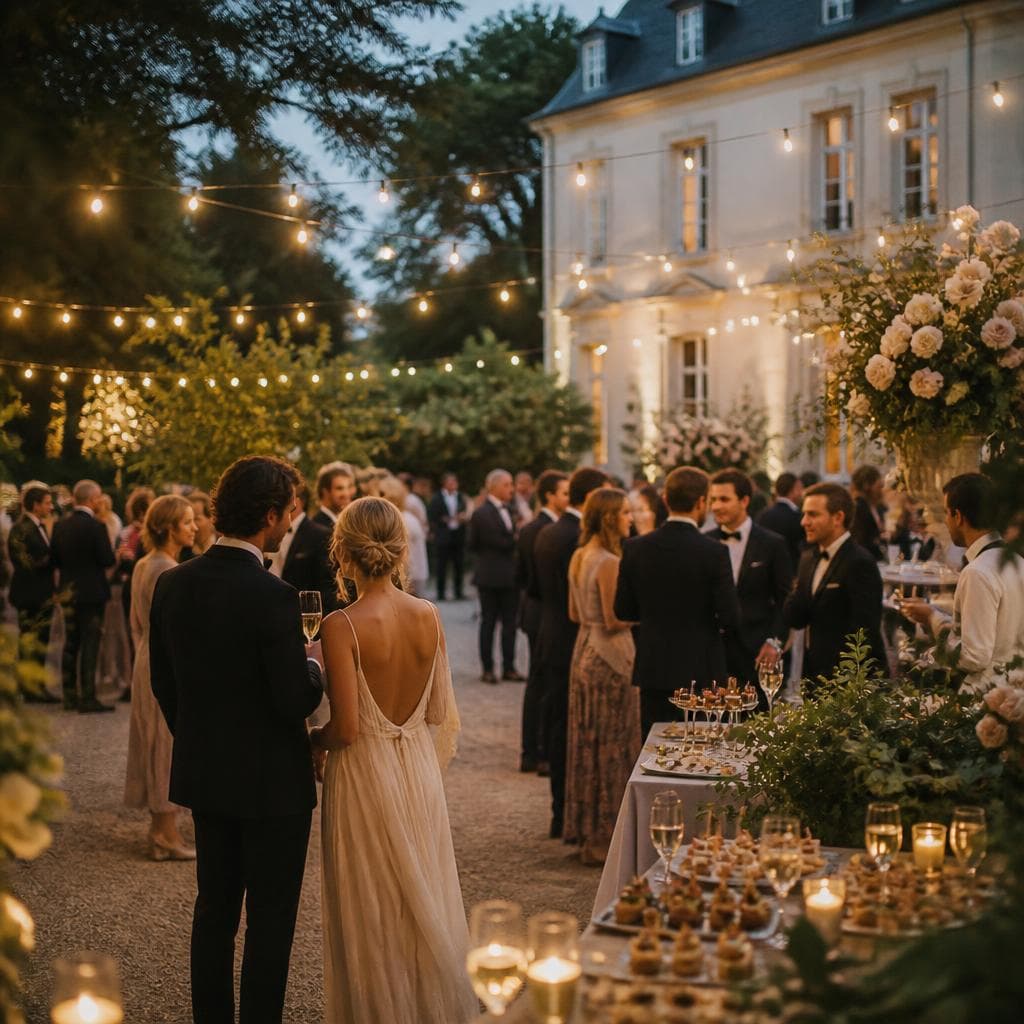
Wedding cocktail: duration, drinks, canapés and organization
How much time should you allow for the cocktail? How to choose drinks and canapés without weighing down the meal?
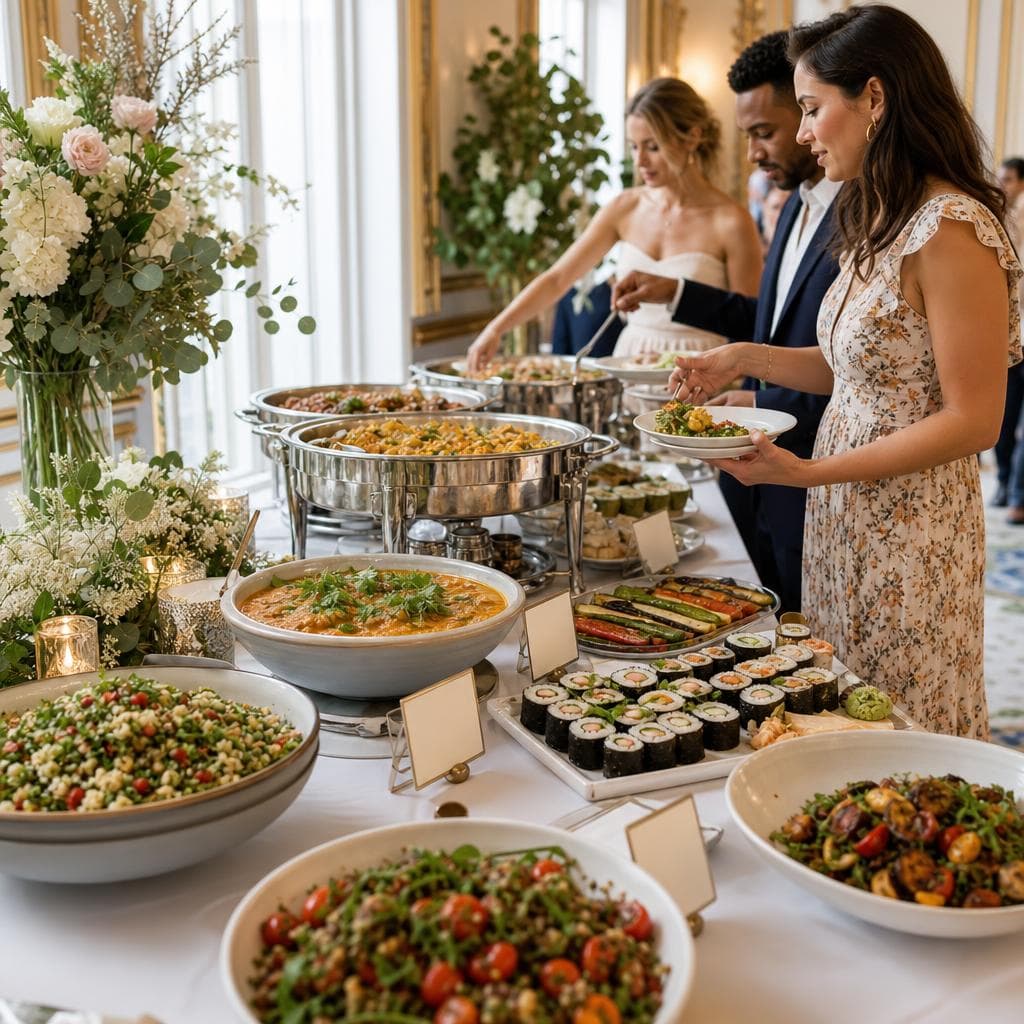
Multicultural Wedding Menu: Cuisines, Diets and Allergens
Building a generous meal when cuisines meet, while clearly identifying allergies, diets and plant-based options.