
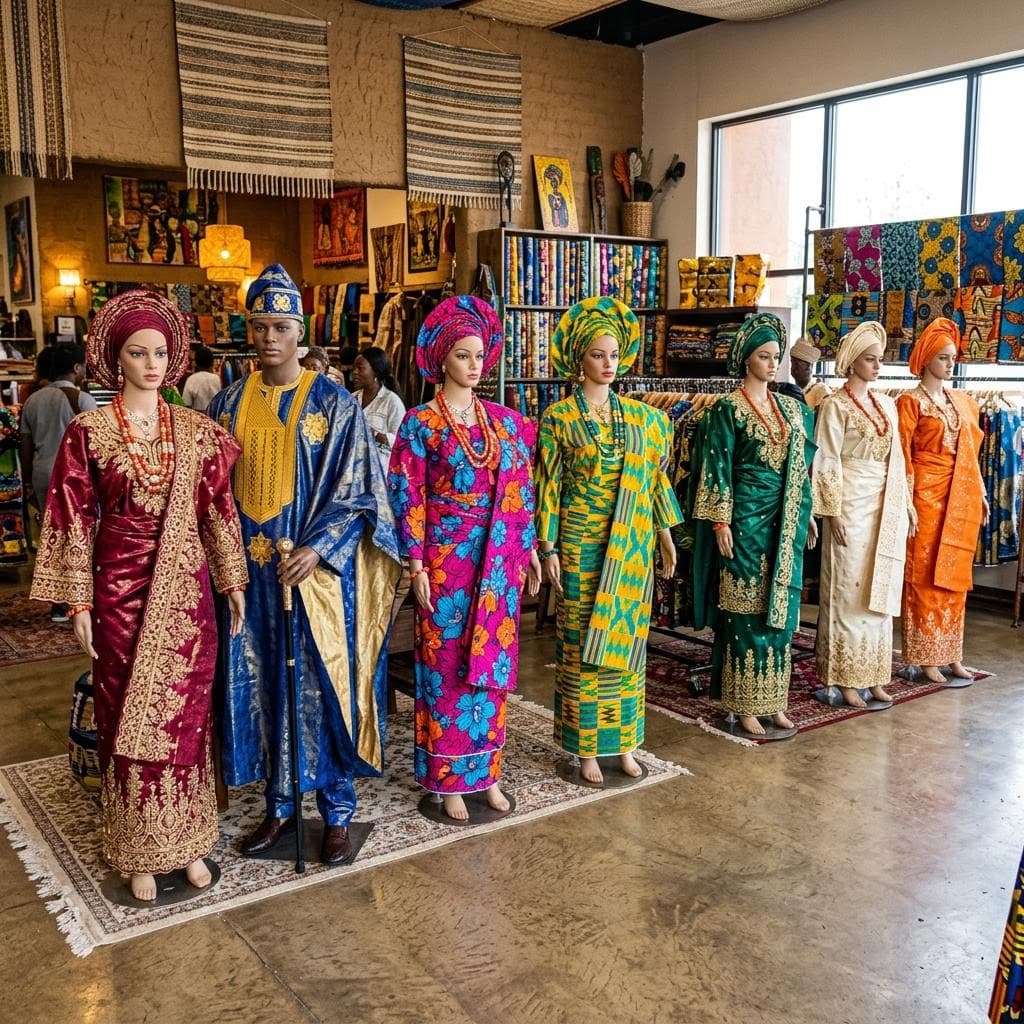
African wedding attire: pagne, bazin, kente and tips for choosing
Attire plays a central role in an African wedding. They allow the bride and groom to showcase their origins, family heritage and personality.
Pagne, bazin, kente, aso oke or kitenge: each textile has its own history and should not be indiscriminately associated with all African cultures.
Before choosing their clothes, the prospective couple should identify the traditions they wish to represent and discuss with their families.
There is no single African outfit
Africa brings together a great diversity of textiles, manufacturing techniques, cuts and accessories.
A Senegalese outfit will not necessarily be identical to an Ivorian outfit, a Cameroonian outfit, a Congolese outfit, a Nigerian outfit or a Ghanaian one.
The couple should avoid mixing elements from several cultures just because they seem aesthetic. Each choice can be made with the help of parents, elders or a designer familiar with the traditions concerned.
The pagne in wedding attire
The word “pagne” can refer to different fabrics or garments depending on the country and usage.
It can be used to make:
- a dress;
- a skirt;
- a set;
- a boubou;
- a shirt;
- a jacket;
- an accessory;
- a coordinated outfit for the couple.
The pattern, colors and quality of the textile should be chosen according to the style of the ceremony.
It is advisable to buy an extra amount for alterations and last-minute accessories.
Bazin
Bazin is appreciated in several West African countries for its shiny appearance and structured hold.
It can be used to make large boubous, dresses, sets and richly embroidered garments.
The result depends on the quality of the fabric, its dyeing, the embroidery and the tailor's know-how.
Because bazin can be quite stiff, a full fitting is essential to check comfort and freedom of movement.
Kente
Kente is a woven textile associated notably with traditions of Ghana, particularly among the Asante and Ewe peoples.
Its colors and patterns can have a particular meaning. It is therefore preferable to inquire before choosing a design.
Kente can be worn as draped fabric or incorporated into a dress, suit, jacket or accessories.
A couple without ties to this culture should avoid presenting kente as an outfit representing the entire African continent.
Aso oke
Aso oke is a woven textile associated with Yoruba culture, notably in Nigeria.
It can be used for the bride's, groom's and their relatives' outfits.
A Yoruba bride can notably wear an outfit accompanied by a gele, while the groom may choose an agbada and a coordinated head covering.
The cuts and accessories should be prepared with a professional familiar with this tradition.
Wax
Wax is widely used in contemporary African fashion and allows many different cuts to be made.
It can be chosen for:
- the couple's outfits;
- the wedding party;
- the families;
- the bridesmaids and groomsmen;
- accessories;
- certain decorative elements.
Motifs should be examined on a large surface before tailoring. A print can produce a different result depending on how it is cut and assembled.
The tailor must plan the placement of the patterns before starting.
Kitenge and other regional textiles
In several East African countries, kitenge can be used to make dresses, shirts, sets and accessories.
Other regions have their own fabrics, embroideries and traditional garments.
The couple can also choose:
- a locally woven textile;
- a family cloth;
- a garment passed down through generations;
- a modern creation inspired by a regional outfit.
The origin and meaning of the textile should be checked before integrating it into the wedding.
The bride's outfit
The bride can wear a traditional dress, a pagne set, a large boubou or a custom creation.
She can also combine a cultural outfit with a white dress.
Before choosing, she should take into account:
- the weight of the garment;
- the temperature;
- the duration of the ceremony;
- the movements required;
- the planned changes;
- the accessories;
- the shoes.
A spectacular outfit must remain comfortable enough to allow the bride to walk, sit and dance.
The groom's outfit
The groom can wear a boubou, an agbada, a coordinated fabric set, a traditional jacket or a suit.
He can match his outfit to the bride's by using:
- the same fabric;
- a common color;
- similar embroideries;
- a matching accessory;
- a lining that picks up the chosen pattern.
It is not necessary for both outfits to be entirely identical to form a harmonious set.
How many outfits to plan?
The number of garments depends on the wedding program.
The couple can plan:
- An outfit for the customary ceremony.
- A white dress and a suit for the civil or religious ceremony.
- A lighter outfit for the evening party.
Multiplying changes increases the budget and can reduce the time spent with guests.
It is preferable to select a few important outfits and prepare a realistic schedule.
Coordinated family outfits
Families can wear a common fabric or adhere to a color palette.
This coordination is sometimes called aso ebi in the Nigerian context, but the principle exists in different forms in several countries.
The couple should communicate:
- the chosen fabric;
- the quantity available;
- the price;
- the deadline;
- the colors;
- any accessories.
The two families can choose different but complementary colors.
Guests' outfits
A guest can wear a traditional outfit corresponding to their origins or a modern ceremonial outfit.
Before choosing, it is advisable to check:
- the level of formality;
- the theme;
- reserved colors;
- the fabric possibly chosen by the family;
- instructions indicated on the invitation.
Guests should avoid an outfit too similar to that of the bride or groom.
Headwear and accessories
Accessories complete the outfit and can represent a particular tradition.
Depending on the cultures, they can include:
- a gele;
- a scarf;
- a hat;
- a fan;
- beads;
- jewelry;
- a decorative cane;
- a shawl;
- a matching clutch.
Bulky accessories should be tried on for several minutes to check their weight and comfort.
Shoes
Shoes should be adapted to the length of the outfit and the day's schedule.
The bride and groom can plan a second, more comfortable pair for the evening dance.
Shoes should be worn during the final fitting to properly adjust the length of the garments.
Having a custom outfit made
Custom tailoring makes it possible to choose the fabric, cut, embroidery and finishes.
The couple should start several months before the wedding and plan:
- Fabric selection.
- Taking measurements.
- Model validation.
- A first fitting.
- Alterations.
- The final fitting.
Important details should be confirmed in writing with the tailor.
Buy or rent your outfits?
Buying allows you to keep the garment and personalize it. However, it can represent a significant expense when several outfits are planned.
Renting can be suitable for a garment worn only for a few hours.
Before renting, check:
- the duration;
- the deposit;
- alterations;
- cleaning;
- included accessories;
- conditions applicable in case of damage.
The outfit must be tried on early enough to plan another solution if necessary.
How to choose your tailor?
The tailor should know the textile used and be able to achieve the desired cut.
Before booking, it is advisable to check:
- their previous creations;
- deadlines;
- the number of fittings;
- included alterations;
- the cost of tailoring;
- whether the fabric is provided;
- conditions in case of delay.
A precise model, accompanied by photos and a sketch, helps limit misunderstandings.
Prepare the outfits for the wedding day
Each garment should be stored separately with its accessories.
A sheet can indicate:
- the order of outfits;
- the corresponding jewelry;
- the shoes;
- the headwear;
- the moment of the change;
- the person responsible for helping.
An emergency kit can contain thread, pins, a suitable stain remover, buttons and garment tape.
Find a professional for your outfits
A tailor or specialized designer can help the couple choose a textile corresponding to their origins and create garments adapted to the ceremony.
On DreamWeds, you can search for tailors, designers, makeup artists and hairdressers, photographers and other professionals to prepare your African wedding outfits.
Frequently asked questions about African wedding attire
Which fabric to choose?
The choice depends on the couple's origins, the season, the ceremony style and the budget.
Can I wear a white dress and a traditional outfit?
Yes. The bride can alternate between the two or reserve each outfit for a different ceremony.
Do families have to wear the same fabric?
No. It is an optional choice that creates visual coordination.
When should tailoring start?
It is preferable to start several months before the wedding in order to plan fittings and alterations.
Can several textiles be mixed?
Yes, if the result respects the cultures represented and remains coherent with the couple's story.
DreamWeds
Find your dream vendors
Photographers, caterers, venues and much more — compare up to 4 vendors side by side.
Find vendors for my weddingArticles on the same topic
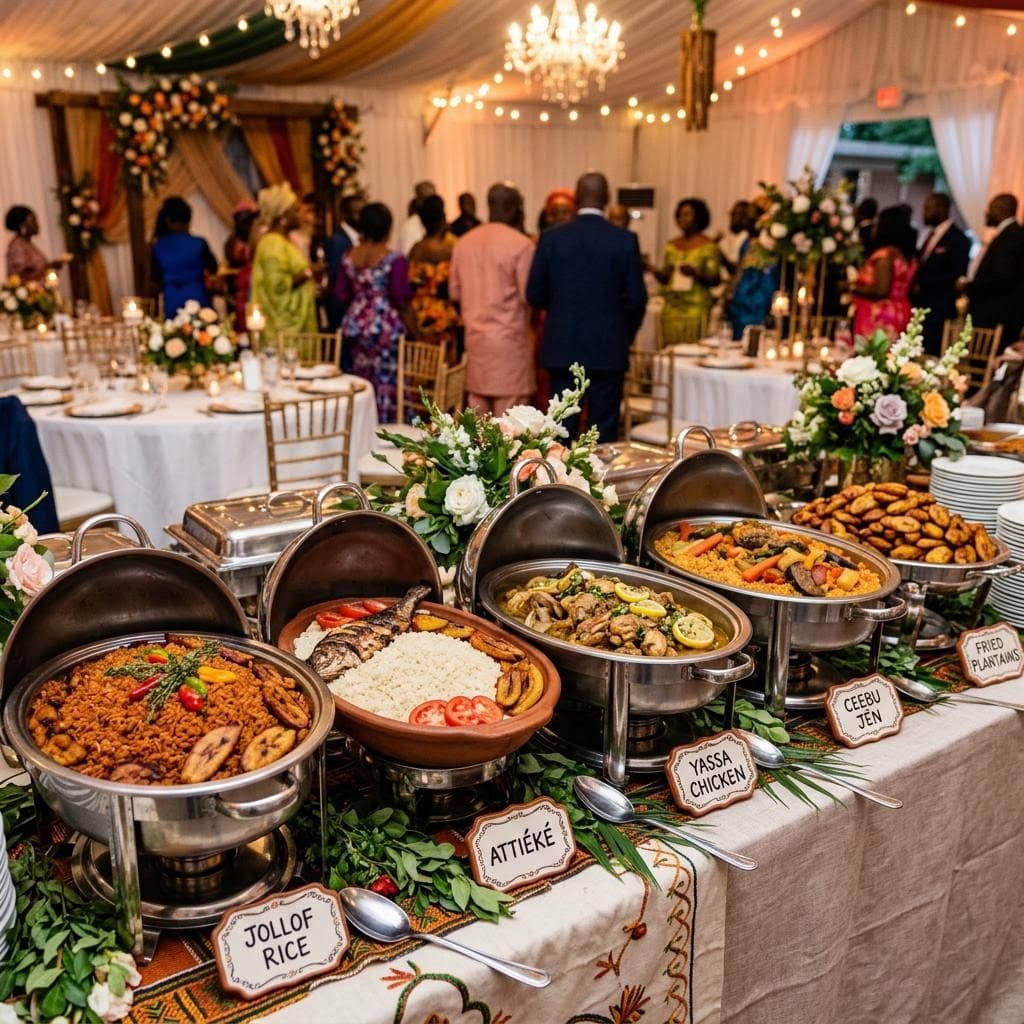
African wedding menu: dish ideas and tips for choosing your caterer
Ceebu jën, yassa, attiéké, ndolé or jollof: discover our African menu ideas and our tips for choosing your wedding caterer.
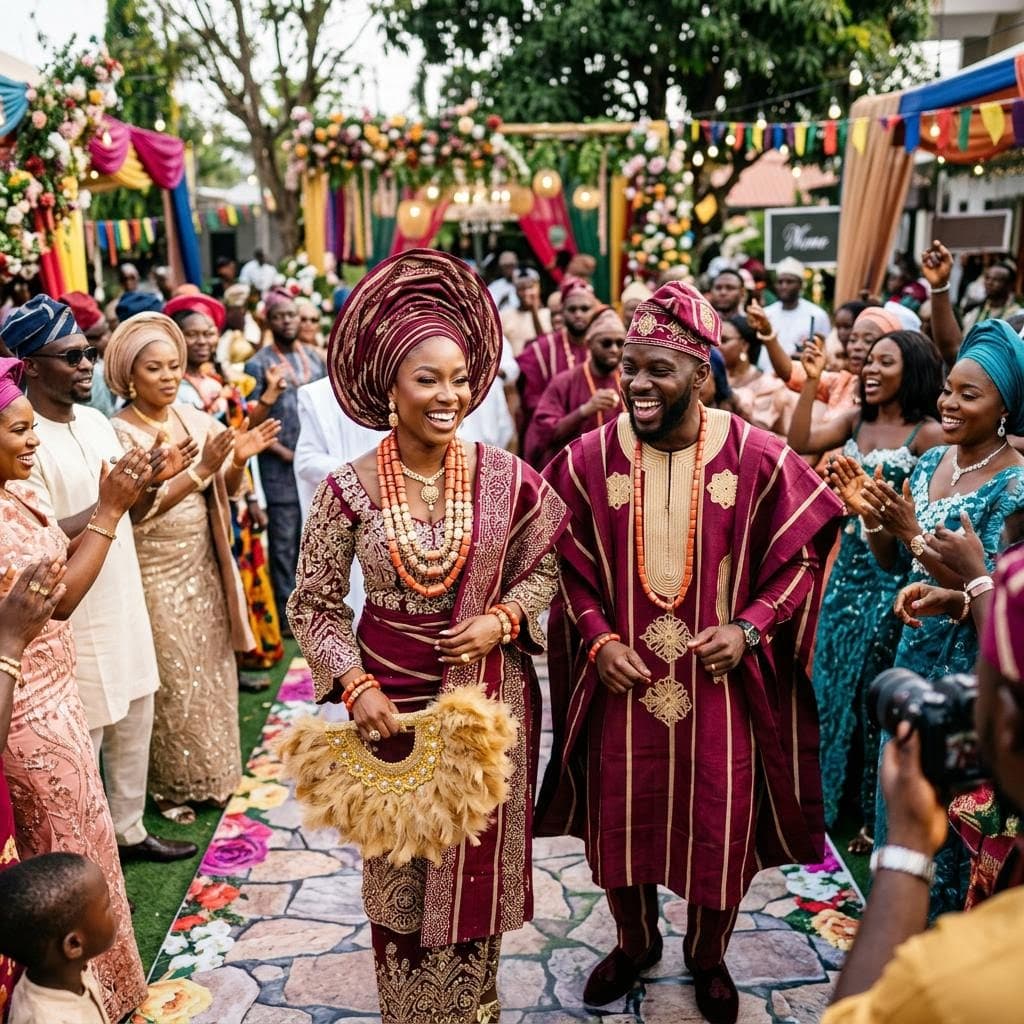
Nigerian wedding: Yoruba, Igbo and Hausa traditions
Discover Nigerian wedding traditions: Yoruba, Igbo and Hausa ceremonies, outfits, aso ebi, food, music and organization.
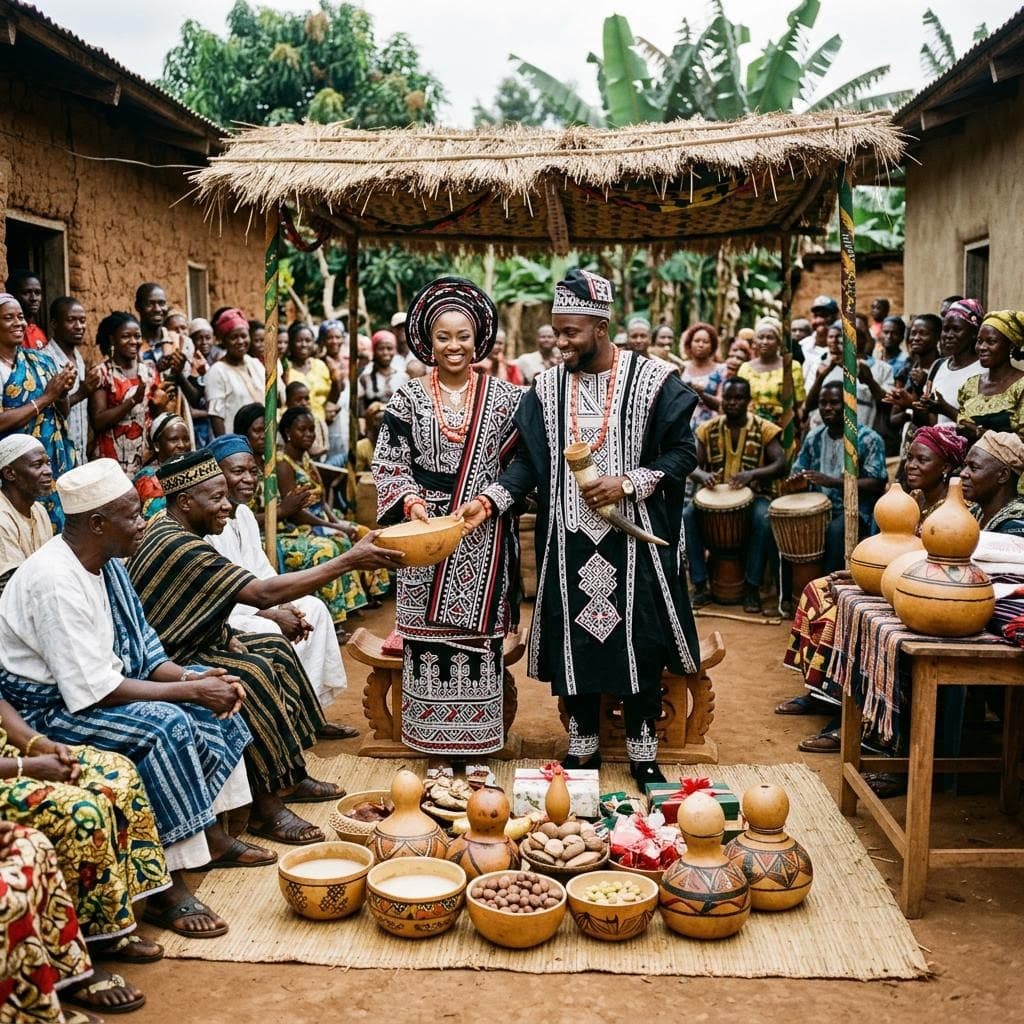
Cameroonian wedding: traditions, dowry, outfits and timeline
Discover the traditions of a Cameroonian wedding: meeting of the families, dowry ceremony, outfits, meal, music and organization.